
The Role of Home Caregiver: Responsibilities and Support
The Role of Home Caregiver: Responsibilities and Support
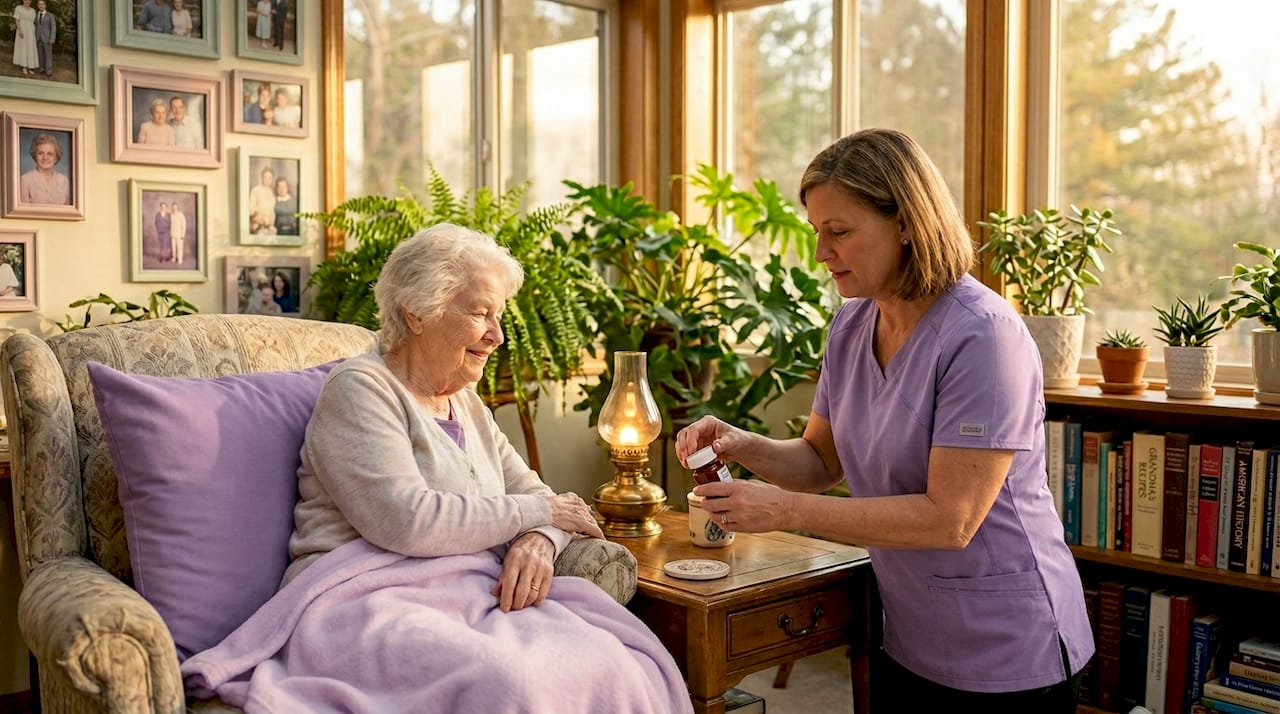
A home caregiver is a person who assists individuals with personal care, household tasks, health monitoring, and emotional support so they can remain safely in their own homes. The role of home caregiver spans two distinct categories: family members who provide unpaid care and professional aides employed through agencies or private arrangements. According to the AARP Valuing the Invaluable 2026 Report, 59 million family caregivers provided 49.5 billion hours of care in 2024, with an economic value exceeding $1 trillion. That figure means caregiving is one of the largest labor forces in the United States, yet most of it goes uncompensated and unrecognized. Understanding what caregivers actually do, where their responsibilities begin and end, and what support exists is the foundation for making good care decisions.
What are the primary responsibilities of a home caregiver?
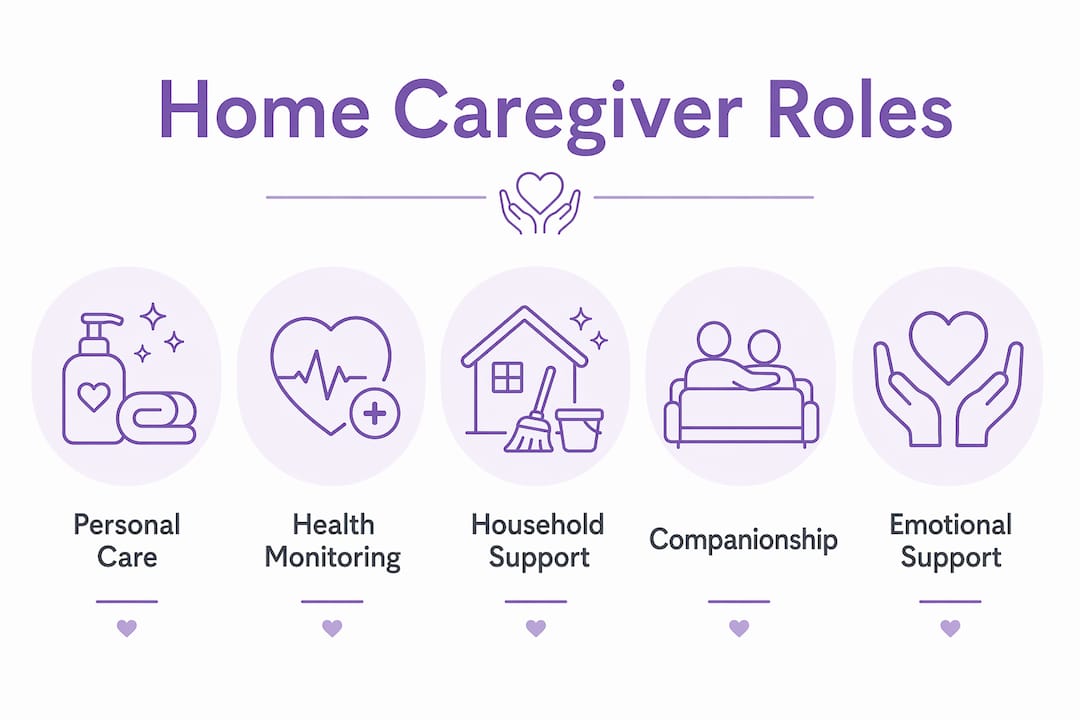
Home caregiver responsibilities fall into four categories: personal care, health monitoring, household tasks, and companionship. Each category maps to a recognized framework used by care professionals across the country.
Personal care covers Activities of Daily Living, commonly called ADLs. These are the physical tasks a person needs to get through each day:
- Bathing, grooming, and hygiene
- Dressing and undressing
- Toileting and continence support
- Eating and feeding assistance
- Mobility, transfers, and repositioning
Household and logistical support covers Instrumental Activities of Daily Living, or IADLs. According to the National Caregiver Authority, these duties include medication reminders, meal preparation, grocery shopping, transportation to appointments, light housekeeping, and basic financial tasks like paying bills. IADLs are often where the workload quietly expands, because each task requires planning, coordination, and follow-through beyond the physical act itself.
Health monitoring includes observing changes in condition, tracking vital signs where permitted, and communicating concerns to nurses or physicians. This is not clinical care, but it is the first line of detection for problems like infections, falls, or medication reactions.
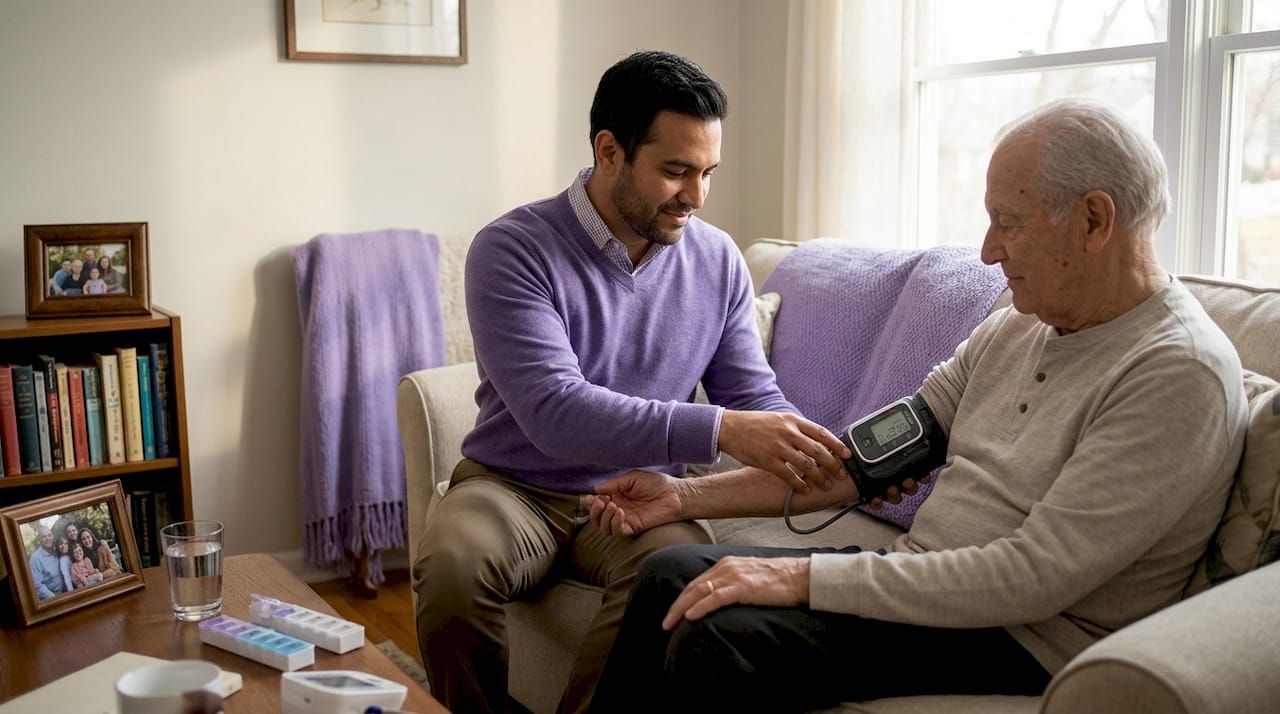
Companionship is the category most frequently underestimated. Isolation is a documented health risk for older adults, and a caregiver who engages a person in conversation, activities, or outings provides measurable benefit to cognitive and emotional health.
Pro Tip: When a family first arranges care, write out every task the care recipient needs help with and assign it to a specific person. Leaving tasks unassigned creates gaps that nobody notices until something goes wrong.
How does the scope of a home caregiver’s role vary?
Not every caregiver can legally or practically perform every task. The difference between a family caregiver and a licensed home health aide matters significantly when it comes to medical tasks.
Family caregivers operate under fewer formal restrictions. A spouse or adult child can administer medications, manage wounds, or assist with medical equipment because they are acting as a personal agent, not a paid professional. Professional aides, by contrast, work within agency policies and state regulations that define exactly what they can and cannot do.
Medication administration is the most common area of confusion. Most states restrict professional aides to medication reminders and observing self-administration. Anything beyond that, including drawing insulin, crushing pills, or applying prescription creams, typically requires a licensed nurse or physician. Agencies manage this with escalation protocols: the aide identifies a need, documents it, and contacts a supervisor or nurse to handle the clinical task.
Tasks caregivers generally can perform:
- Reminding clients to take medications
- Preparing meals and snacks
- Assisting with bathing, dressing, and mobility
- Light housekeeping and laundry
- Providing transportation and accompaniment
Tasks that typically require licensed personnel:
- Administering injections or IV medications
- Wound care beyond basic first aid
- Catheter care and tube feeding
- Interpreting diagnostic results
State-level variation is real. Some states allow trained aides to perform delegated nursing tasks under a supervising RN. Others prohibit it entirely. If you are arranging professional care, confirm the specific rules in your state before assuming a task is covered.
Pro Tip: Ask any home care agency for a written list of tasks their aides are permitted to perform in your state. If they cannot produce one, that is a red flag about their compliance practices.
What challenges do home caregivers face and what support is available?
Caregiver burden is a clinical term describing the physical, emotional, and financial strain that accumulates when caregiving demands exceed a person’s capacity to manage them. It is not a sign of weakness. It is a predictable outcome of providing complex, ongoing care without adequate support.
The stress compounds when care needs escalate. A person who initially needed help with bathing and meals may later require overnight supervision, wound care coordination, and behavioral management for dementia. Each new need adds hours and cognitive load to the caregiver’s day. The AARP 2026 report notes that caregivers’ roles extend well beyond physical care into complex coordination tasks that significantly increase workload over time.
The good news is that support systems exist and are expanding. According to KFF’s 2025 Medicaid analysis, 37 states now provide caregiver training programs and 26 states fund counseling or support groups. Some states go further and offer stipends to family caregivers through Medicaid waiver programs. These programs improve measurable outcomes and extend how long families can sustain home care arrangements.
Available support resources include:
- Respite care: Temporary relief provided by a substitute caregiver, allowing the primary caregiver to rest
- Caregiver training: Skill-building programs covering safe transfers, medication reminders, and dementia communication
- Counseling and support groups: Mental health resources specifically designed for caregiver stress
- Care management services: Professional coordinators who assess needs, create care plans, and connect families to services
For caregivers managing stress day to day, mindfulness practices for caregivers have shown real benefit in reducing anxiety and improving emotional resilience. This is not a luxury. Caregiver health directly affects care recipient safety.
Pro Tip: Contact your local Area Agency on Aging (AAA) to find state-funded caregiver support in your county. The Eldercare Locator at eldercare.acl.gov connects you to local AAA offices at no cost.
How can families optimize home caregiving arrangements?
Effective home care does not happen by default. It requires planning, clear communication, and regular review. These five steps give families a practical framework for building a caregiving arrangement that holds up over time.
-
Conduct an ADL and IADL assessment. List every task the care recipient needs help with, noting frequency and level of assistance required. This baseline prevents assumptions and identifies gaps before they become crises. Detailed care plans that map each task to a specific caregiver prevent overlap and coverage gaps.
-
Assign responsibilities clearly. Divide tasks among family members, professional aides, and any community volunteers based on availability, skill, and legal scope. Ambiguity about who handles medications or transportation is a direct path to missed care.
-
Document everything. Keep a care log that records daily observations, medication administration, appointments, and any changes in condition. This record is invaluable when communicating with physicians and protects everyone involved if a dispute arises.
-
Schedule regular care reviews. Needs change. A care plan built six months ago may no longer reflect current reality. Monthly check-ins among all caregivers and quarterly reviews with a healthcare provider keep the plan current.
-
Engage professional services when the need exceeds family capacity. Home health aide services provide trained, supervised support for ADLs and household tasks, and they operate within defined quality and safety standards. Formal care management, as required in quality home care programs, involves regular direct activities aligned with participant goals and quality standards.
A wellness and reablement approach, where the goal is to maintain or restore the care recipient’s independence rather than simply perform tasks for them, produces better long-term outcomes. Encourage participation in tasks where it is safe to do so, even if it takes longer.
Key takeaways
The role of home caregiver requires structured task assignment, clear scope boundaries, and active use of available support programs to remain sustainable for both caregiver and care recipient.
| Point | Details |
|---|---|
| Core responsibilities span four areas | Personal care, health monitoring, household tasks, and companionship each require specific skills and planning. |
| Scope boundaries protect everyone | Professional aides follow state regulations on medication and clinical tasks; family caregivers have more flexibility but need guidance. |
| Caregiver burden is a real clinical risk | Stress from complex, prolonged care demands requires proactive support through respite care, training, and counseling. |
| 37 states offer caregiver training | Medicaid and state programs provide training, counseling, and sometimes stipends to support family caregivers. |
| Care plans prevent gaps and overload | Mapping ADL and IADL tasks to specific caregivers reduces assumption errors and missed care. |
What I’ve learned about how we treat the people doing this work
I have spent years working alongside caregivers and the families who rely on them, and the pattern I keep seeing is the same. The caregiver is the last person anyone thinks to check on. Everyone asks how the care recipient is doing. Almost nobody asks how the caregiver is holding up.
The economic data makes this absurd. We are talking about a workforce that delivers over $1 trillion in annual value, mostly without pay, benefits, or formal recognition. A professional in any other field carrying that level of responsibility would have a job title, a supervisor, a performance review, and paid time off. Most family caregivers have none of those things.
What I find equally underappreciated is how much the role has changed. Caregiving used to mean helping someone bathe and making sure they ate. Today it means coordinating between three specialists, managing a medication list of twelve drugs, navigating insurance prior authorizations, and monitoring for cognitive decline. The complexity has grown faster than the support systems designed to address it.
The practical implication is this: if you are a family caregiver, you are not just providing care. You are functioning as a care manager, patient advocate, and household administrator simultaneously. Treating yourself as a professional in that role, with boundaries, documentation, and a support network, is not selfish. It is the only way to sustain quality care over the long term.
The families I have seen navigate this well share one trait. They ask for help early, before the crisis, not after it.
— Michael
How Helping Hands Home Care supports caregivers and families
Helping Hands Home Care provides professional in-home care services designed to support elderly individuals and the families who care for them. Whether you need consistent help with daily personal care or specialized support for complex medical needs, the team at Helping Hands Home Care brings trained, compassionate professionals directly to your home.
The home health aide services at Helping Hands Home Care cover ADL assistance, health monitoring, and household support within a clear, documented care plan. For clients with higher-level needs, catastrophic care services provide intensive coordination and supervision. Helping Hands Home Care also offers therapeutic massage to support physical comfort and well-being as part of a whole-person care approach. Explore the full range of services at Helping Hands Home Care and find the right level of support for your situation.
FAQ
What is the role of a home caregiver?
A home caregiver assists individuals with Activities of Daily Living such as bathing, dressing, and mobility, along with Instrumental ADLs like meal preparation, medication reminders, and transportation. The role also includes health monitoring, household support, and companionship to promote safety and well-being at home.
What is the difference between a family caregiver and a home health aide?
Family caregivers are typically unpaid relatives who provide care without formal licensing restrictions, while home health aides are trained professionals who operate within agency policies and state regulations that define permitted tasks. The key practical difference involves medical tasks like medication administration, which aides can only perform within their legally defined scope.
Can a home caregiver administer medications?
Professional home health aides are generally limited to medication reminders and observing self-administration. Administering injections, managing IV lines, or performing wound care typically requires a licensed nurse. State rules vary, so confirm permitted tasks with your agency before assuming coverage.
What support is available for overwhelmed caregivers?
According to KFF’s 2025 analysis, 37 states fund caregiver training programs and 26 states support counseling or group support through Medicaid. Respite care, care management services, and local Area Agencies on Aging also provide practical relief and resources for caregivers facing burnout.
How do you create an effective home care plan?
Start with a written assessment of every ADL and IADL the care recipient needs help with, then assign each task to a specific caregiver based on skill and availability. Review the plan monthly and update it whenever the care recipient’s condition changes to prevent gaps in coverage.