
3 Bathroom Fixes That Prevent Senior Falls and Preserve Independence
3 Bathroom Fixes That Prevent Senior Falls and Preserve Independence
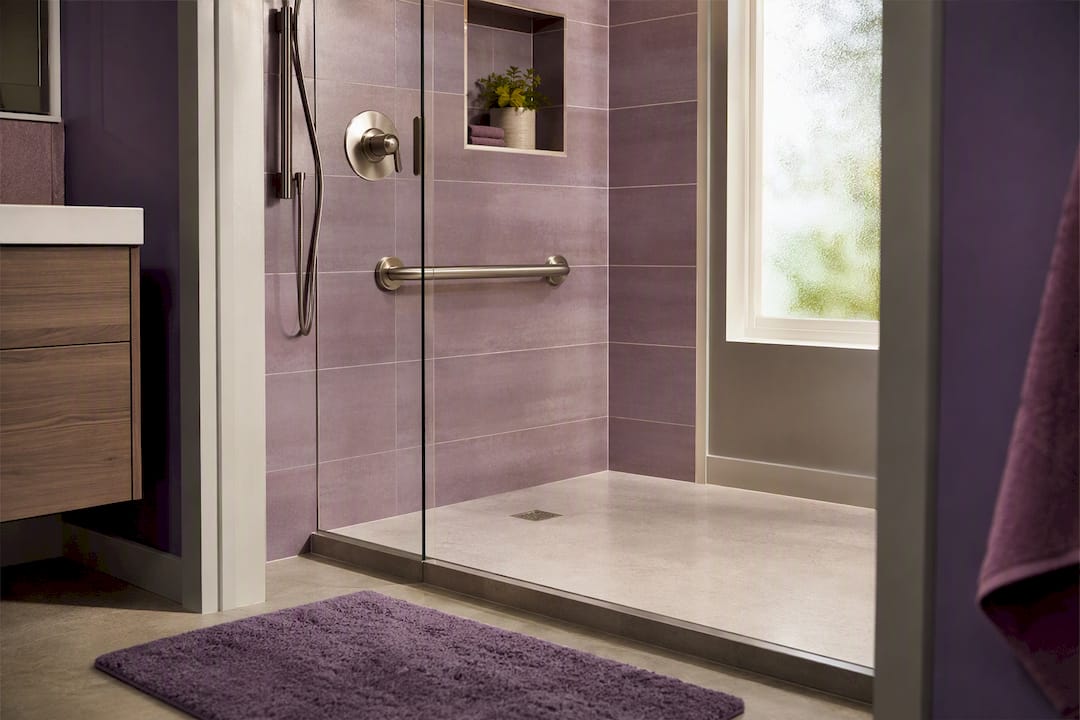
The single most effective step is removing risky transitions, like stepping over a tub wall, and replacing them with fixed, anchored support at the exact spots where transfers happen. Do these three things today: put down a non-slip mat, add a shower chair or transfer bench, and mount at least one grab bar near the toilet or shower entry. If there’s been a near-fall or trouble with transfers recently, call an occupational therapist before doing anything else.
TL;DR:
- Anchored grab bars, screw-in into wall studs, are essential over suction ones because they withstand real force during transfers.
- Curbless showers completely eliminate the risky step-over motion, making them the safest long-term solution despite higher upfront costs.
- Toilets should be raised to a higher seat with support arms, and support should be anchored on studs to prevent shifting and ensure safety.
- Bathroom lighting must prioritize nighttime visibility with low, motion-activated nightlights, while contrast between mats and tiles reduces fall risk.
- Medicare generally does not cover structural bathroom modifications, so funding often relies on private or alternative assistance programs.
Table of Contents
- Core Bathroom Upgrades That Actually Prevent Falls
- Shower vs Tub: Which Setup Actually Reduces Fall Risk?
- Toilet Safety and Transfers: Where Most Bathroom Falls Happen
- Lighting, Flooring, and Trip Hazards You’re Probably Missing
- What Does Medicare Cover for Bathroom Safety Modifications?
- When to Call an Occupational Therapist or a Contractor
- Your First-Week Bathroom Safety Checklist
- Do Fall Detection Devices Belong in the Bathroom?
- How Often Should Bathroom Safety Equipment Be Inspected?
- Teaching Seniors and Caregivers Safe Bathroom Habits
- Balancing Privacy With Bathroom Safety Monitoring
- Why Bathroom Changes Feel Harder Than They Should
- The Real Priority Nobody Talks About
- Sources
Core Bathroom Upgrades That Actually Prevent Falls
Not every safety product delivers the same protection. A suction grab bar can pop loose the moment someone leans on it hard, and that failure happens at the worst possible time, mid-transfer, with full body weight already committed. Anchored bars, screwed into wall studs or backed with blocking, hold under real force. That distinction should drive every purchase decision.
Placement matters as much as the hardware itself. The CDC’s STEADI program recommends bars both inside and just outside the tub or shower, plus one beside the toilet. Think in terms of zones: entry (where someone steps over or through), sitting (lowering onto a seat or toilet), and standing (pushing back up). Each zone needs its own support, positioned along the actual path of the person’s hands, not just wherever looks convenient.
Flooring and seating changes that matter:
- Textured, low-gloss tile or vinyl outperforms polished stone, which turns dangerously slick the moment it’s wet.
- Adhesive non-slip strips work in a pinch but wear down within a year and need regular replacement.
- A fold-down shower seat or portable shower chair should match standard chair height so the sit-to-stand motion feels familiar.
- A transfer bench, which straddles the tub wall, lets someone sit outside the tub and slide in, avoiding the step-over entirely.
- A handheld shower head on a slide bar solves reach problems for anyone using a seated position.
Anti-scald protection deserves its own line item. A thermostatic mixing valve caps water temperature automatically, which matters because slowed reflexes mean a senior may not react fast enough to a sudden temperature spike.
Pro Tip: Before buying any grab bar, press hard against the wall where you plan to install it. If it flexes or sounds hollow, there’s no stud there, and you’ll need blocking installed by a contractor rather than a quick DIY job.
Shower vs Tub: Which Setup Actually Reduces Fall Risk?
The step-over motion, lifting one leg over a tub wall while balancing on the other, is the single riskiest movement in most bathrooms. A low-threshold or curbless shower removes that motion completely, which is why it ranks as the safest long-term option for most older adults.
Walk-in tubs solve part of the problem but create another. The door seals at floor level, so once inside, the person must wait for the tub to fill or drain before entering or exiting. That’s a long stretch of time sitting in a wet, enclosed space, and it can turn into a real problem if a caregiver needs to intervene quickly.
Here’s how the main options stack up:
- Curbless shower conversion: best long-term fix; highest upfront cost; eliminates the step-over entirely.
- Walk-in tub: good for soaking comfort; slow fill and drain times complicate quick caregiver access.
- Shower chair or transfer bench in an existing tub/shower: the practical middle ground for most households, since it works without construction.
Occupational therapists generally favor seated bathing when balance or fatigue is a factor, because it reduces the standing time and the number of weight shifts required. Cognitive impairment changes the calculus further. Someone with dementia may forget how a walk-in tub door locks or panic in an enclosed space, so a simpler, familiar seated setup in an open shower is often the safer call. For guidance on adapting bathrooms specifically around memory issues, dementia-focused amenity planning covers layout choices worth considering.
Toilet Safety and Transfers: Where Most Bathroom Falls Happen
Toileting accounts for a disproportionate share of bathroom falls, mostly because it happens multiple times a day, often at night, often in a hurry. MedlinePlus recommends raising toilet height and installing grab bars as first-line fixes.
- Choose the right support type. A raised toilet seat with armrests works for most people; a freestanding frame around the toilet helps when someone needs support on both sides rather than just one.
- Anchor a wall-mounted bar whenever a stud is available. Frame supports that rest on the floor can shift under weight if not properly weighted or braced.
- Practice the transfer slowly. Pivot toward the stronger leg, hold the bar (never the towel rack), and lower with control rather than dropping onto the seat.
- Clear the path between bed and toilet, and add a motion-sensor nightlight so nighttime trips don’t happen in the dark.
- Get formal training if a family caregiver feels unsure about assisting with transfers. A few sessions with a home health aide or physical therapist prevents injuries to both the senior and the caregiver’s back.
Privacy still matters here. A caregiver assisting with toileting should knock, explain each step out loud, and step back once the person is safely seated, checking in rather than hovering.
Lighting, Flooring, and Trip Hazards You’re Probably Missing
Bathrooms are small, which makes lighting gaps easy to overlook. A single overhead fixture often leaves shadows exactly where someone needs to see clearly, like the edge of the tub or the transition from tile to bath mat. Motion-activated nightlights placed low, near the floor, solve the nighttime version of this problem without anyone needing to fumble for a switch.
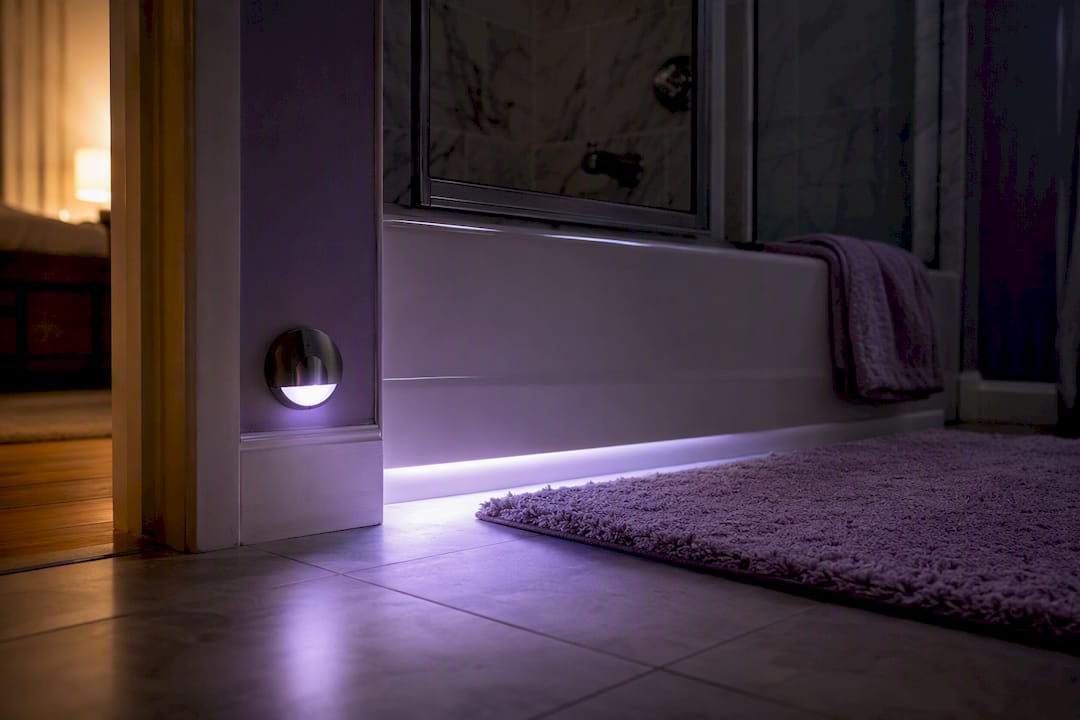
Contrast helps too. A dark bath mat against light tile reads clearly to aging eyes in a way that two similar shades never will, since depth perception and contrast sensitivity both decline with age.
Quick wins that take under an hour:
- Remove throw rugs entirely, or secure them with non-slip backing tape if they must stay.
- Keep a clear, straight walking line from the door to the toilet and shower, no laundry baskets, no scale, nothing in the path.
- Store frequently used items, towels, soap, medication, at waist to shoulder height so nobody bends or reaches on wet tile.
- Never grab a towel bar for support. It’s designed to hold a towel, not a person’s full body weight.
- Place bath mats just outside the tub, not draped over the edge where a foot can catch.
Small changes like these often prevent more falls than any single piece of equipment. For a broader look at extending these fixes past the bathroom, a room-by-room fall prevention plan covers hallways, bedrooms, and stairs using the same logic.
What Does Medicare Cover for Bathroom Safety Modifications?
Original Medicare offers a flat answer here, and it’s not the one families want: it does not cover bathroom remodeling or structural modifications, period. AARP’s coverage guidance confirms this applies to Parts A and B across the board.
Some Medicare Advantage plans offer partial help through flex-card allowances or limited durable medical equipment benefits, but coverage varies enormously by plan. The only way to know is to check that specific plan’s Evidence of Coverage document.
What things typically cost, and where funding might help:
- A professionally installed grab bar often runs a few hundred dollars including labor, though tile or fiberglass surfaces can push that higher.
- Full shower conversions or walk-in tub installations commonly run into the thousands, with wide variation depending on scope and materials.
- Medicaid home and community-based waivers, VA Aid and Attendance benefits, and local Area Agency on Aging grants sometimes cover modifications Medicare won’t.
- HSA or FSA funds can often apply to items like grab bars or shower chairs if a doctor documents medical necessity.
Only a small share of Medicare Advantage plans currently include structural safety allowances, so don’t assume coverage exists without confirming it directly with the plan. Ask an occupational therapist for a written list of recommended equipment first. That documentation strengthens any funding request and gives contractors clear specifications to work from.
When to Call an Occupational Therapist or a Contractor
Certain warning signs mean it’s time to bring in a professional rather than troubleshoot alone. A near-fall, new dizziness, needing physical help to get on or off the toilet, or noticeable memory decline are all reasons to request a formal safety evaluation.
What each professional actually does:
- An occupational therapist assesses mobility, balance, and daily bathing routines, then recommends specific adaptations tied to that person’s actual movements, not generic advice.
- A licensed contractor handles anchored installs into tile, fiberglass, or masonry, situations where a DIY grab bar job risks a bar that looks secure but isn’t.
- An in-home caregiver provides ongoing, hands-on support: supervising bathing, assisting with transfers, and noticing subtle changes in balance before they become falls.
Helping-hands-home-care aides fill that last role daily across the metro Detroit area, supporting safe bathing routines and catching small issues, like a wet floor left unattended, before they turn into injuries.
Pro Tip: Ask the OT for measurable goals, not just recommendations. “Can transfer to toilet without hands-on assistance” is trackable. “Improve safety” is not.
Your First-Week Bathroom Safety Checklist
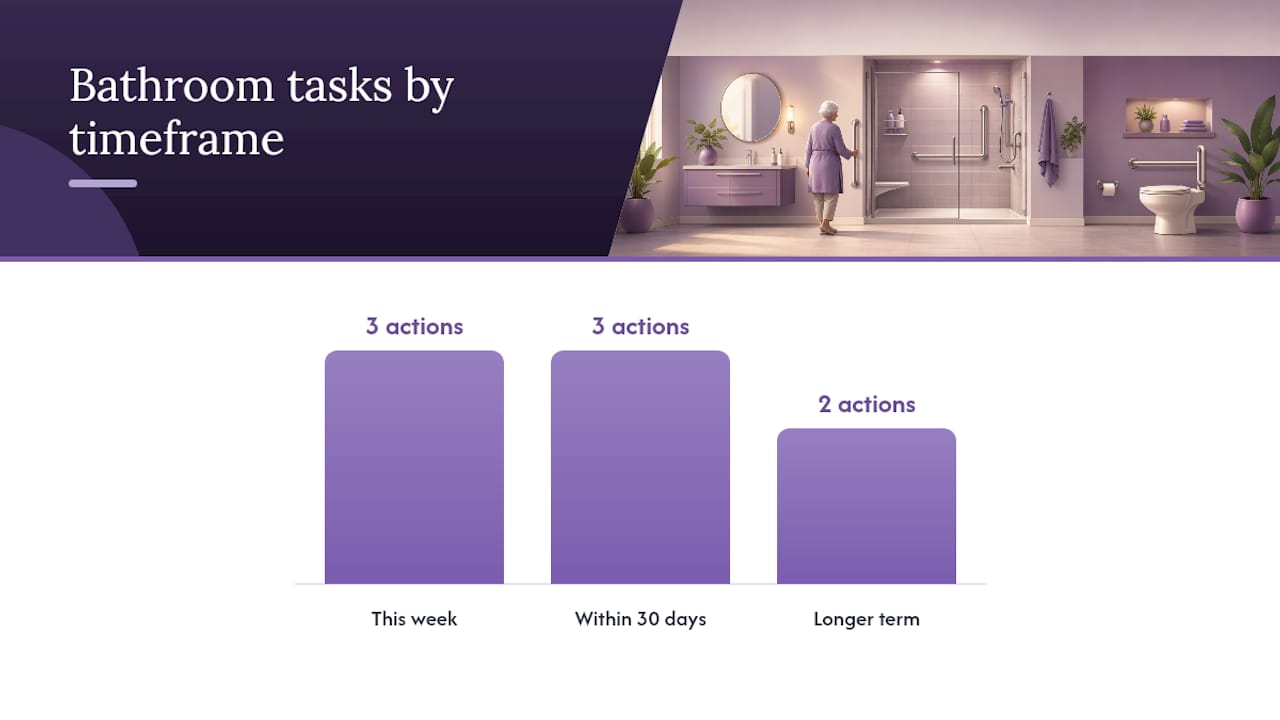
Start small and build from there. This week: install one anchored grab bar, add a non-slip mat, and clear every loose rug from the floor. Within 30 days: get a shower chair or transfer bench, add a motion nightlight, and schedule an OT evaluation if there’s been any recent stumble. Longer term: price out a curbless shower conversion or walk-in tub if mobility continues to decline.
Helping-hands-home-care aides can support this process directly, supervising bathing sessions, keeping the bathroom clean and clutter-free, and flagging safety gaps a family member might miss. Details like in-home cleaning that reduces clutter-related fall risk matter more than people expect.
Before a home visit, have ready:
- A current medication list, since certain drugs affect balance and dizziness.
- Notes on any falls or near-falls in the past six months, including where and when.
- Observations about which transfers (toilet, shower, tub) feel hardest right now.
Do Fall Detection Devices Belong in the Bathroom?
Yes, and they solve a problem grab bars and non-slip mats can’t: what happens after a fall occurs. Bathrooms present a unique alert challenge because wet skin can interfere with some wearable sensors, and the small, enclosed space means a fall can happen out of earshot from the rest of the house.
Wearable pendants with automatic fall detection use accelerometers to sense a sudden downward motion combined with impact, then trigger an alert even if the wearer can’t press a button. That distinction matters specifically in bathrooms, where a slip often causes a head injury or loss of consciousness that prevents someone from calling for help manually.
Wall-mounted emergency pull cords offer a low-tech backup, positioned low enough to reach from the floor, since someone who has fallen usually can’t stand to reach a cord at chest height. Voice-activated smart speakers can also summon help hands-free, provided the senior has been walked through the exact phrase that triggers an emergency call.
The gap most families miss is water resistance. A device rated for showering, not just splash resistance, holds up under sustained water exposure. Check the specific waterproof rating before assuming a pendant will survive daily shower use. Pair any device with a response plan family members actually understand, because an alert that nobody answers quickly provides little real protection.
How Often Should Bathroom Safety Equipment Be Inspected?
Grab bars and shower seats aren’t installed once and forgotten. Hardware loosens, adhesive fails, and plastic components degrade with repeated water exposure, and none of that happens on a convenient schedule.
Check grab bars every three months by applying firm downward and outward pressure, the same forces a real transfer would put on them. Any wobble means the mounting screws need tightening or the anchor has failed and requires reinstallation.
Shower chairs and transfer benches need a different kind of attention. Inspect rubber feet for cracking or hardening, since brittle feet lose grip on wet tile exactly when grip matters most. Non-slip mats and adhesive strips wear smooth faster than most people expect, often within 12 to 18 months of daily use, and a worn strip can actually create a false sense of security while offering almost no traction.
Nightlights and motion sensors deserve a monthly glance too, since dead batteries defeat the entire purpose of the fixture. A simple habit works well here: check every safety device on the first of each month, right alongside changing smoke detector batteries. Bundling the tasks makes it far more likely they’ll actually get done.
Teaching Seniors and Caregivers Safe Bathroom Habits
Equipment only works if people actually use it correctly, and that takes deliberate practice, not assumption. A senior who’s used the same tub for 40 years may resist a new grab bar simply out of habit, reaching for the towel rack instead because that’s what muscle memory tells them to do.
Walk through the new setup together, slowly, more than once. Practice the exact transfer motion, hand placement on the bar, foot position, weight shift, until it becomes automatic rather than something to think through mid-transfer. This matters even more for anyone with early cognitive decline, since repetition builds habit faster than verbal instruction alone.
Family caregivers benefit from the same hands-on training. Learning proper body mechanics for assisting a transfer protects the caregiver’s back as much as it protects the senior from a fall. A short guide on preparing for and assisting with bathing safely walks through the specific steps worth practicing before attempting it solo.
Set a recurring reminder to revisit these habits every few months, especially after any change in mobility, medication, or a hospital stay. Skills fade without use, and a routine that felt automatic six months ago may need a refresher after a period of illness or inactivity.
Balancing Privacy With Bathroom Safety Monitoring
Bathroom monitoring raises a tension that other rooms in the house don’t: the same space where falls happen most is also the space where privacy matters most. A senior who feels watched in the bathroom may resist safety measures altogether, which defeats the purpose entirely.
Cameras almost never belong in the bathroom, full stop. Door sensors, motion detectors near the entry, and wearable fall-detection pendants achieve the same safety goal without capturing images of a private moment. A door sensor that flags unusually long bathroom stays, say, over 20 minutes, lets a caregiver check in without needing constant visual monitoring.
Discuss monitoring choices directly with the senior rather than installing devices unilaterally. Someone who helped choose the system tends to trust it, while someone who discovers it after installation may feel surveilled rather than protected. Frame the conversation around specific incidents. A recent near-fall makes the case for a pendant alarm far more effectively than a general appeal to safety statistics ever could.
Caregivers should also agree on response protocols in advance. Knocking before entering, announcing themselves, and stepping back once someone is safely seated all preserve dignity while still providing real protection.
Why Bathroom Changes Feel Harder Than They Should
Resistance to bathroom modifications rarely comes from stubbornness. It comes from what the changes represent. A grab bar in the shower is a visible, daily reminder of declining independence, and that’s a hard thing to face first thing every morning.
Reframing helps more than most families expect. A grab bar isn’t a symbol of decline; it’s what allows someone to keep bathing independently rather than needing hands-on help from another person. Positioning equipment as a tool for staying independent, rather than a concession to frailty, changes how it gets received.
Involve the senior in every decision, from choosing the grab bar’s finish to picking where the shower chair goes. Autonomy over small choices preserves a sense of control even as bigger physical changes happen around them. Rushing the process, installing everything at once without conversation, tends to backfire, producing resentment or quiet non-use of the very equipment meant to help.
Give it time. Adjusting to a new bathroom setup, physically and emotionally, often takes several weeks. A slow, collaborative approach, one change at a time with real explanation, tends to stick far longer than a single overwhelming renovation ever does.
The Real Priority Nobody Talks About
Most bathroom safety advice focuses on products: which grab bar, which mat, which shower chair. That’s backwards. The research is clear that the step-over transition itself, not any single missing product, causes the most dangerous falls, which means the priority isn’t shopping, it’s eliminating that one movement wherever it exists.
Conventional advice also underrates the psychological side. Families install equipment, then wonder why grandma still isn’t using it. Usually it’s because nobody asked her what she wanted, or explained why the change actually helps her stay independent rather than signaling decline.
If there’s one thing to prioritize first, it’s an honest conversation about actual transfer difficulty, followed by a professional evaluation if anything feels uncertain. Equipment without that conversation just becomes furniture nobody trusts. Helping-hands-home-care aides see this pattern constantly: the families who succeed are the ones who involve the senior in every decision, not the ones who show up with a toolbox and good intentions.
— Michael
Helping-hands-home-care provides in-home aides across the metro Detroit area who support safe bathing, transfers, and daily monitoring so seniors can stay independent without unnecessary risk. If a recent near-fall or growing difficulty with transfers has your family looking for extra support, Helping-hands-home-care’s home health aide services can help set up a safer routine and provide hands-on assistance during bathing and toileting.
This article is general information, not a substitute for advice from a qualified doctor. Consult a qualified healthcare professional about your own circumstances before acting on anything here.
Sources
- Check For Safety | A Home Fall Prevention Checklist For Older Adults — CDC
- Bathroom safety for adults — MedlinePlus Medical Encyclopedia
- Does Medicare cover home safety equipment? — AARP