
Fall Prevention at Home: A Room-by-Room Action Plan
Fall Prevention at Home: A Room-by-Room Action Plan
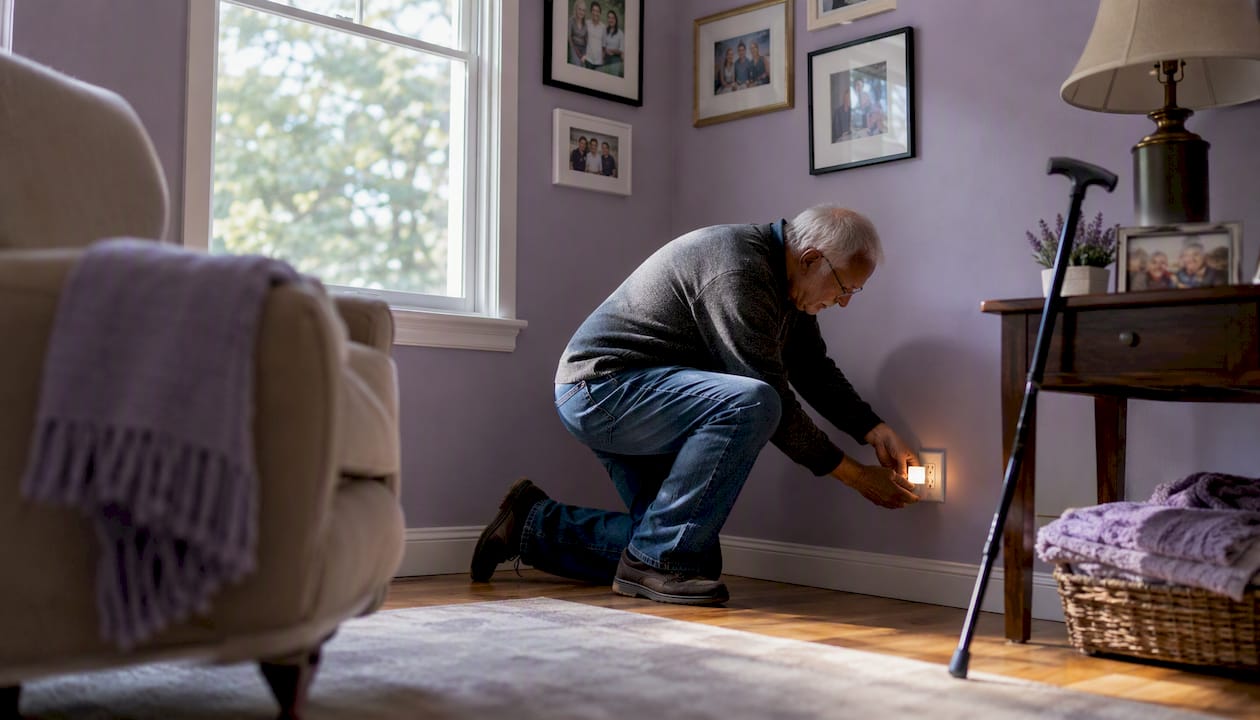
The four highest-impact steps to prevent most falls at home are a clinical medication and vision review, a strength and balance exercise program, removing trip hazards and improving lighting, and targeted home modifications like grab bars and secure railings. Do two things right now: pull up one throw rug from your most-traveled path, and put a flashlight or plug-in night light within arm’s reach of the bed. CDC, the National Institute on Aging, and NCOA all point to the same four pillars, and the evidence behind them is consistent.
Key Takeaways
Preventing falls at home requires combining clinical risk review, targeted home modifications, regular exercise, and a clear emergency plan, not any single fix alone.
| Point | Details |
|---|---|
| Clinical review first | Medication and vision checks address root causes that no home modification can fix. |
| Fix the bedroom-to-bathroom path today | Nighttime trips on that route carry the highest immediate risk; remove rugs and add motion lighting first. |
| OT assessment is the gold standard | An occupational therapist evaluates your specific home and abilities, going beyond any generic checklist. |
| Exercise reduces falls | Balance and strength training, including Tai Chi and PT-led programs, are core prevention pillars per CDC guidance. |
| Funding exists | HUD OAHMP, VA benefits, Medicaid waivers, and your local Area Agency on Aging can offset modification costs. |
| Helping-hands-home-care | In-home aides, cleaning, and meal prep in metro Detroit provide daily safety support between clinical visits. |
Table of Contents
- Quick-action checklist for fall prevention at home
- Why falls happen at home: the main risk factors to know
- What to bring to the doctor or pharmacist before your next visit
- Room-by-room fixes that reduce fall risk the most
- Home modifications: costs, timelines, and funding sources
- Assistive devices that help and what to avoid
- Which exercises reduce falls and how to start safely
- If a fall happens: what to do step by step
- When to hire an OT, PT, or in-home caregiver
- The part of fall prevention most people skip
- Helping-hands-home-care: in-home support for safer daily living
- Sources
Quick-action checklist for fall prevention at home
Use this as a printed reference. Work through it in order of urgency.
Do today
- Remove throw rugs from the bedroom-to-bathroom path and any main hallway
- Place a flashlight or plug-in motion-activated night light beside the bed
- Move frequently used items (medications, phone, glasses) to counter height so you never reach overhead or crouch
- Check that every staircase has at least one secure handrail
- Put on shoes or non-slip slippers; stop walking in socks
This week
- Schedule a medication review with your doctor or pharmacist (include all OTC drugs and supplements)
- Book an annual eye exam if one is overdue
- Buy non-slip adhesive strips for the tub or shower floor
- Test every light switch; replace any burned-out bulbs with brighter LEDs
- Start a near-miss log: note where, when, and what you were doing each time you nearly fell, then bring it to your next appointment
This month
- Install grab bars in the shower and beside the toilet (hire a licensed handyman or contractor)
- Request an occupational therapist home assessment through your doctor or insurer
- Begin a balance or strength class (Tai Chi, a local senior center program, or a PT-led session)
- Review outdoor steps and walkways for cracks, loose boards, or poor lighting
Pro Tip: Documenting near-misses is one of the most underused tools in fall prevention. A short note on your phone or a sticky pad, recording where and when it happened, gives your clinician the pattern they need to identify a root cause before an actual fall occurs.
Why falls happen at home: the main risk factors to know
A significant portion of adults age 65 and older fall each year, and most of those falls happen in familiar places, not on unfamiliar terrain. That familiarity is part of the problem: people move faster and less carefully through spaces they know well.
Medical contributors are often the hidden driver. Medications that cause dizziness, sedation, or low blood pressure on standing (orthostatic hypotension) are among the most common culprits. Vision changes reduce depth perception and contrast sensitivity, making a shadow on the floor look flat. Muscle weakness in the legs, particularly in the quadriceps and ankles, reduces the ability to recover from a stumble. Chronic conditions like Parkinson’s disease, peripheral neuropathy, and arthritis each affect gait and balance in specific ways.
Environmental causes layer on top of medical ones. Poor lighting on stairs, throw rugs that slide, electrical cords crossing walkways, and slippery bathroom floors are all documented hazards in the CDC STEADI checklist. Behavioral patterns matter too: carrying laundry baskets that block sightlines, rushing to the bathroom at night, or reaching for items on high shelves all spike risk in the moment.
When to suspect a medical cause and see a clinician: more than one near-miss in a month, dizziness when standing up, more than one fall in a year, or any fall with no clear environmental explanation.
What to bring to the doctor or pharmacist before your next visit
Clinical intervention addresses root causes that no grab bar can fix. NIA and CDC guidance both recommend these checks as part of a fall-risk assessment:
- Medication review: bring a complete list of every prescription, OTC drug, and supplement. Ask specifically about drugs that cause dizziness, sedation, or blood pressure drops.
- Orthostatic blood pressure test: a simple in-office check that measures BP lying down, then standing. A significant drop on standing is a treatable cause of falls.
- Annual eye exam: ask the optometrist to check for changes in depth perception and contrast sensitivity, not just acuity.
- Osteoporosis screening: relevant for postmenopausal women and men over 70; a fracture from a fall is far more serious when bone density is low.
- Fall-risk screening: ask your primary care provider to run a formal fall-risk screen (the Timed Up and Go test takes under two minutes in the office).
Bring your near-miss log, a list of recent falls with dates, and, if possible, a short video of any movement that feels unsteady. Ask for referrals to physical therapy for strength and balance work, and to an occupational therapist for a home assessment. Mayo Clinic lists these same clinical steps as the foundation of any fall-prevention plan.
Room-by-room fixes that reduce fall risk the most
Walk through each area below and check off what applies. The CDC STEADI program uses this same room-by-room structure because it works: people fix what they can see.
Stairs and hallways
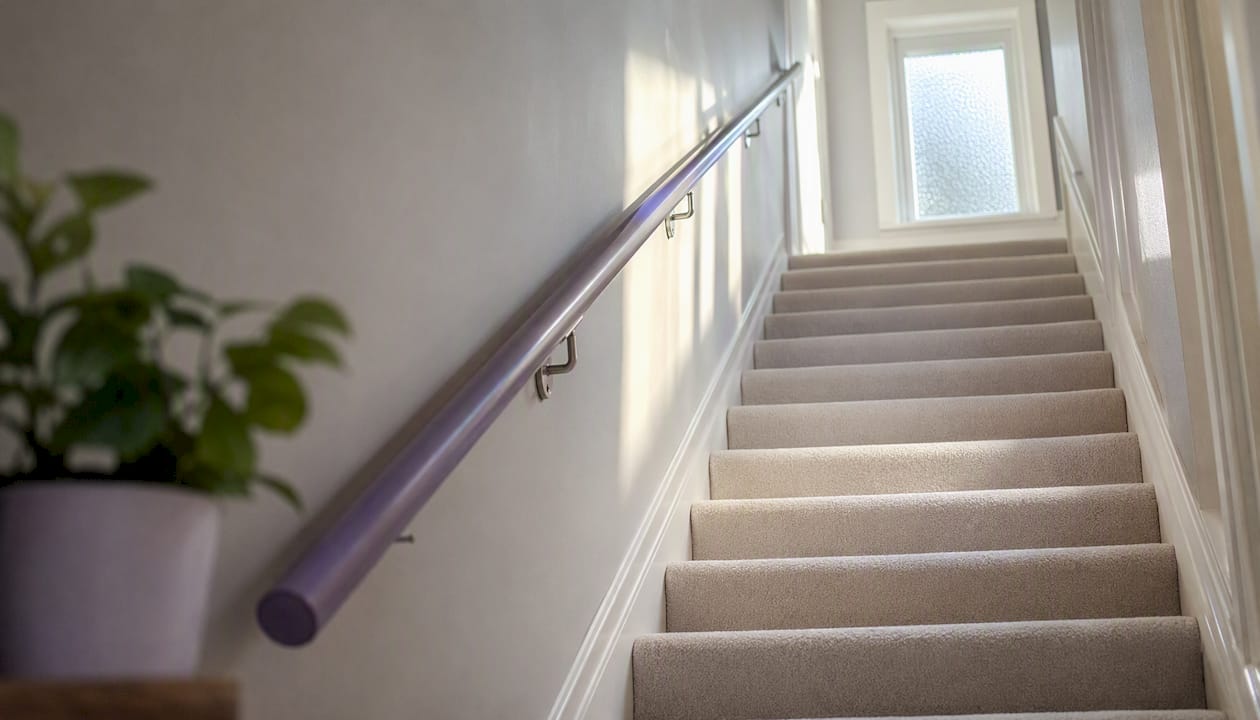
- Install handrails on both sides of every staircase; test that they are firmly anchored
- Add bright lighting at the top and bottom of stairs, with switches reachable from both ends
- Remove any objects stored on steps, even temporarily
Bathroom
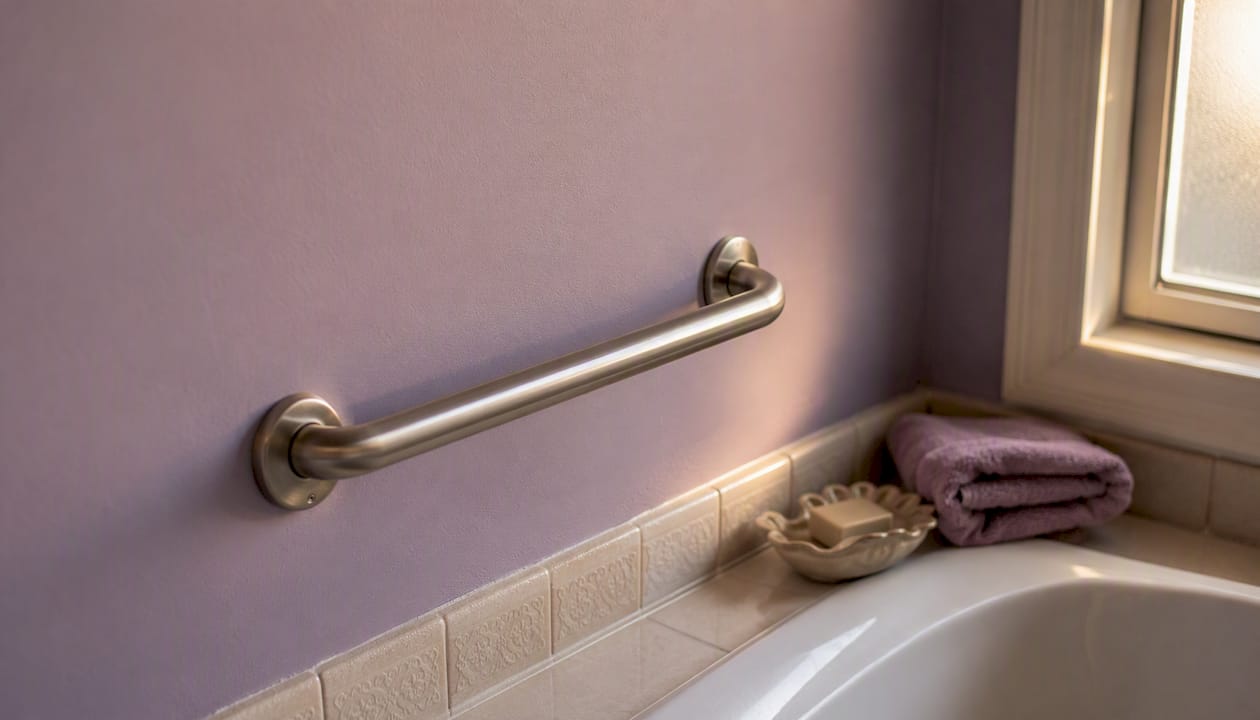
- Install grab bars in the shower, beside the tub, and next to the toilet (wall-anchored into studs, not suction-cup versions)
- Place a non-slip mat inside the tub or shower and a bath rug with a rubber backing outside it
- Consider a raised toilet seat and a shower chair if standing for a full shower is tiring
Bedroom
- Keep a phone and light source within reach of the bed at all times
- Clear the path from bed to bathroom of all objects, cords, and rugs
- Set the bed height so feet rest flat on the floor when sitting on the edge
Kitchen
- Store everyday items between hip and shoulder height; use a step stool with a handle for anything higher
- Clean spills immediately; use a non-slip mat in front of the sink
Living areas
- Secure or remove all throw rugs; tape down or route electrical cords along walls
- Arrange furniture to leave clear, wide walking paths
Outdoor entryways
- Repair cracked walkways and loose steps; add outdoor lighting with motion sensors
- Install a handrail on any outdoor steps, even a single step
Pro Tip: Start with the bedroom-to-bathroom path. NIA research identifies nighttime trips on that route as one of the highest-risk moments in the home. Fix that path first, and you get the biggest immediate return.
Home modifications: costs, timelines, and funding sources
Modifications range from a $5 roll of non-slip tape to a $3,000 ramp installation. Knowing the tiers helps you prioritize.
The HUD Older Adult Home Modification Grant Program (OAHMP) funds OT-led, targeted modifications for eligible older adults, with per-unit cost caps and an emphasis on low-cost, high-impact changes. A GAO review of federal fall-prevention programs found positive health outcomes for participants in evidence-based interventions and flagged coordination gaps that leave some at-risk adults without access.
Funding sources to explore:
- Area Agency on Aging (AAA): — your local AAA is the fastest starting point; call 1-800-677-1116 or visit eldercare.acl.gov to find yours
- HUD OAHMP grants: — for income-eligible homeowners; administered through local grantees
- Medicare Advantage: some plans cover limited home safety modifications; reviewing your Medicare coverage annually can reveal benefits you are not using
For broader financial assistance options for home care, including community programs in the metro Detroit area, Helping-hands-home-care’s resource guide covers several starting points.
Assistive devices that help and what to avoid
Devices worth using:
- Canes and walkers (fitted by a PT or OT, not borrowed from a neighbor)
- Shower chairs and tub transfer benches
- Raised toilet seats with armrests
- Handheld showerheads
- Non-slip bath mats
- Motion-activated night lights
- Personal emergency response systems (PERS) such as a medical alert button worn on the wrist or around the neck
Footwear guidance: wear shoes with non-slip rubber soles and a low, broad heel inside the house. Floppy slippers and socks-only walking are two of the most common contributors to indoor falls. Shoes do not need to be clinical-looking; many athletic shoes meet all the criteria.
What to avoid: poorly fitted borrowed devices (a cane set to the wrong height throws off balance rather than improving it), suction-cup grab bars that pull free under load, and any device that feels so institutional the person stops using it after a week. Involve the older adult in choosing finishes and styles. A brushed nickel grab bar blends into a bathroom; a chrome hospital bar often gets removed.
Have a clinician or OT verify the fit of any mobility aid before it becomes a daily habit.
Which exercises reduce falls and how to start safely
Balance and strength training are the most evidence-backed behavioral interventions for reducing falls. CDC guidance specifically names weight-bearing physical activity, including Tai Chi, as a core prevention pillar.
Effective program types:
- Tai Chi: improves balance, coordination, and lower-body strength; widely available at senior centers and YMCAs
- Lower-body strength training: squats, calf raises, and step-ups build the leg strength needed to recover from a stumble
- Home-based balance programs: standing on one foot near a counter, heel-to-toe walking, and seated leg lifts are safe starting points
- PT-supervised programs: the most appropriate option after a recent fall, hospital discharge, or significant balance impairment
Before you start, check these four things:
- Clear a walking area of at least 6 feet in every direction
- Wear supportive shoes, not socks
- Keep a sturdy chair within arm’s reach for balance support
- Get clinician clearance if you have had a cardiac event in the past six months
Your local Area Agency on Aging can connect you with community exercise classes at low or no cost. Ask your primary care provider for a PT referral if you have had more than one fall or feel unsteady during daily tasks.
If a fall happens: what to do step by step
Immediately after a fall:
- Stay calm and stay still for a moment. Take a breath and assess whether anything hurts.
- If you are injured, in pain, or cannot move, call 911 or activate your PERS device. Do not try to get up.
- If you feel unhurt, roll slowly onto your side, push up to a hands-and-knees position, and crawl to a sturdy chair. Place your hands on the seat, bring one foot forward, and push yourself up. Sit for several minutes before standing fully.
- If you cannot get up on your own, call for help or use your PERS device. Stay warm with a blanket if available.
Who to call and when:
- 911: any injury, severe pain, head impact, or inability to move
- Your doctor: any fall, even without obvious injury, to rule out a fracture or concussion and review contributing causes
- Family or caregiver: to document the event and help with follow-up
Document the fall before the details fade:
- Where it happened and what time
- What you were doing (walking, reaching, turning)
- Any symptoms just before (dizziness, lightheadedness, leg weakness)
- What you were wearing on your feet
Bring this information to your next clinical appointment. Keep a pre-filled emergency contact list near the phone and a charged phone accessible from the floor in every main room.
When to hire an OT, PT, or in-home caregiver
Occupational therapist (OT): the right call when you need a personalized home assessment. NCOA identifies OT-led assessments as the gold standard because OTs evaluate how a specific person interacts with their specific environment, not just what a generic checklist flags. Request one after any fall, after a hospital discharge, or when the home environment feels increasingly difficult to navigate.
Physical therapist (PT): the right call for strength, balance, and gait training. A PT designs a program around your current ability and progresses it safely. Most insurance, including Medicare Part B, covers PT with a physician referral.
In-home caregiver: the right call when daily tasks like bathing, dressing, meal preparation, or medication management feel unsafe or exhausting. A caregiver provides consistent daily safety support that no device or modification can replicate. Signs it is time: recurrent falls or near-misses, inability to perform daily activities safely, recent hospital discharge, or a family caregiver who is stretched thin.
Questions to ask when hiring:
- Are you licensed and insured in Michigan (or your state)?
- How do you conduct a home safety assessment, and what does the report include?
- What is your experience with clients who have [specific condition: Parkinson’s, post-stroke, etc.]?
- How do you communicate with the primary care physician?
- What happens if the assigned caregiver is unavailable?
- Can you provide references from current or recent clients?
Pro Tip: Ask any home-care agency whether their aides receive fall-prevention training and whether they follow a written care plan. Agencies that use professional home care plan examples and update them regularly deliver more consistent safety support than those that rely on informal arrangements.
The part of fall prevention most people skip
The conventional wisdom on fall prevention focuses almost entirely on the home environment: grab bars, rugs, lighting. That advice is correct, but it is incomplete in a way that matters. The home fixes are visible and satisfying to check off. The clinical fixes, specifically medication review and strength training, are less visible and easier to defer.
In practice, a grab bar does not help someone whose blood pressure drops 30 points every time they stand up. A clear hallway does not help someone whose leg muscles can no longer arrest a stumble. The environmental changes buy time; the clinical changes address the underlying physics of why a person falls in the first place.
The other thing most guides underplay is the role of the older adult’s own preferences. Safety equipment that looks and feels institutional gets removed, covered up, or simply not used. Involving the person in choosing a brushed-bronze grab bar instead of a chrome one, or a stylish rollator instead of a standard aluminum walker, is not a cosmetic concern. It is a compliance concern, and compliance is what actually reduces falls over months and years.
Small, consistent changes, done with the person rather than to them, produce the results that matter.
Helping-hands-home-care: in-home support for safer daily living
For families in the metro Detroit area, Helping-hands-home-care offers a practical next step beyond the checklist. A trained home health aide provides daily safety support, mobility assistance, medication reminders, and meal preparation, the kind of consistent, hands-on presence that keeps older adults safe between clinical appointments. The house cleaning service directly reduces trip hazards by keeping floors, walkways, and living areas clear and organized.
Helping-hands-home-care also offers therapeutic massage, which can support mobility and comfort as part of a broader plan for aging in place. If you are unsure where to start, the services overview covers the full range of options. Call Helping-hands-home-care to discuss your situation and schedule an in-home consultation.
Sources
- Preventing Falls and Hip Fractures | Older Adult Fall Prevention | CDC
- Falls and Fractures in Older Adults: Causes and Prevention | National Institute on Aging
- Older Adult Home Modification Grant Program (OAHMP) | HUD
- GAO report on federal programs addressing fall prevention and accessibility | GAO
Contact your local Area Agency on Aging first if you need help identifying grant programs or community exercise classes in your area. They coordinate access to most of the federal and state programs listed above.
This article is general information, not a substitute for advice from a qualified doctor. Consult a qualified healthcare professional about your own circumstances before acting on anything here.
Recommended
- How to Prepare Home for Caregiver: 2026 Safety Guide | Helping Hands Home Care
- Professional Home Care Plan Examples for Elderly Care | Helping Hands Home Care
- Talking to Parents About Home Care: A Family Guide | Helping Hands Home Care
- Know When to Increase Home Care for Aging Parents | Helping Hands Home Care