
Aging in Place for Families: Evidence and a Room Plan
Aging in Place for Families: Evidence and a Room Plan
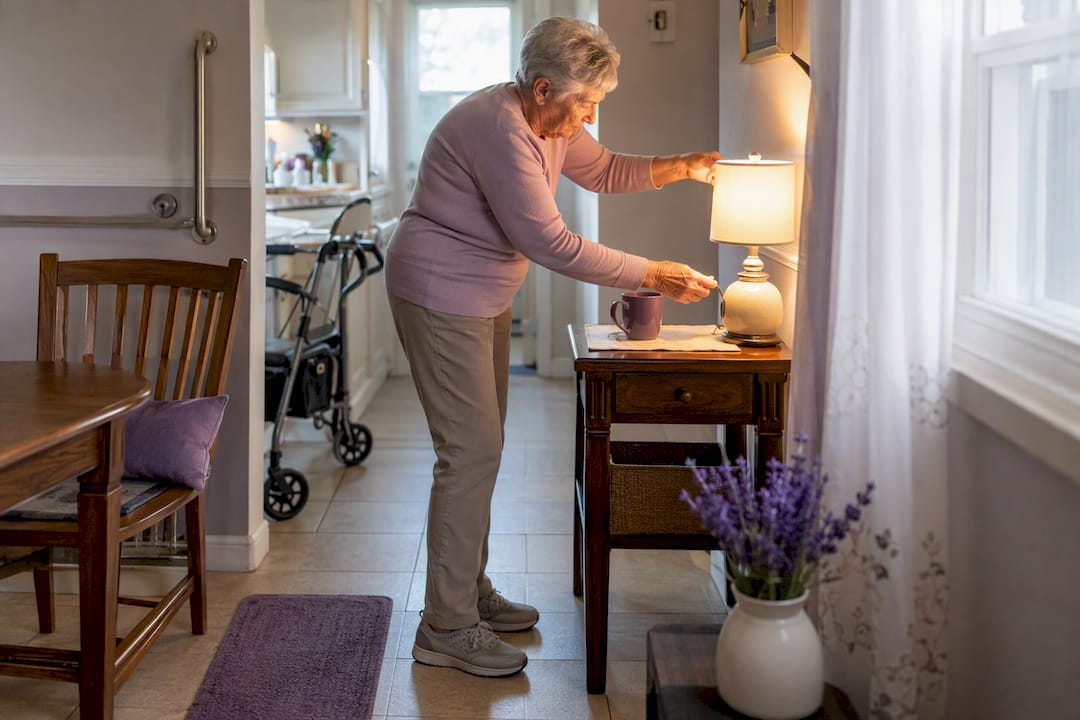
Aging in place commonly preserves independence, familiar surroundings, and social connection, and it can reduce certain costs and infection risks compared with facility-based care. The catch: those benefits only materialize when the right home safety measures, in-home support, and caregiver capacity are in place. Without them, staying home can quietly become the riskier choice.
TL;DR:
- Having adequate safety measures, routine support, and caregiver backup is essential for aging in place to be safer than moving to a facility.
- Regular safety audits, early support services, and community resources are crucial to prevent falls and caregiver burnout while maintaining independence.
- Costs vary widely based on needed hours of care, home modifications, and local programs, with around-the-clock care often approaching facility-level expenses.
- The most reliable benefits are linked to accessible health and caregiver support, rather than home renovations alone.
- Reassessing safety needs every six months ensures support keeps pace with changing health and living conditions.
Table of Contents
- What Are the Main Benefits of Aging in Place?
- Do Health and Emotional Benefits Hold Up in Research?
- What Does Aging in Place Cost Compared to a Facility?
- What Risks Come With Staying Home?
- How Do You Actually Make Aging in Place Work?
- Who Is a Good Candidate for Aging in Place?
- What Does the Research Actually Show?
- What Would I Tell My Own Family?
- How Helping-Hands-Home-Care Supports Families Choosing to Age at Home
- Sources
What Are the Main Benefits of Aging in Place?
Independence tops the list, and it’s not an abstract idea. It means choosing when to eat breakfast, which chair to sit in during a phone call, and whether to skip a shower on a tired day. Older adults consistently name this kind of control over daily choices as a primary reason they want to stay home rather than move into a facility, according to a systematic review on aging-in-place supports.
Familiarity does something research has trouble quantifying but families notice immediately: it lowers everyday stress. A person who has lived in the same house for thirty years doesn’t need to relearn where the light switches are, which stair creaks, or how the water heater behaves in winter. The University of Southern California’s Leonard Davis School points out that this kind of environmental fluency reduces cognitive load and contributes to a stronger sense of identity, particularly for people with mild memory changes.
The benefits break down into four practical categories:
- Emotional and identity benefits. Staying in a personal environment, surrounded by decades of belongings and routines, supports a stronger sense of self than an unfamiliar facility room typically allows.
- Autonomy and daily control. Decisions about meals, sleep schedules, visitors, and hobbies stay with the individual instead of shifting to an institutional schedule.
- Social continuity. Long-standing relationships with neighbors, a church community, or a regular coffee shop stay intact, which matters more than people expect once isolation risk enters the picture.
- Reduced exposure to facility-acquired infections. Congregate living settings carry higher risk of transmissible illness outbreaks than a private home, an advantage that became impossible to ignore during the pandemic years.
That last point deserves a real-world example. A widow in her late seventies who continues to attend the same weekly bridge game and pick up prescriptions from a pharmacist who knows her by name isn’t just maintaining a routine. She’s maintaining a support network that would take months to rebuild anywhere else, and continuity of care with the same physician and pharmacy also reduces medication errors that tend to spike during transitions between care settings.
None of this happens automatically. The PMC review on long-term care supports is direct about this: the benefits above are real, but they depend heavily on whether adequate services and safety measures are actually in place. A house full of trip hazards and no one checking in doesn’t deliver independence. It delivers risk.
Do Health and Emotional Benefits Hold Up in Research?
Yes, with real caveats worth knowing before you bank on them. Social connection has a documented relationship with lower dementia risk and better cardiovascular outcomes, a link serious enough that the U.S. Surgeon General has treated loneliness among older adults as a public health priority, a concern echoed in the critical review of long-term care services.
Continuity of care at home can also reduce hospital readmissions for certain patient groups, largely because the same home health aide or family caregiver notices small changes (a swollen ankle, a new cough, confusion at dinner) before they become emergency room visits.
But the evidence isn’t uniformly strong. Reviewers are careful to note that outcomes like mortality and eventual nursing-home entry show mixed results across studies. Some seniors who age in place with strong support networks do better on these measures. Others, particularly those with complex medical needs and thin support, don’t show a clear advantage. The honest takeaway is that aging in place shifts risk rather than eliminating it. It trades certain institutional risks for home-based ones, and which trade wins depends on the individual’s health complexity and support system.
What Does Aging in Place Cost Compared to a Facility?
Home-based care usually costs less than assisted living or a nursing home, but the comparison depends heavily on how many hours of paid help a person needs. A few hours of a home health aide a week costs far less than a private nursing home room. Around-the-clock home care, on the other hand, can approach or exceed facility pricing quickly.
Costs come from a few main drivers: hours of paid care needed, home modifications, and ongoing services like cleaning or meal delivery. Programs that can help offset these costs include Medicaid Home and Community-Based Services (HCBS) waivers, the Program of All-Inclusive Care for the Elderly (PACE), and local Area Agency on Aging grants, though eligibility varies significantly by state and income level.
Before committing to a plan, walk through this checklist:
- Estimate the realistic weekly hours of paid help needed, not the minimum you hope will suffice.
- Ask providers directly what’s included in an hourly rate versus billed separately.
- Check state Medicaid HCBS waiver eligibility and waitlist length, since some states have multi-year waits.
- Factor in one-time costs for home modifications separately from ongoing care costs.
What Risks Come With Staying Home?
Falls are the risk families worry about most, and for good reason: a fall without a fast emergency response can turn a minor injury into a hospitalization. Isolation is the quieter risk. A senior who stops driving and lives alone can go days without meaningful conversation, which research ties to worse mental and physical health outcomes over time.
Caregiver burnout deserves equal attention. Adult children juggling jobs, their own kids, and a parent’s care needs run out of bandwidth faster than most people admit until they’re already exhausted. Home maintenance adds another layer. Gutters, furnace repairs, and yard work don’t pause because someone’s mobility has declined.
Workforce shortages compound all of this. In many regions, demand for home health aides outpaces the available workforce, which means waitlists for services families assumed would be available immediately.
The mitigations are fairly consistent: scheduled check-in visits, wearable fall-detection devices, respite care so family caregivers get real breaks, and community programs that provide social contact on a regular schedule rather than sporadically. None of these fix everything alone, but layered together they close most of the gap.
How Do You Actually Make Aging in Place Work?
Good intentions don’t prevent falls. A plan does. Here’s a sequence that works better than waiting for a crisis to force decisions.
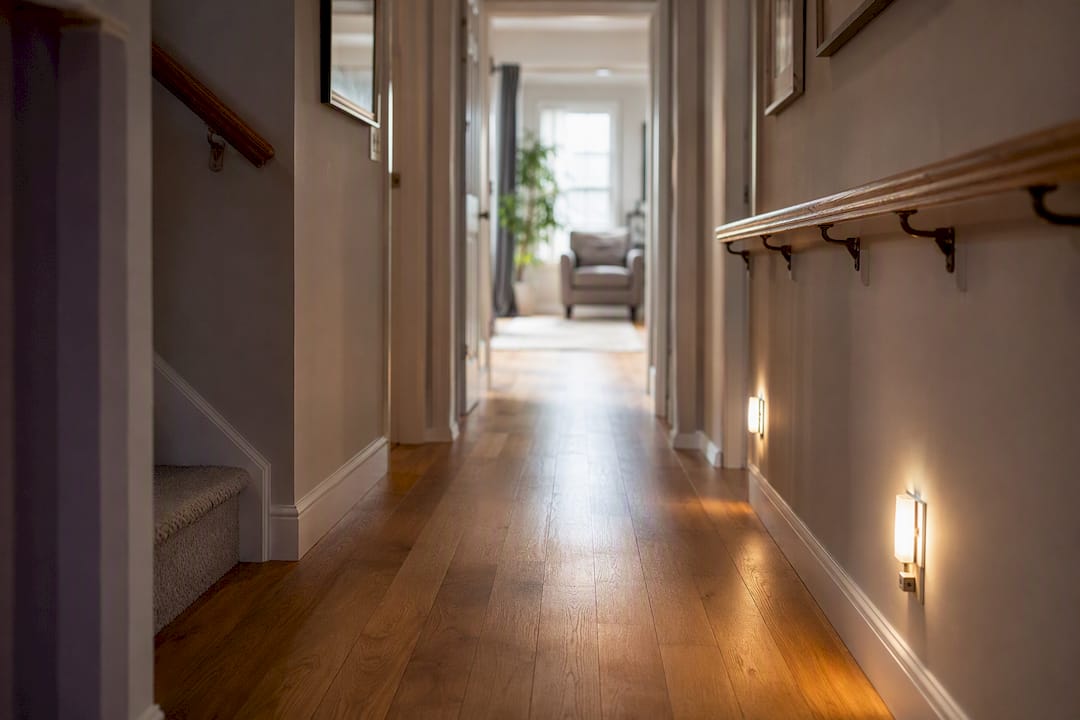
- Start with a room-by-room safety audit. Bathrooms cause many injuries, so it is important to prioritize grab bars near the toilet and shower, a non-slip mat, and a raised toilet seat if needed. Address stairs next with secure handrails on both sides and better lighting at the top and bottom. Replace loose rugs and trailing cords throughout the house, since those are the most common trip hazards according to guidance from the National Institute on Aging. A detailed room-by-room fall prevention plan can walk you through the specifics.
- Bring in paid support before it feels urgent. Housecleaning, meal preparation, and personal care assistance function as preventive medicine here, not luxuries. Outsourcing physically demanding chores conserves a senior’s energy for the activities that matter most and reduces the strain that leads to family caregiver burnout, according to Springer’s research on preventive in-home services. Waiting until after a fall or hospitalization to arrange this help means starting from crisis mode rather than prevention mode.
- Connect with community resources early. Adult day programs, village-model networks, volunteer visitor programs, and PACE or Hospital-Based Palliative Care (HBPC) services all fill gaps that family alone can’t cover. Your local Area Agency on Aging is usually the fastest way to find what’s actually available nearby, and the guidance from Aging Solo on maintaining independence offers useful direction on building this kind of network solo or with limited family support.
- Build the care network before you need it, not during an emergency. Identify a paid provider, a backup provider, and a geriatric care manager if the situation involves multiple chronic conditions or complex medication management. Clinicians consistently recommend this kind of proactive groundwork, per UCHealth’s guidance on aging in place safely.
- Schedule reassessments every six months. Needs shift gradually, then suddenly. A biannual check on mobility, medication management, and home safety catches changes before they become emergencies.
Pro Tip: Don’t wait for a fall or hospital stay to bring in help. Hiring a housecleaning or meal-prep service while your parent is still fully independent buys them energy for the things they actually want to do, and it builds trust with a care provider before a crisis forces a rushed decision.
A full family guide to home care services covers how to sequence these decisions in more detail.
Who Is a Good Candidate for Aging in Place?
Good candidates typically check most of these boxes: reliable mobility or manageable mobility aids, stable cognition or well-managed early-stage decline, a single-level or adaptable home layout, at least one engaged caregiver or paid support option, and reasonable transportation access for appointments and errands.
Red flags point the other direction. Repeated falls, medical needs too complex for part-time supervision, or an inability to manage basic daily activities even with services in place all signal that a facility might now be safer than the family wants to admit.
- Try adding services (a home health aide a few days a week, meal delivery) for a defined trial period before assuming a full move is necessary.
- Reassess honestly after 60 to 90 days: has the added support actually closed the safety gap?
- If concerns persist, loop in a geriatric care manager for an objective evaluation before making a final decision.
Structural limits matter too. A three-story Victorian with narrow doorways may cost more to retrofit than it would to simply relocate to a single-level home, a trade-off worth weighing honestly rather than assuming renovation is always the cheaper path.
What Does the Research Actually Show?
How we know: The strongest evidence comes from systematic reviews synthesizing findings across dozens of studies, not single small trials.
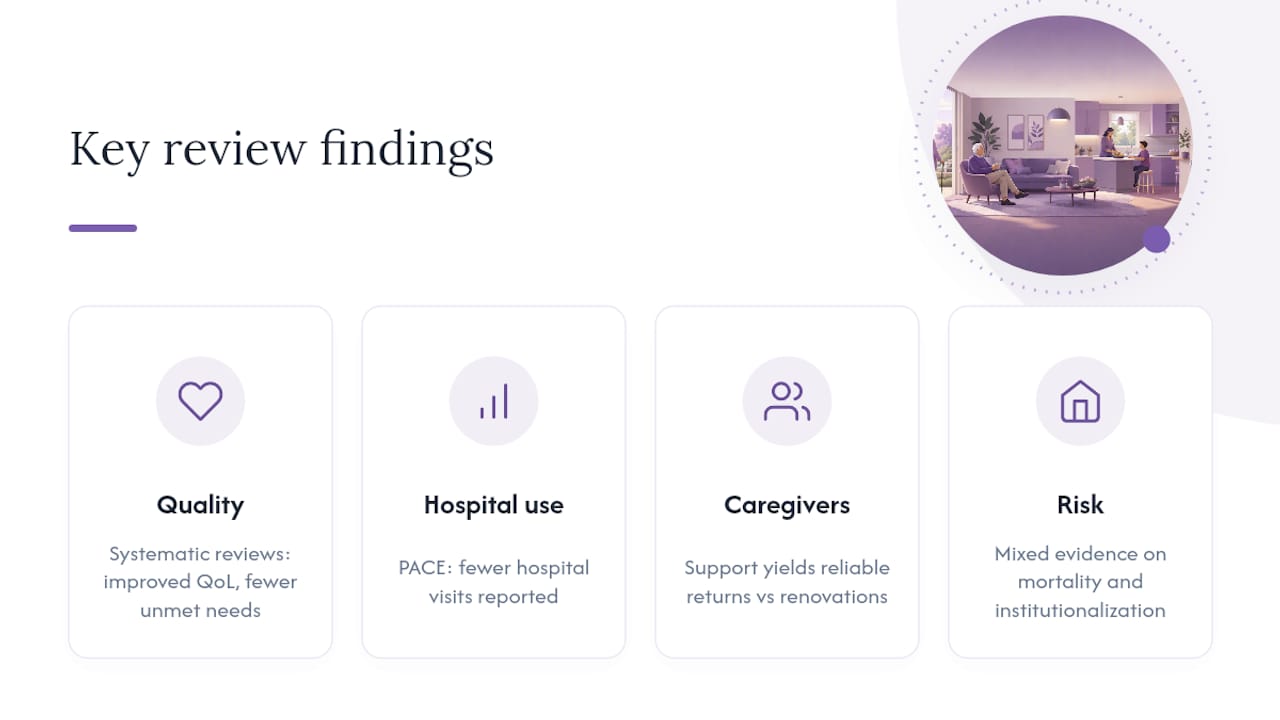
The best-supported conclusion across reviews is straightforward: accessible home health services and caregiver support measurably improve quality of life and reduce unmet care needs. Evidence on mortality and long-term institutionalization is far less consistent, varying by study design and population, according to the critical review published in PMC.
Specific programs back this up with real outcomes. CAPABLE, a home-based intervention pairing nurses, occupational therapists, and handyman services, has shown reduced falls and improved self-care among participants. PACE has demonstrated fewer hospital visits for enrollees, based on reporting from Shelterforce’s coverage of aging-in-place delivery gaps.
For families, the practical translation is simple: money and effort spent on home health services and caregiver support tend to deliver the most reliable return, more so than renovations alone.
What Would I Tell My Own Family?
The families that do this well don’t wait for a scare. They hire help while a parent is still steady on their feet, not after a fall forces the decision. Cleaning, meal prep, and personal care aren’t luxuries. They’re the cheapest insurance against caregiver burnout you’ll find. Reassess every few months, because needs shift faster than families expect. Try a 30-day starting point: get a home safety check done, schedule a home-care consultation, and connect with one community program before the month ends.
— Michael
How Helping-Hands-Home-Care Supports Families Choosing to Age at Home
If you’ve read this far, you already know that home health services and preventive support are the highest-impact investments a family can make, and that’s exactly where Helping-hands-home-care fits. Rather than waiting on a facility waitlist or navigating a confusing intake process, families in the metro Detroit area can bring in a home health aide, housekeeping, meal preparation, or therapeutic massage on a schedule that matches actual need, not a facility’s fixed routine.
Families typically reach out after a hospital stay, a recent fall, or simply when a parent starts struggling to keep up with laundry and cooking alone. A first consultation walks through daily routines, current health needs, and which services would close the biggest safety gaps first, whether that’s a home health aide for personal care and medication reminders or house cleaning to remove one of the most common physical strains on aging bodies. Massage therapy is also available for clients managing chronic pain or mobility limitations. Reach out to schedule a consultation and find out which combination of services fits your family’s situation.
Sources
- Aging in Place: Are We Prepared? - PMC
- Aging in place: Growing older at home - NIA/NIH
- Everyone supports aging in place. Can we actually deliver it? — Shelterforce