
How to Hire an In-Home Caregiver Step by Step
How to Hire an In-Home Caregiver Step by Step
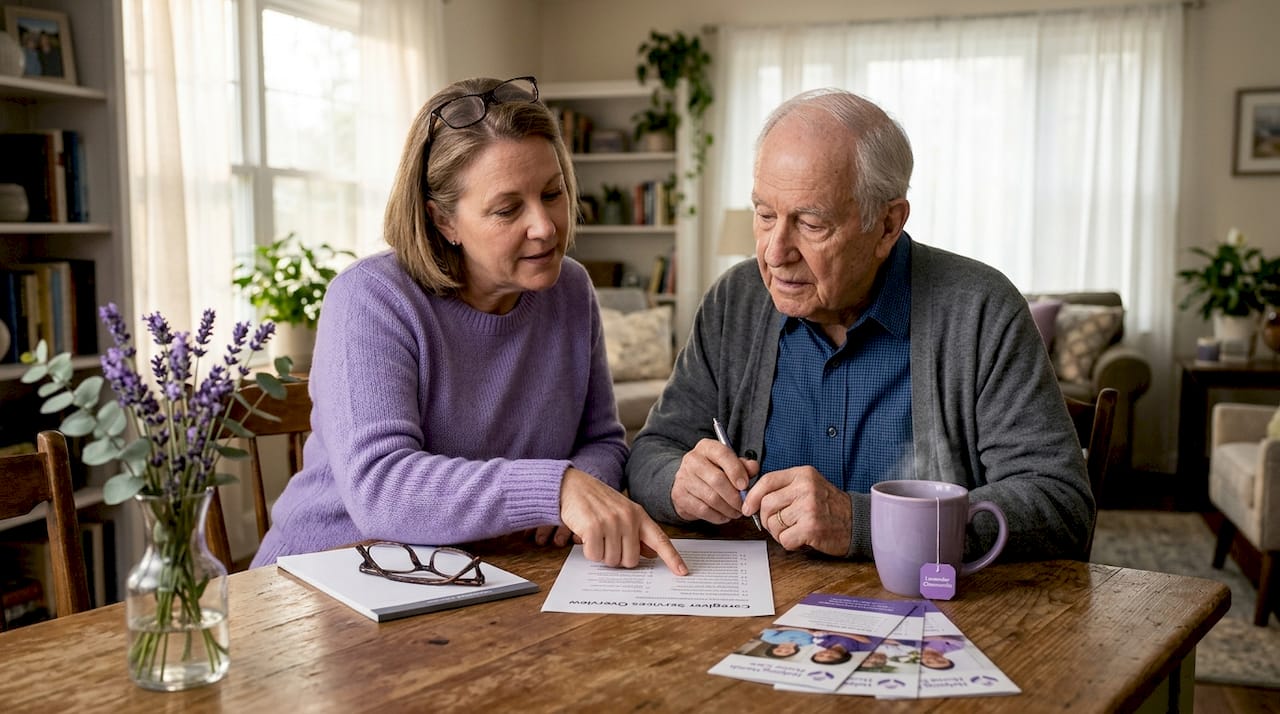
Hiring an in-home caregiver is a structured process that begins with assessing your loved one’s needs and ends with a fully onboarded professional providing safe, consistent support at home. The industry term for this role is home health aide or personal care aide, depending on the level of medical support required. Families who follow a deliberate caregiver selection process, rather than acting on urgency alone, report better outcomes in caregiver retention and care quality. This guide walks you through every phase of that process, from defining the role to formalizing the hire, so you can make a confident, informed decision.
How to hire an in-home caregiver step by step
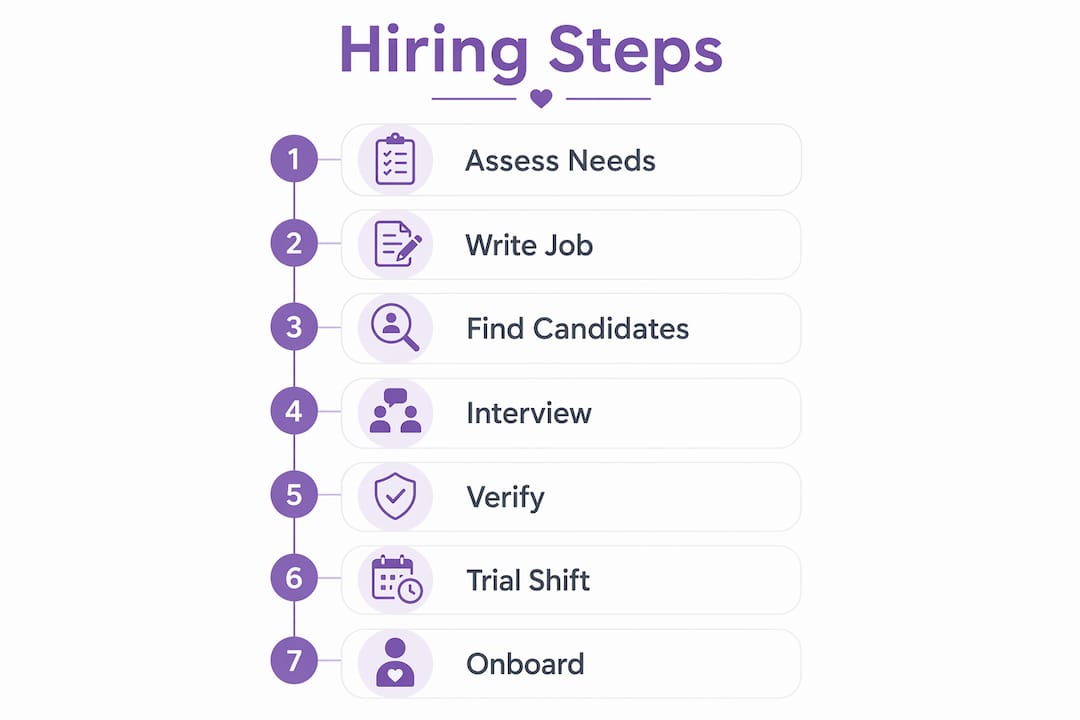
The 7-step hiring process covers needs assessment, job description, sourcing, interviewing, background checks, a formal offer with a trial period, and onboarding. Each step builds on the last, and skipping any one of them increases the risk of a poor fit or a preventable safety issue. Families who treat this as a systematic process, rather than a quick search, consistently find more reliable caregivers.
What care does your loved one actually need?
Many families start hiring without first deciding what type of in-home support is most useful. That gap leads to mismatched hires, unclear expectations, and early turnover. Before you post a single job listing, sit down with your loved one and map out their daily life in detail.
Start by identifying which activities of daily living (ADLs) they need help with. These include:
- Personal hygiene: bathing, dressing, grooming
- Mobility support: transferring from bed to chair, walking assistance
- Medication reminders or administration (requires certified aide)
- Meal preparation and feeding assistance
- Companionship and cognitive engagement
- Light housekeeping and laundry
- Transportation to appointments
Beyond ADLs, note any safety concerns such as fall risk, wandering behavior in dementia patients, or medical equipment like oxygen concentrators. These details directly shape what qualifications your caregiver must hold.
Once you have a clear picture, write a detailed job description. Vague role definitions are one of the leading causes of disputes between families and caregivers. A written description sets clear boundaries, prevents scope creep, and gives both parties a reference point when questions arise. Include hours, specific duties, physical requirements, and any household rules.
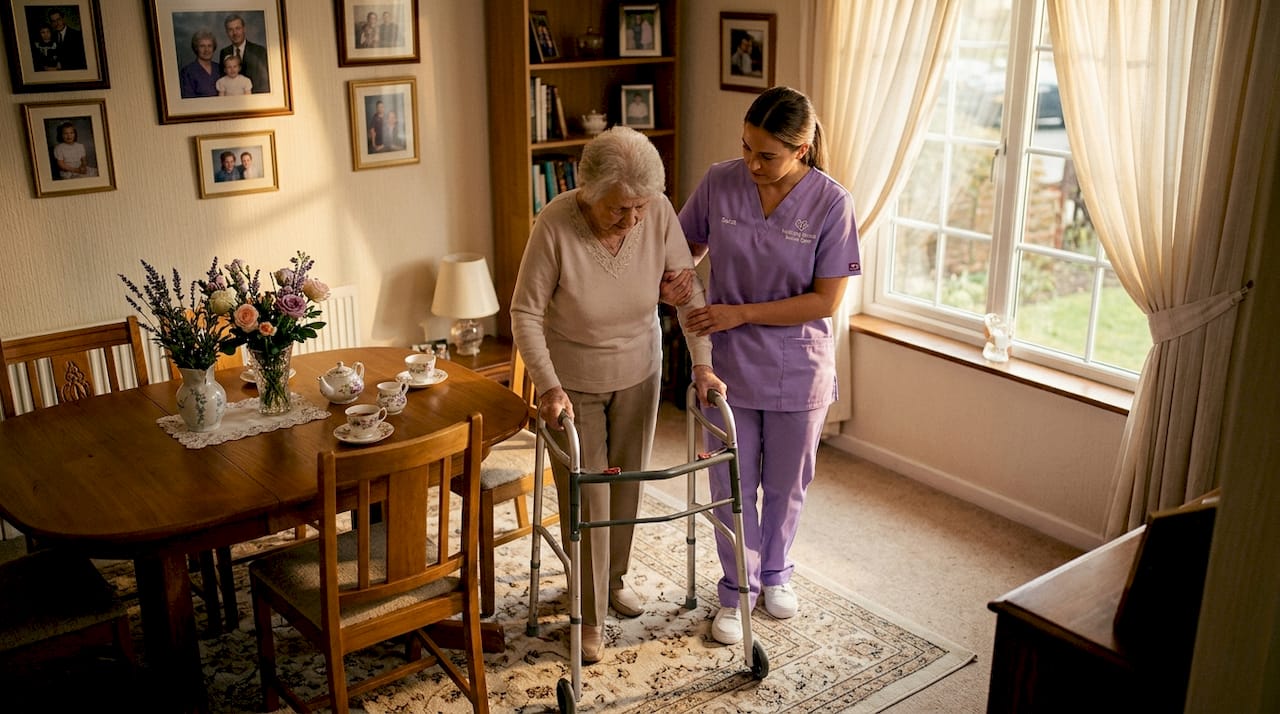
Pro Tip: If you are unsure whether your loved one needs a personal care aide or a licensed home health aide, consult their primary care physician before writing the job description. The distinction affects what tasks a caregiver can legally perform.
The agency versus private hire decision also starts here. Agencies handle screening, payroll, and backup coverage. Private hires offer more scheduling flexibility but require you to act as the employer, managing taxes, insurance, and compliance yourself.
Where do you find qualified caregiver candidates?
Sourcing is where many families hit their first wall. The caregiving workforce faces real shortages, particularly in rural areas, which means a passive approach rarely produces enough qualified candidates. You need to work multiple channels at once.
| Source | Best for | Key consideration |
|---|---|---|
| Home care agency | Families wanting pre-screened, insured aides | Higher cost; less scheduling flexibility |
| Job boards (Indeed, Care.com) | Private hires with specific requirements | You manage all vetting and employer duties |
| Referrals from friends or doctors | Trust-based introductions | Still requires full background check |
| Eldercare Locator | Connecting to local community resources | Free service; covers all U.S. regions |
| Social media community groups | Local reach, fast response | Widest variation in candidate quality |
When posting a job listing, be specific. Include the care recipient’s condition (in general terms), required hours, physical demands, and whether driving is required. Vague listings attract unqualified applicants and waste your time during screening.
The Family Caregiver Alliance notes that workforce shortages can directly affect availability and hiring timelines, especially outside major metro areas. Build in at least two to four weeks for sourcing before you need the caregiver to start. Rushing this phase is the single most common reason families end up with a poor fit.
Pro Tip: Post your listing on at least three different channels simultaneously. A referral from a trusted source is worth pursuing, but never skip the vetting steps just because someone came recommended.
How do you vet and interview caregiver candidates?
Thorough vetting is the most time-intensive part of the in-home caregiver hiring guide, and it is also the most important. A friendly interview alone tells you very little. You need a structured process that combines behavioral questions, credential checks, and direct observation.
Structuring the interview
Prepare questions that reveal how a candidate handles real situations. Strong examples include:
- “Describe a time a care recipient refused to take their medication. How did you handle it?”
- “What would you do if you noticed signs of a fall or injury?”
- “How do you protect a client’s privacy when family members ask for updates?”
Conduct a phone screen first to filter for communication skills and basic qualifications. Follow up with an in-person interview that includes time with your loved one present. Watch how the candidate speaks to them, not just to you.
Verifying credentials and running background checks
Verify credentials directly with the licensing or credentialing body rather than accepting photocopies or screenshots. A certificate on paper proves nothing until confirmed with the issuing agency. This step distinguishes a legitimate qualification from a forged document.
Your background check process should cover:
- Criminal history at state and federal levels
- Sex offender registry check
- Driving record if transportation is part of the role
- Identity and right-to-work verification
- Reference checks with at least three former employers or clients
Contact at least three references and ask specific questions about reliability, how the caregiver handled conflict, and whether they would rehire the person. Vague or overly brief references are a warning sign.
Running a paid trial shift
A paid trial shift is the most reliable predictor of real-world performance. Structure it as a fixed block of three to eight hours covering the core tasks in your job description. Observe how the candidate handles privacy, safety protocols, and documentation. Do they wash their hands before and after care tasks? Do they speak to your loved one with respect and patience? Do they document what they did without being prompted?
Pro Tip: Use a simple observation checklist during the trial shift. Score the candidate on five to eight specific behaviors rather than relying on your overall impression. This makes the evaluation objective and defensible.
How to formalize the hire and onboard your caregiver
Once you have selected your candidate, the formal offer and written contract are non-negotiable steps. A verbal agreement is not enough. Your written care agreement should include:
- Start date and scheduled hours
- Hourly rate or salary and payment schedule
- Specific duties and any tasks explicitly excluded
- Overtime policy and holiday coverage expectations
- Confidentiality and privacy terms
- Termination conditions for both parties
- A defined trial period, typically one to two weeks
The trial period is not just a formality. Trial periods reveal whether a caregiver’s communication style, reliability, and day-to-day compatibility match your family’s needs. Credentials tell you what someone is qualified to do. A trial period tells you whether they will actually do it consistently.
Onboarding for a strong start
Onboarding is where many families underinvest. A caregiver who starts without proper orientation is more likely to make mistakes, feel unsupported, and leave within the first month. Structure the first week deliberately.
Walk the caregiver through the full care plan on day one. Cover emergency contacts, medication schedules, equipment locations, and household rules. Have them shadow you or a current caregiver for the first shift if possible. Introduce documentation expectations early, whether that is a paper log, a shared app, or a care management platform.
Set a weekly check-in for the first month. This gives both sides a structured opportunity to raise concerns before they become problems. Ask your loved one for feedback privately, since they may not speak freely in front of the caregiver. A good caregiver-family relationship is built on consistent, honest communication from the very first week.
Pro Tip: Create a one-page “house guide” that covers daily routines, your loved one’s preferences, and any quirks of the home (such as a stiff door lock or a pet that needs to be kept away during care). This small investment prevents a surprising number of early friction points.
Key takeaways
Hiring a qualified in-home caregiver requires a structured seven-step process where role clarity, thorough vetting, and a formal trial period are the three factors most likely to determine long-term success.
| Point | Details |
|---|---|
| Define needs before sourcing | Write a detailed job description covering ADLs, safety concerns, and required qualifications before posting. |
| Use multiple sourcing channels | Post on at least three platforms simultaneously and allow two to four weeks for sourcing. |
| Verify credentials directly | Contact licensing bodies yourself rather than accepting copies to confirm qualifications are valid. |
| Run a structured trial shift | Observe three to eight hours of real care tasks using a checklist to evaluate performance objectively. |
| Formalize with a written contract | Include duties, pay, schedule, trial period terms, and termination conditions in a signed agreement. |
What I have learned after years of watching families hire caregivers
Most families I have worked with make the same mistake: they treat the interview as the finish line. They find someone who seems warm and capable, they feel relieved, and they skip the hard parts. No credential check. No reference calls. No trial shift. Three weeks later, they are starting over.
The families who get this right treat the trial period as the real interview. Credentials tell you what someone is trained to do. A trial shift tells you whether they show up on time, whether they treat your loved one with dignity when no one is watching, and whether they document their work without being reminded. Those behaviors predict long-term performance far better than any certificate.
The other pattern I see is role confusion. A caregiver hired to provide companionship gradually takes on medication management, wound care, or financial tasks because no one ever wrote down what the job was. That is not the caregiver’s fault. It is a structural problem that a clear written job description prevents entirely.
My honest advice: spend more time on the job description and the trial period than on the interview itself. The interview is a conversation. The trial shift is evidence.
— Michael
How Helping-hands-home-care supports your hiring process
Finding and vetting a qualified caregiver takes time, structure, and experience most families do not have on their first attempt. Helping-hands-home-care removes that burden by connecting families with pre-screened, qualified home health aides matched to your loved one’s specific care needs.
Helping-hands-home-care handles the sourcing, credential verification, and care plan customization so you can focus on your loved one rather than the paperwork. Whether you need a dedicated home health aide for daily personal care, or you want to explore the full range of in-home services including house cleaning and massage therapy, the team is ready to build a care plan around your family’s needs. Contact Helping-hands-home-care today to get started.
FAQ
What is the difference between a home health aide and a personal care aide?
A home health aide (HHA) is trained to perform basic medical tasks such as monitoring vital signs and wound care under supervision, while a personal care aide (PCA) focuses on non-medical support like bathing, dressing, and companionship. The right choice depends on your loved one’s medical needs and your state’s licensing requirements.
How long does it take to hire an in-home caregiver?
A thorough caregiver selection process typically takes two to four weeks from posting the job to the first paid shift. Rushing the timeline increases the risk of skipping background checks or reference calls, which are the steps most likely to catch a problematic candidate.
Do I need to run a background check even if the caregiver comes recommended?
Yes. A referral reduces risk but does not eliminate it. Background checks should cover criminal history, sex offender registry, and driving record regardless of how the candidate was sourced.
How much does in-home care typically cost?
The cost of in-home care varies significantly by region, level of care, and whether you hire through an agency or privately. Agency rates are generally higher but include insurance, backup coverage, and payroll management. Private hires cost less per hour but require you to handle employer taxes and liability directly.
What should a caregiver trial period include?
A structured trial period of one to two weeks should cover the full scope of daily duties, with at least one observed shift of three to eight hours. Evaluate reliability, communication, documentation habits, and how the caregiver interacts with your loved one when the pressure of the formal interview is gone.