
Fix Seniors' Home Hazards This Weekend: OT Guided Safety Checklist
Fix Seniors’ Home Hazards This Weekend: OT Guided Safety Checklist
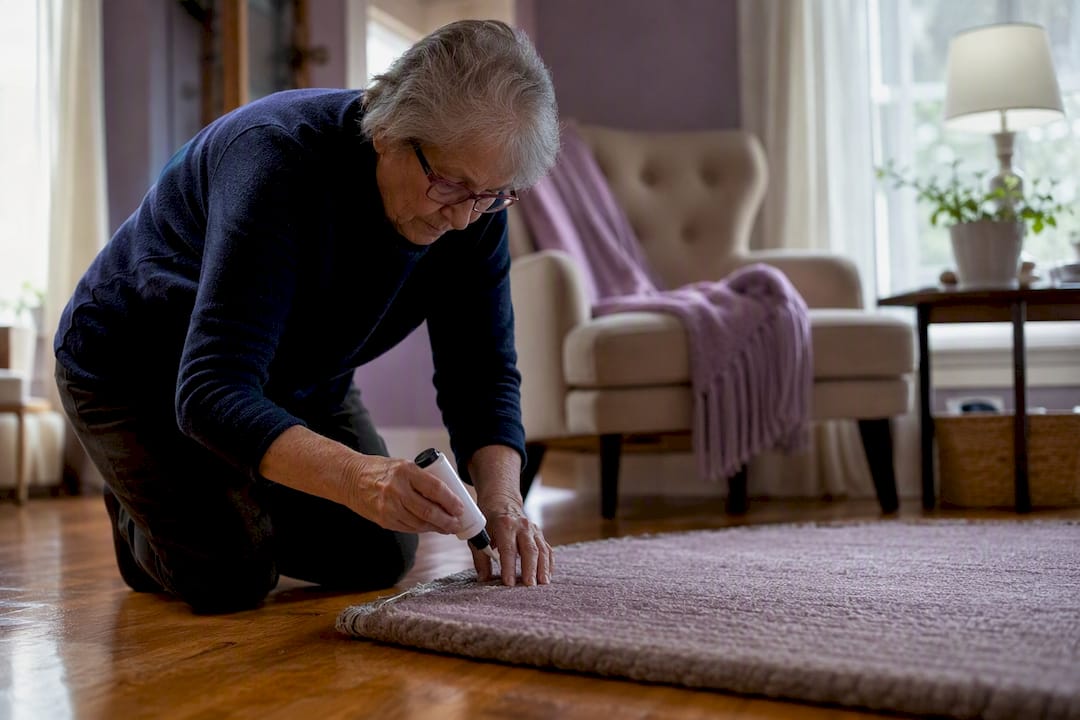
Walk through the bathroom and stairs first, fix the lighting, secure loose rugs, and pull together every medication into one bottle-by-bottle review this week. Those four moves prevent more falls than any single gadget you could buy. Print the room-by-room checklist below, work through it this weekend, and if your parent has fallen recently or just started using a walker, call an occupational therapist for a home visit before you do anything else.
TL;DR:
- Most falls among seniors result from hazards in specific areas like bathrooms, stairs, and clutter, which can be addressed with simple, low-cost fixes.
- Installing grab bars, non-slip mats, and proper lighting in bathrooms and stairways significantly reduces fall risks, especially when reinforced with professional follow-up.
- Regularly reviewing medication, vision, footwear, and home temperature or air quality can prevent falls caused by health and environmental factors.
- Continuous house maintenance, like decluttering and securing loose rugs or cords, is essential, as many hazards reappear if not checked weekly or after health changes.
- Professional home safety assessments and ongoing caregiver support ensure that fall prevention measures remain effective and are used correctly over time.
Table of Contents
- Room-By-Room Home Safety Checklist For Seniors
- What Are the Most Common Fall Hazards, and How Do You Fix Them Fast?
- Which Bathroom and Stair Changes Matter Most?
- How Do Medication, Vision, and Footwear Affect Fall Risk?
- Do You Have Working Smoke and Carbon Monoxide Alarms?
- When Should You Bring in an Occupational Therapist?
- Build a One-Page Checklist You’ll Actually Use
- How Helping-Hands-Home-Care Supports Ongoing Safety
- How Should Seniors Plan for Emergencies at Home?
- How Can You Improve Home Security for an Aging Parent?
- Why Temperature and Air Quality Belong on the Checklist
- What Do Caregivers Get Wrong About Home Safety?
- Get Help Turning This Checklist Into a Safer Home
- Where to Find the Official Checklists
- Sources
Room-By-Room Home Safety Checklist For Seniors
A room-by-room walkthrough catches what a quick glance around the house misses. The CDC’s STEADI checklist has built its entire fall-prevention framework around this approach for a reason: hazards hide in specific spots, and most families never look there until after someone gets hurt.
Go room by room with a notepad. Mark anything that needs fixing today versus fixing this month.
Living areas
The living room causes more falls than people expect, mostly because it’s where furniture accumulates over decades.
- Remove or tape down any rug that doesn’t have a rubber backing.
- Widen walking paths to at least 36 inches if a walker or wheelchair is in use.
- Move coffee tables, ottomans, and side tables out of the main walking path between the couch and the hallway.
- Coil or tape down lamp and extension cords along the wall, never across open floor.
- Swap unstable furniture (wobbly side tables, low stools) for pieces sturdy enough to lean on.
Kitchen
Kitchens punish reaching and bending, two motions that get riskier with age.
- Store everyday dishes, mugs, and pans between waist and shoulder height so nobody climbs a step stool for the cereal bowl.
- Replace any freestanding throw rug in front of the sink or stove with a low-profile, non-slip mat.
- Keep a sturdy, grippy step stool with a handrail nearby if anything must stay on a high shelf, and skip the folding chair.
- Wipe spills immediately and keep a towel within reach of the sink at all times.
Bedroom
Nighttime bathroom trips cause a disproportionate share of falls, which makes the bedroom setup matter more than most families realize.
- Install a plug-in or motion-sensor night light between the bed and the bathroom door.
- Keep the path from bed to bathroom completely clear, no laundry baskets, no shoes, no cords.
- Set the bed height so feet reach the floor flat when seated on the edge, generally 20 to 23 inches from floor to mattress top.
- Keep the phone, a lamp switch, and a glass of water within arm’s reach of the pillow.
Bathroom
This is the room where the highest-impact changes live, and it deserves its own detailed treatment further down. For now, the basics:
- Add non-slip strips or a mat inside the tub or shower floor.
- Install grab bars near the toilet and inside the shower, never relying on a towel bar as a substitute.
- Consider a shower bench and a handheld shower head for anyone who tires standing.
Stairs and entry points
- Handrails on both sides of every staircase, not just one, extending the full length including the top and bottom steps.
- Non-slip treads or high-contrast tape on stair edges, especially if vision has started to decline.
- A light switch at both the top and bottom of the stairs, never a single switch that forces someone to climb in the dark.
- Nothing stored on stair treads, ever, not even temporarily.
Outdoor entry and walkways
- Repair cracked or uneven walkway pavers and fill gaps where a foot could catch.
- Add a handrail to any exterior step, even a single-step porch.
- Trim shrubs and plants that lean into the walkway or block the sightline to the front door.
- Install motion-sensor lighting along the path from the driveway or car to the front door.
The AARP aging-in-place checklist adds a smart long-term idea here: if stairs are becoming a daily struggle, look at whether a bedroom and full bathroom can be reorganized onto the main floor rather than only investing in stair equipment. It’s a bigger conversation, but it solves the stair problem permanently instead of managing around it. For a room-by-room plan you can adapt to your own layout, Helping-hands-home-care’s action plan walks through the same priorities in more visual detail.
If dementia or memory changes are part of the picture, the NIA’s home safety worksheet adds items this general checklist doesn’t cover, like securing medications behind a lock and removing small objects that could be mistaken for food.
What Are the Most Common Fall Hazards, and How Do You Fix Them Fast?
Four hazards cause most home falls among older adults: poor lighting, loose flooring, exposed cords, and clutter in high-traffic paths. None of them require a contractor. All of them can be fixed this weekend for under $100.
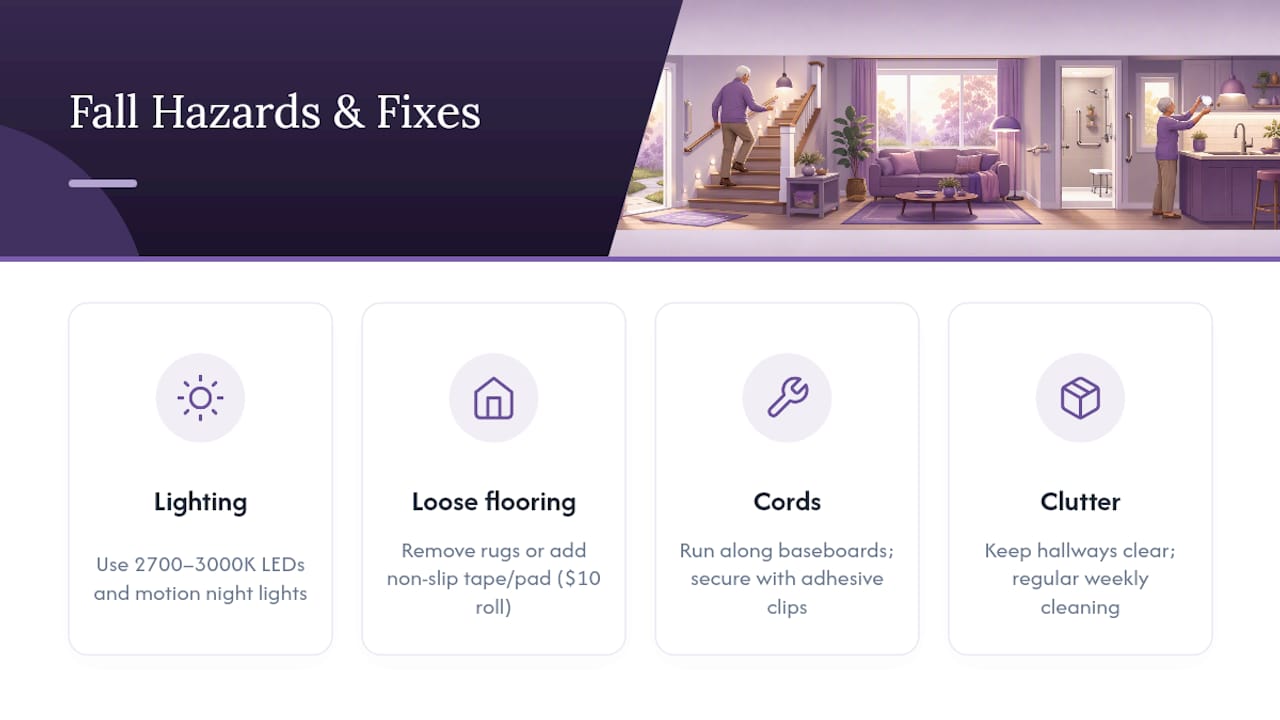
Lighting is the cheapest fix with the biggest payoff. Aging eyes need roughly three times more light than a 20-year-old’s to see the same detail clearly, so a single 60-watt bulb that felt adequate at 40 no longer cuts it at 75. Aim for bright, warm-white LED bulbs (2700K to 3000K) in every hallway, stairwell, and bathroom, and add motion-sensor night lights in hallways and bathrooms so nobody fumbles for a switch at 2 a.m.
Loose flooring means area rugs without rubber gripper backing, curling vinyl edges, and thresholds between rooms that create a small lip a foot can catch on. Either remove the rug entirely or apply double-sided rug tape or a non-slip rug pad underneath. A $10 roll of tape prevents more falls than most people assume.
Cords running across open floor, whether from lamps, phone chargers, or medical equipment, are trip hazards regardless of how tidy they look. Run them along the baseboard and secure with adhesive cord clips, or reroute the outlet situation with a qualified electrician if cords constantly cross a walking path.
Clutter in hallways and doorways, magazines by the recliner, shoes by the door, boxes waiting to be donated, narrows the walking lane exactly where a person needs the most stability. Regular house cleaning does more for fall prevention than most families give it credit for, simply by keeping those paths clear week after week.
Pets deserve a mention too. A small dog or cat underfoot, food bowls in the kitchen walkway, or a leash left draped over a chair all add up. Keep pet feeding stations against a wall, not in the main kitchen path, and consider a bell on the collar if the pet tends to appear silently at ankle height.
Pro Tip: Organize the kitchen and bathroom into “reach zones.” Everything used daily belongs between hip and shoulder height. Anything requiring a step stool or a deep squat should be something used once a month, not once a day.
Which Bathroom and Stair Changes Matter Most?
Bathrooms and stairs cause a disproportionate share of home falls, and they’re also where the highest-impact, lowest-regret changes live. If your budget or your time is limited, start here before anywhere else in the house.
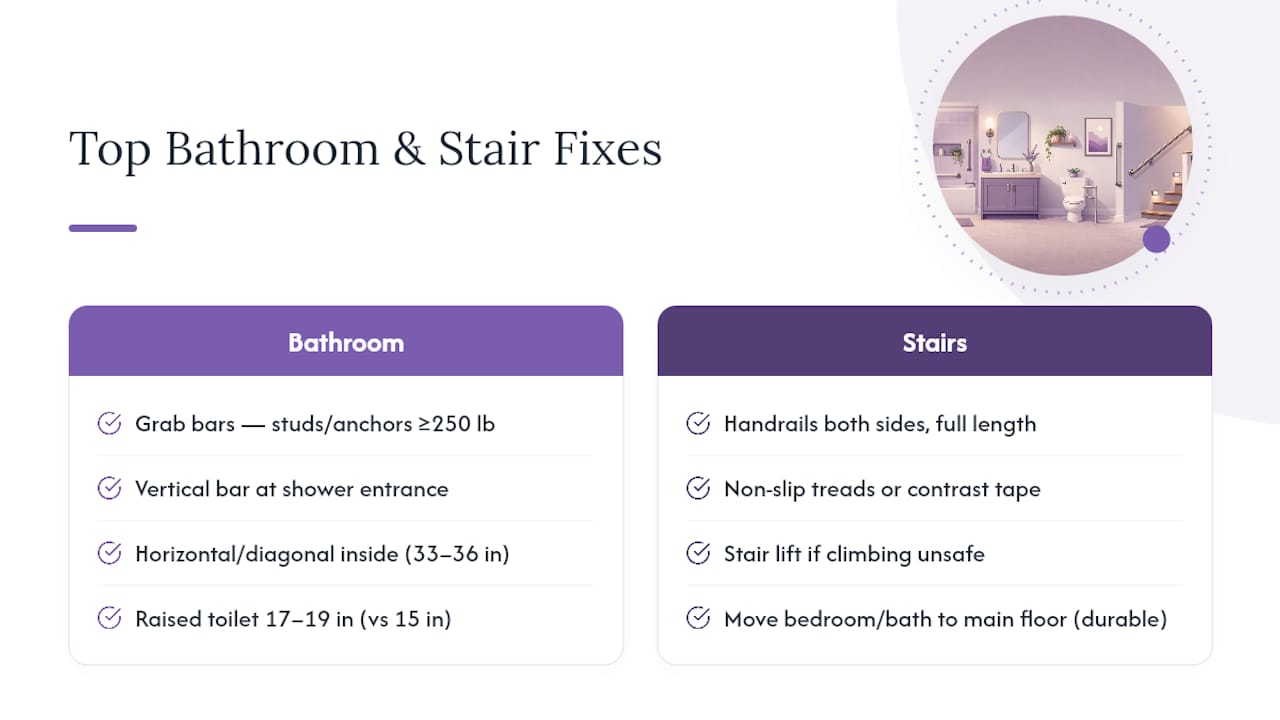
Grab bars need to be installed into wall studs or with proper wall anchors rated for at least 250 pounds, never just screwed into drywall. Place one vertical bar near the shower entrance for balance while stepping over the threshold, and one horizontal or diagonal bar inside the shower or tub at a height that matches the user’s arm reach, typically 33 to 36 inches from the floor. Near the toilet, a grab bar mounted on the wall beside it, or a toilet-frame version that bolts to the base, both work depending on the bathroom’s layout.
Toilet height matters more than people expect. Standard toilets sit around 15 inches; a raised toilet seat or a “comfort height” toilet at 17 to 19 inches reduces the squat distance significantly for anyone with knee or hip pain.
Shower access comes down to one decision: bench or walk-in conversion. A shower bench or transfer bench paired with a handheld shower head solves the problem for a few hundred dollars and can go in this week. A full walk-in shower conversion removes the tub lip entirely but runs into real renovation territory, and that’s the point where hiring a CAPS-certified (Certified Aging-in-Place Specialist) contractor is worth the extra planning and cost.
Stairs need handrails on both sides, full length, plus non-slip treads or contrast tape on each step edge. If climbing stairs has become genuinely unsafe rather than just difficult, a stair lift is a real option, but so is reorganizing the home so the bedroom and bathroom both live on the main floor. That second option, where the layout allows it, tends to be the more durable fix.
A systematic review and meta-analysis covering 10 trials and 1,960 participants found that home modification programs produce a modest but real reduction in falls, and the effect holds up best when the changes are targeted to the person’s actual risks rather than applied as a generic package. Bathroom and stair fixes, because they address the two rooms where falls commonly concentrate, tend to be exactly that kind of targeted change.
How Do Medication, Vision, and Footwear Affect Fall Risk?
Fall risk isn’t only about the house. Medications, eyesight, and what’s on someone’s feet cause falls just as often as a loose rug does, and they get overlooked far more.
Run a medication review every three months, or immediately after any new prescription. Line up every bottle, including over-the-counter drugs and supplements, and ask the pharmacist or prescriber two questions: does anything on this list cause dizziness or drowsiness, and does anything interact badly with something else on the list? Blood pressure medications, sedatives, and some antidepressants are common culprits behind lightheadedness that leads to a fall.
Schedule an eye exam annually. Cataracts and changes in depth perception develop gradually enough that seniors often don’t notice how much their vision has declined until someone else points it out. Pair the exam with the lighting fixes above, since better lighting compensates for some vision loss but can’t fix all of it.
Footwear should have a low, wide heel, a non-slip sole, and a secure back, never a loose slipper or a sock alone on hardwood or tile. If a cane or walker is part of daily life, get it properly fitted, the handle height should let the elbow bend at roughly a 15-degree angle when standing upright.
Small routine changes round out the picture: night lights along the bathroom path, the phone and TV remote kept in the same spot every time, and a consistent toileting and hydration schedule so nighttime bathroom trips happen less often and less urgently.
Do You Have Working Smoke and Carbon Monoxide Alarms?
Fire and carbon monoxide safety belong on every senior home safety checklist right alongside fall prevention, and the CPSC’s guidance for older consumers treats them as an equal priority, not an afterthought.
Install smoke alarms inside every bedroom, outside each sleeping area, and on every level of the home, including the basement. Test them monthly and replace the batteries at least once a year, or install 10-year sealed-battery units to remove that chore entirely. Carbon monoxide alarms belong near sleeping areas too, especially in homes with gas appliances, a fireplace, or an attached garage.
A few smaller adjustments reduce burn and fire risk directly:
- Set the water heater to 120°F to prevent scald injuries, which happen faster and more severely on aging skin.
- Never leave a space heater running unattended, and keep it at least three feet from bedding, curtains, or furniture.
- Check that stove knobs are easy to see and turn, and replace hard-to-read dials if eyesight has changed.
Build a simple escape plan and practice it once. Walk through which exit works from the bedroom, note that stairs may not be usable during a fire, and identify a safe meeting spot outside. If your parent or client lives alone, share the plan with a neighbor or family member who checks in regularly, so someone besides the senior knows the plan exists.
When Should You Bring in an Occupational Therapist?
Call an occupational therapist or physical therapist for a home visit after any fall, any new diagnosis affecting balance or strength, any new mobility device, or any noticeable change in memory or thinking. Waiting until “things get worse” costs valuable time that a professional assessment could have used productively.
An OT home visit looks different from a contractor walkthrough. Rather than just measuring doorways, an occupational therapist observes the person actually performing daily tasks, getting out of bed, walking to the bathroom, cooking at the stove, and evaluates the fit between that specific person and that specific environment. That produces a prioritized list of recommendations instead of a generic equipment order, and it usually includes a follow-up visit to confirm the changes actually got made and are being used correctly.
The evidence backs up why that follow-up step matters: a systematic review and meta-analysis of 10 trials involving 1,960 older adults found moderate-quality evidence that home modification programs reduce falls, but the strongest results came from programs that paired the physical changes with follow-up and, often, an exercise component.
That last detail deserves attention. Installing a grab bar nobody was taught to use, or a shower bench nobody adjusted to the right height, doesn’t move the needle much. The programs that worked combined the hardware with a person actually returning to check that it fit.
Watch for these specific triggers that mean it’s time to make the call:
- A fall in the past six months, even a minor one with no injury.
- A new walker, cane, or wheelchair introduced in the last few weeks.
- A recent hospital stay or new diagnosis affecting strength, balance, or cognition.
- Noticeable hesitation or fear when using stairs or the shower.
Build a One-Page Checklist You’ll Actually Use
Print one page per home. List each room down the left side, mark items “fix now” or “fix this month,” and note who’s responsible, family member, paid caregiver, or contractor. Walk through it monthly, and always redo it after a fall, hospital stay, or new diagnosis. Splitting tasks this way keeps the list from becoming one person’s forgotten chore.
How Helping-Hands-Home-Care Supports Ongoing Safety
A checklist only works if someone follows through on it week after week, and that’s where a lot of families lose momentum. House cleaning services keep clutter and trip hazards from creeping back in, while a scheduled home health aide visit catches the small slips, a rug that’s shifted, a burnt-out bulb, before they cause a fall. Regular follow-up matters just as much as the initial fix, which is why we build check-ins into ongoing care rather than treating safety as a one-time project. For families preparing for a first in-home visit, our guide to preparing your home for a caregiver walks through what to expect.
How Should Seniors Plan for Emergencies at Home?
A safety checklist prevents most incidents, but the plan needs a backup for when something happens anyway. A personal emergency alarm, either a wearable pendant or a wristband with a call button, connects to a monitoring service or a family member’s phone and works even if the person can’t reach a landline after a fall. Look for a waterproof version so it stays on in the shower, where a large share of bathroom falls happen.
Keep a phone within reach in every room where time is spent most, not just charging in the bedroom overnight. For anyone with vision or dexterity changes, a large-button phone or a voice-activated assistant (a smart speaker set up to call a preset contact) removes the fine motor skill that dialing normally requires.
Post an emergency contact list somewhere visible, on the refrigerator or by the phone, with the primary caregiver, a backup contact, and the local emergency number written in large print. If a senior lives alone, arrange a daily check-in call or text with a family member or neighbor, so a missed check-in itself becomes an early warning sign rather than something discovered a day later.
Review the plan every few months, especially after any change in mobility or a new medication that affects alertness. An emergency plan that was accurate a year ago can quietly go stale.
How Can You Improve Home Security for an Aging Parent?
Fall prevention gets most of the attention, but home security deserves its own line item, especially for seniors living alone. Confirm every exterior door has a working deadbolt, not just the original doorknob lock, and consider a keyless or smart lock if remembering keys has become a struggle.
Peepholes and video doorbells let a senior see who’s at the door without opening it, which matters for both scam prevention and general peace of mind. Window locks should be checked on ground-floor rooms in particular, since older or painted-shut windows sometimes don’t latch the way they appear to.
Set up a simple visitor protocol as a family: agree on a code word for legitimate callers, and make it a habit that home health aides, delivery workers, and repair technicians always call ahead. Scams targeting older adults frequently start with an unannounced knock, so a habit of not opening the door to strangers, even a friendly-seeming one, is worth reinforcing regularly.
Outdoor motion-sensor lighting, mentioned earlier for fall prevention, does double duty here, deterring anyone loitering near entry points after dark.
Why Temperature and Air Quality Belong on the Checklist
Older adults regulate body temperature less efficiently than younger adults, which makes both heat and cold more dangerous at home than most families realize. Keep the thermostat between 68°F and 72°F in winter, and don’t assume a senior will notice or mention that the house has gotten uncomfortably cold. A basic indoor thermometer placed in the main living area gives an objective check instead of relying on how the room “feels.”
Air quality matters just as much, particularly for anyone with respiratory conditions. Change HVAC filters on schedule, run a portable air purifier in the bedroom if allergens or dust are a recurring issue, and test carbon monoxide levels through the alarms already discussed above rather than relying on smell alone, since CO has none.
A simple hygrometer costs less than $15 and takes the guesswork out of it.
What Do Caregivers Get Wrong About Home Safety?
The mistake I see most often isn’t skipping the checklist. It’s doing everything on it at once and expecting it to stick. A family installs grab bars, buys a shower bench, adds night lights, and reorganizes the kitchen all in one weekend, and three months later half of it isn’t being used correctly, or at all.
Start with one path: the route from bed to bathroom, cleared and lit. Then the bathroom itself. Everything else can follow. Equipment installed without a quick walkthrough of how to actually use it gets ignored more often than families expect, a grab bar mounted at the wrong height gets grabbed once and avoided after that.
The other habit worth building: recheck the whole house after any health change, not just after a fall. A new medication, a hospital stay, even a bad cold that knocks someone off their feet for a week can shift balance and strength enough to make yesterday’s safe layout risky today.
— Michael
Get Help Turning This Checklist Into a Safer Home
Reading a checklist and installing grab bars, decluttering hallways, and keeping up with it every week are two very different jobs, and most families don’t have the time for the second one. Helping-hands-home-care handles the ongoing part: regular house cleaning that keeps trip hazards from creeping back, and home health aide visits that catch the small slips before they become falls, a loose bath mat, a dimming bulb, a medication bottle left out of order.

Our aides in the metro Detroit area work directly from checklists like the one above, and we’re glad to combine that with recommendations from an occupational therapist if your family has already had a home assessment. Massage therapy is also available for seniors managing stiffness or mobility discomfort that makes the daily walk to the bathroom harder than it should be. If a parent or client could use an extra set of eyes on their home this month, request an in-home safety visit and we’ll walk the house with you, room by room.
Where to Find the Official Checklists
Download the original room-by-room tools directly: the CDC STEADI checklist, the NIA’s home safety worksheet, and the CPSC’s older-consumer safety checklist. Each one covers slightly different ground, so keeping copies of all three on hand fills in gaps this article’s summary can’t fully replace.
This article is general information, not a substitute for advice from a qualified doctor. Consult a qualified healthcare professional about your own circumstances before acting on anything here.
Sources
- Check For Safety A Home Fall Prevention Checklist For Older Adults
- Home hazard modification programs for reducing falls in older adults: a systematic review and meta-analysis
- Worksheet: Home Safety Checklist
- Safety for Older Consumers – Home Safety Checklist