
Patient Satisfaction in Home Care: A Family Guide
Patient Satisfaction in Home Care: A Family Guide
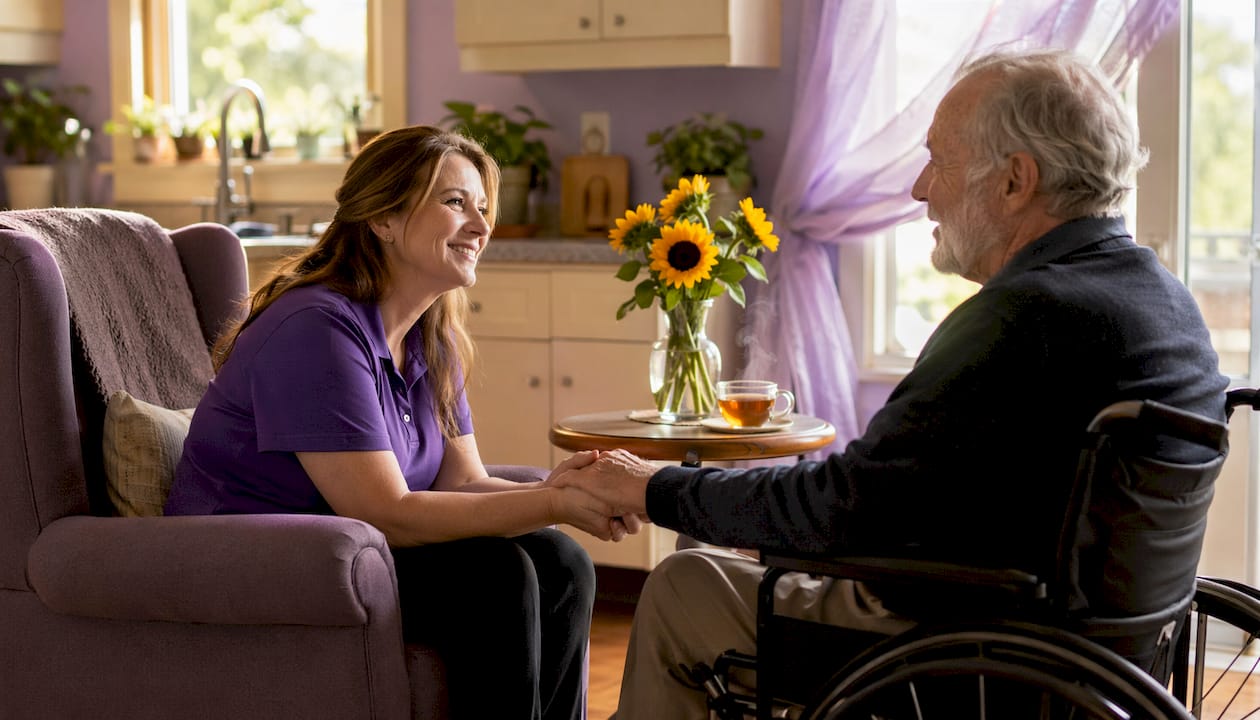
Patient satisfaction in home care is the degree to which patients feel respected, cared for, and involved in their own care. It combines clinical competence with emotional connection, and it serves as the primary quality indicator for home health agencies across the United States. The Centers for Medicare and Medicaid Services (CMS) measures it formally through the Home Health Care Consumer Assessment of Healthcare Providers and Systems (HHCAHPS) survey. Understanding what is patient satisfaction home care means for your loved one is the first step toward making sure they receive care that genuinely meets their needs, not just their medical checklist.
What is patient satisfaction in home care, and why does it matter?
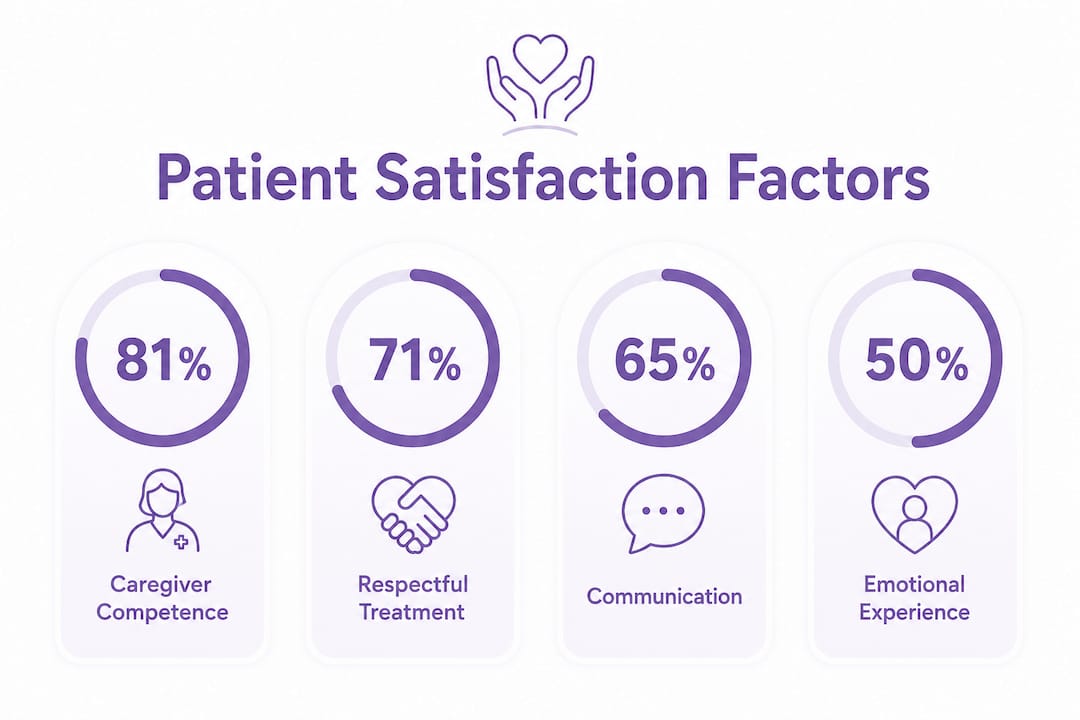
Patient satisfaction in home care is defined as a patient’s overall assessment of whether their care met their expectations across clinical, emotional, and relational dimensions. It is not simply about whether a caregiver showed up on time or completed assigned tasks. Research shows that caregiver competence and friendliness explain over 81% of patient satisfaction variation, with clinical competence carrying the stronger statistical weight. That single finding reframes the entire conversation: technical skill matters most, but warmth and connection are nearly as powerful.
High satisfaction also has direct consequences for care quality. Patients who feel genuinely heard are more likely to follow care plans, report symptoms early, and stay with the same agency long enough to build a trusting relationship with their caregiver. For families, a satisfied patient is also a safer patient. Agencies that retain clients longer spend far less on replacing lost clients, which means more resources stay focused on care delivery rather than recruitment.

What are the main factors that influence patient satisfaction?
Several factors drive whether a patient feels satisfied with their home care experience. The most influential fall into two categories: clinical and relational.
Clinical factors:
- Caregiver competence, including proper technique, medication management, and wound care
- Consistency of the assigned caregiver, since frequent staff changes disrupt trust
- Accurate and timely completion of care tasks
Relational factors:
- Caregiver friendliness and warmth during visits
- Whether the patient feels listened to and respected
- Clear, proactive communication from the agency about schedules and changes
Communication gaps create a specific and measurable problem. 71% of patients reported that caregivers treated them with kindness, yet 31% experienced delays when trying to reach their home health agency. That gap reveals a critical truth: a caregiver can be excellent during a visit, but if the agency fails to respond between visits, satisfaction drops sharply.
Emotional experience also shapes satisfaction in ways that task lists cannot capture. Patients increasingly report that feeling cared about as a person, not just as a case, is what separates a good experience from a great one. This is especially true for elderly patients who may feel isolated or dependent.
Pro Tip: Ask your loved one’s caregiver one simple question at the start of each visit: “What matters most to you today?” That question signals respect and often surfaces concerns that would otherwise go unspoken.
How is patient satisfaction in home care measured and assessed?
The HHCAHPS survey is the standardized federal tool used to measure patient satisfaction in home health care. CMS administers it through approved vendors, and results feed directly into agency star ratings and payment calculations. In 2026, CMS made significant changes to the survey’s structure and focus.
What changed in the 2026 HHCAHPS survey?
The 2026 HHCAHPS update dropped 8 task-focused questions and added 3 new relational measures centered on emotional experience. The most significant new question asks whether patients felt that staff cared about them as a person. That shift is not cosmetic. Agencies with perfect scheduling but weak interpersonal engagement can now fail new satisfaction metrics even if their clinical scores are strong. Overall Rating of Care and Willingness to Recommend together represent 20% of the Total Performance Score for larger agencies.
| Measurement Area | Old Focus (Pre-2026) | New Focus (2026) |
|---|---|---|
| Care tasks | Detailed task completion questions | Reduced; fewer task-specific items |
| Emotional experience | Minimal coverage | 3 new relational quality questions |
| Patient-centered care | Indirect references | Direct question on feeling cared for as a person |
| Performance weighting | Task compliance | Overall rating and willingness to recommend |
Beyond the federal survey, agencies can use supplemental tools such as post-visit phone calls, short digital feedback forms, and quarterly family interviews. These methods capture real-time feedback that the HHCAHPS survey, administered months after care, often misses. Combining both approaches gives families and agencies the fullest picture of care quality.
Pro Tip: Families can request their agency’s HHCAHPS star rating through Medicare’s Care Compare tool. A low rating on “communication” or “care of patients” is a specific, actionable warning sign worth discussing directly with the agency.
What role do caregivers and family members play in improving patient satisfaction?
Caregivers and family members are not passive observers of patient satisfaction. They are active contributors to it. The actions families take before, during, and after visits shape how a patient experiences their care.
Involving patients and families in care planning boosts patient activation and satisfaction. Patients who help set their own care goals feel empowered rather than dependent. That sense of agency directly correlates with higher satisfaction scores and better adherence to care routines.
Practical steps families can take include:
- Attend care plan meetings. Ask the agency to include you when goals are set or revised. CMS requires that patients be involved in their care plan, and families can reinforce that right.
- Create a communication log. Keep a simple notebook at home where caregivers, patients, and family members note concerns, changes in condition, or questions for the agency.
- Ask specific questions after visits. “Did the caregiver explain what they were doing?” and “Did you feel rushed?” reveal more than a general “How was it today?”
- Report concerns promptly. Delayed feedback allows problems to compound. Agencies can only fix what they know about.
- Support emotional connection. Encourage your loved one to share personal stories and preferences with their caregiver. Relationships built on familiarity produce better care.
Families who communicate openly with the care team also reduce the risk of misunderstandings that erode trust. A guide on talking to parents about home care can help families approach those conversations with confidence and clarity.
What practical steps address common communication and responsiveness gaps?
The 31% responsiveness gap in home care, where nearly one in three patients reports delayed responses from their agency, is the most fixable satisfaction problem in the industry. Closing it requires deliberate action from both agencies and families.
-
Set clear contact expectations at intake. Families should ask the agency: “What is your response time for non-emergency calls?” and “Who do we contact after hours?” Knowing the answer in advance prevents frustration later.
-
Use digital communication tools. Many agencies now offer patient portals or messaging apps that allow families to send questions and receive updates without waiting on hold. If your agency offers this, use it consistently.
-
Request a dedicated care coordinator. Patients who have a single point of contact at the agency report higher satisfaction than those who speak to different staff members each time they call.
-
Train caregivers in relational habits. Agencies that use microeducation techniques, short and repeated training sessions focused on specific behaviors, build consistent relational care into daily practice rather than leaving it to individual personality. Families can ask agencies what ongoing training their caregivers receive.
-
Schedule regular check-ins. A brief weekly call between the family and the care coordinator catches problems before they become complaints. This is especially valuable when a patient cannot easily self-advocate.
-
Integrate feedback into improvement. Agencies that treat satisfaction surveys as compliance checkboxes miss the real value. Families should ask how the agency uses survey results to change actual practices.
Understanding how home care quality is measured gives families the vocabulary to ask sharper questions and hold agencies accountable for real improvement.
Key Takeaways
Patient satisfaction in home care depends most on caregiver competence and relational quality, and families who actively participate in care planning and communication produce measurably better outcomes for their loved ones.
| Point | Details |
|---|---|
| Satisfaction is relational, not just clinical | Competence and friendliness together explain over 81% of satisfaction variation. |
| HHCAHPS changed in 2026 | CMS now measures emotional experience, asking if patients feel cared for as a person. |
| Communication gaps are the top fixable problem | 31% of patients report delayed agency responses; setting contact expectations at intake closes this gap. |
| Family involvement raises satisfaction | Patients included in care planning feel empowered and report higher satisfaction scores. |
| Surveys must drive real change | Agencies that use feedback for quality improvement, not just compliance, deliver better care over time. |
Why relational quality is the real measure of good home care
I’ve spent years watching families evaluate home care agencies by the wrong metrics. They count missed visits, check medication logs, and scan clinical notes. Those things matter. But the patients who thrive are almost always the ones whose caregivers made them feel like a person, not a patient.
The 2026 HHCAHPS changes confirm what good caregivers have always known. Dignity, trust, and empathy are not soft extras. They are the core of what makes care work. A caregiver who completes every task on the checklist but never makes eye contact or asks how someone is feeling is not delivering good care. They are delivering compliance.
Families often feel guilty pushing back on this. They worry that asking for more warmth sounds ungrateful or unrealistic. It is neither. Relational quality is now a federal measurement standard. Families have every right to expect it and every tool to ask for it by name.
The shift I find most meaningful in the new survey is the question about whether patients feel cared about as a person. That one question captures everything that matters. If your loved one’s answer is no, no star rating or clinical score changes that reality. Start there.
— Michael
How Helping-hands-home-care supports patient satisfaction every day
Helping-hands-home-care builds every care plan around the same principles the research confirms: clinical skill paired with genuine human connection.
The home health aid services at Helping-hands-home-care are designed to address both dimensions of satisfaction. Caregivers receive ongoing training in relational care, not just clinical tasks, so patients feel respected and heard during every visit. Families receive clear communication about schedules, changes, and care goals. Helping-hands-home-care also offers house cleaning and massage therapy services that support overall patient comfort and well-being at home. If you want care that reflects the full picture of what your loved one needs, Helping-hands-home-care is ready to talk.
FAQ
What is patient satisfaction in home care?
Patient satisfaction in home care is a patient’s overall assessment of whether their care met their clinical and emotional expectations. It is measured formally through the CMS HHCAHPS survey and informally through agency feedback tools.
What factors most influence patient satisfaction in home care?
Caregiver competence and friendliness together explain over 81% of satisfaction variation. Communication responsiveness from the agency is the most commonly reported gap, with 31% of patients experiencing delays.
How does the 2026 HHCAHPS survey change satisfaction measurement?
The 2026 update dropped 8 task-focused questions and added 3 relational measures, including whether patients felt cared about as a person. Overall Rating of Care and Willingness to Recommend now represent 20% of the Total Performance Score for larger agencies.
How can families improve their loved one’s satisfaction with home care?
Families can attend care planning meetings, keep a communication log, ask specific post-visit questions, and report concerns promptly. Patients who are involved in setting their own care goals consistently report higher satisfaction.
How do home care agencies use satisfaction surveys effectively?
Agencies that integrate survey results into Quality Assurance and Performance Improvement programs use feedback to fix real problems. Treating surveys as a compliance checkbox misses the opportunity to improve care where it actually falls short.
Recommended
- Home Care Services for Seniors: A Family Guide | Helping Hands Home Care
- Talking to Parents About Home Care: A Family Guide | Helping Hands Home Care
- How Home Care Quality Is Measured: A Family Guide | Helping Hands Home Care
- Home Care Assessment Process Explained for Families | Helping Hands Home Care