
How Home Care Quality Is Measured: A Family Guide
How Home Care Quality Is Measured: A Family Guide

Home care quality is measured by combining clinical outcome metrics, patient experience surveys, and practical indicators like caregiver consistency and communication transparency. Families who understand how home care quality measured translates into real-world results can make faster, better decisions for their loved ones. The Centers for Medicare & Medicaid Services (CMS) Home Health Star Ratings system and standardized tools like OASIS give families a concrete starting point. Knowing what to look for, and where to find it, puts you in control of the care your family member receives.
How is home care quality measured through clinical standards?
Clinical quality measurement in home care relies on two primary systems: CMS Home Health Star Ratings and the OASIS assessment tool. These are the industry’s recognized standards, not informal checklists.
CMS calculates Star Ratings quarterly using clinical outcome and patient experience measures, producing a 1 to 5-star summary for each agency. The “Quality of Patient Care” star rating draws from 7 clinical measures, while the “Patient Survey” star rating draws from 6 patient experience measures. An agency can score differently on each rating. That gap matters. A high clinical score paired with a low patient experience score tells you the agency delivers technically sound care but may fall short on communication or dignity.
What OASIS measures and why it matters
The OASIS tool is the standardized assessment instrument Medicare-certified agencies must use. OASIS evaluates ADLs, IADLs, cognitive status, and environmental safety, with required reassessments every 60 days. ADLs are activities of daily living like bathing and dressing. IADLs are instrumental activities like managing medications or preparing meals.
These reassessments track whether your loved one is gaining, maintaining, or losing functional independence over time. A care plan that never changes despite a declining OASIS score is a red flag. Quality agencies use reassessment data to adjust care intensity before a crisis occurs.
| Clinical Measure | What It Tracks | Why Families Should Care |
|---|---|---|
| CMS Quality of Patient Care Stars | 7 clinical outcome metrics | Benchmarks agency against national peers |
| CMS Patient Survey Stars | 6 patient experience metrics | Reflects dignity, communication, and safety |
| OASIS Functional Assessment | ADLs, IADLs, cognitive status | Monitors independence over 60-day intervals |
| Caregiver Turnover Rate | Staff retention percentage | Predicts care consistency and relationship quality |
How do patient experience surveys reflect home care quality?
Clinical data tells you what happened. Patient experience data tells you how it felt. Both are necessary for a complete home care quality assessment.

Consumer experience surveys measure whether clients feel respected, listened to, and safe. These indicators are now central to national quality frameworks, including the 2026 Support at Home program. Surveys address dignity, communication, reliability, and client safety. They capture the trust dimension of care that no clinical metric can quantify.
Quality of life indicators go even further. They assess whether clients feel connected to their community, whether they have meaningful choices in their daily routine, and whether care supports a sense of purpose. These are not soft metrics. They predict long-term outcomes including reduced hospitalization and slower functional decline.
“Quality in home care has often been invisible to families, but new consumer experience frameworks now centralize the client’s perspective on dignity, respect, and safety. Families who review both clinical and experience scores get a far more accurate picture of what daily care actually looks like.”
Families can access CMS Star Rating data through Medicare’s Care Compare tool, which publishes both clinical and patient survey scores side by side. When reviewing scores, look for agencies where both ratings are 4 stars or above. An agency that scores well on clinical outcomes but poorly on patient experience often has a systemic communication problem.
Pro Tip: Ask any agency you are considering to share their most recent patient satisfaction survey results directly. Agencies confident in their quality will provide this without hesitation.
What practical signs reveal home care quality in real life?
Formal ratings give you a baseline. What you observe day to day tells you whether those ratings hold up in practice.
Caregiver turnover rates above 60% annually are strong predictors of poor service quality. High turnover disrupts the client-caregiver relationship, which is the foundation of effective personal care. When a new face shows up every few weeks, your loved one loses the comfort of familiarity and the caregiver loses the context needed to notice subtle health changes.
Practical quality indicators families should monitor include:
- Caregiver consistency: Does the same caregiver show up for scheduled visits, or does the roster change frequently?
- Communication clarity: Does the agency give direct answers about supervision, care adjustments, and billing, or do responses feel vague?
- Backup protocols: Agencies with written backup plans for caregiver absences demonstrate operational stability. Evasive answers about backup care are a clear warning sign.
- Care plan flexibility: Does the agency adjust the care plan when your loved one’s needs change, or does the same plan run unchanged for months?
- Caregiver screening: High-quality providers use multi-layered screening including background checks, personality assessments, and ongoing professional training.
Digital care logs and care management platforms give families real-time visibility into care delivery. These tools record visit times, tasks completed, and any concerns noted by the caregiver. Paper logs cannot match this level of accountability. If an agency still relies entirely on paper, ask why.
Pro Tip: Request a sample digital care log from the agency before signing a contract. A well-structured log shows you exactly what gets recorded and how quickly supervisors respond to flagged concerns.
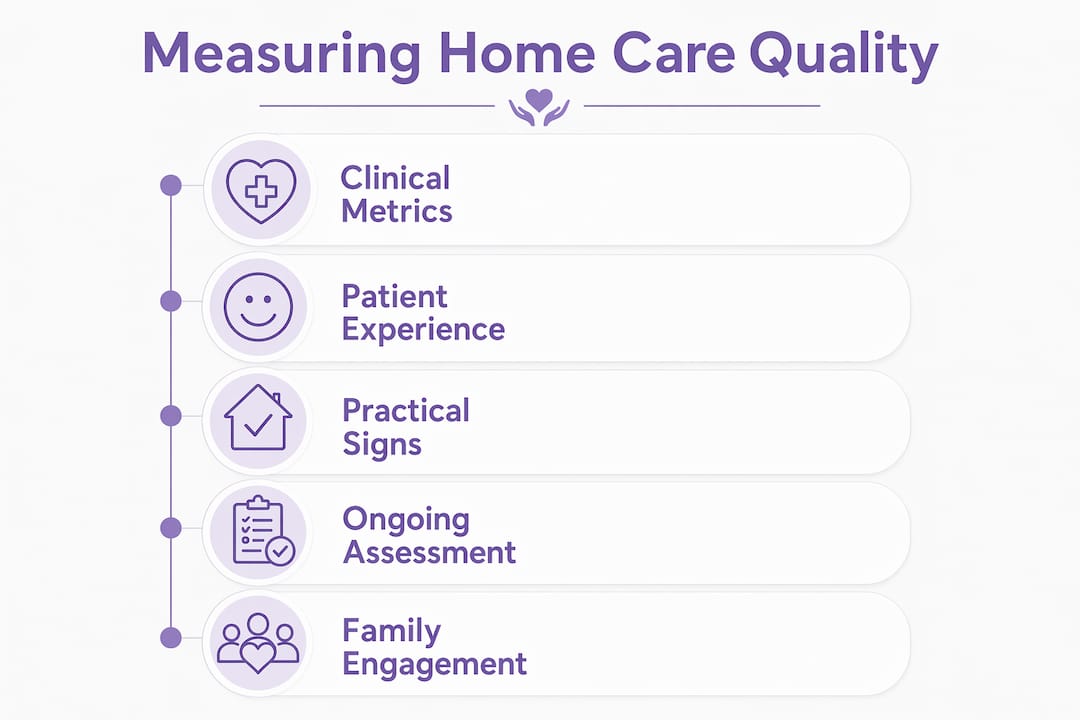
Consistency in caregiver assignments and agency communication directly shapes how families perceive quality and trust. Agencies that include families in care updates, not just in emergencies, build a fundamentally different relationship than those that communicate only when problems arise.
How should families conduct ongoing quality assessments?
A single evaluation at the start of care is not enough. Quality monitoring is a continuous process, and families play a direct role in it.
The initial comprehensive assessment creates the care plan baseline. This assessment should document your loved one’s functional abilities, medical conditions, home environment, and personal preferences. A personalized care plan built from thorough assessment produces better outcomes than a generic template.
Follow these steps to maintain quality over time:
- Conduct a monthly self-assessment. Families should regularly evaluate their loved one’s ability to manage daily tasks. Watch for changes in mobility, appetite, mood, and personal hygiene. Early detection allows care adjustments before a crisis develops.
- Review care logs weekly. Check digital logs for missed tasks, late arrivals, or notes flagged by the caregiver. Patterns matter more than single incidents.
- Schedule a formal care plan review every 60 days. Align this with the OASIS reassessment cycle. Use the meeting to compare current functional status against the baseline.
- Ask direct questions at each review. Does the current care level still match your loved one’s needs? Has the caregiver reported any new concerns? Has the care plan been updated to reflect recent changes?
- Track quality indicators over time. Keep a simple log of caregiver consistency, communication response times, and any incidents. This record becomes your evidence if you need to advocate for a care change.
Proactive self-assessment by families enables earlier intervention and better outcomes. Waiting for a fall or a hospitalization to trigger a care review is the most common mistake families make.
Pro Tip: Use a shared digital document or a free app like Google Sheets to track weekly observations. A three-month record gives you concrete data when discussing care changes with the agency.
Key Takeaways
Home care quality is measured through a combination of clinical outcome data, patient experience surveys, and practical family observations, and no single metric tells the full story.
| Point | Details |
|---|---|
| CMS Star Ratings as a benchmark | Review both Quality of Patient Care and Patient Survey scores before selecting an agency. |
| OASIS drives care plan updates | Reassessments every 60 days should trigger care plan adjustments when functional status changes. |
| Patient experience fills the gap | Dignity, communication, and safety surveys reveal what clinical scores cannot measure. |
| Caregiver turnover predicts quality | Agencies with stable staff deliver more consistent relationships and better daily outcomes. |
| Families must monitor continuously | Monthly self-assessments and weekly log reviews catch problems before they become crises. |
What formal metrics miss about real home care quality
I have spent years watching families navigate home care decisions, and the same pattern repeats. Families choose an agency based on a strong clinical star rating, then feel blindsided six months later when the care feels impersonal and reactive. The clinical score was accurate. It just did not tell the whole story.
The metrics that matter most to families, caregiver consistency, the feeling that someone actually knows their loved one, and the confidence that the agency will call before a problem escalates, are the hardest ones to find on a government website. Consumer experience frameworks are closing that gap, but families still need to ask direct questions and trust their observations.
The families I have seen navigate this best share one habit. They treat quality monitoring as an ongoing conversation, not a one-time check. They review home care best practices regularly, they ask their loved one how care feels, and they do not wait for the 60-day reassessment to raise a concern. That proactive posture is the single biggest predictor of a positive long-term care experience.
Technology helps. Digital care logs give families a window into daily care that paper records never could. But technology only works when the agency culture supports transparency. An agency that resists sharing logs or deflects questions about caregiver turnover is telling you something important.
— Michael
Quality care for your family, backed by real standards
Choosing a home care provider is one of the most consequential decisions a family makes. Helping-hands-home-care builds every care relationship on the same standards described in this article: clinical assessments, transparent communication, consistent caregiver assignments, and digital care logs that keep families informed.
Helping-hands-home-care’s home health aide services are designed around measurable outcomes and genuine family engagement. Whether your loved one needs daily personal care, skilled support, or simply a reliable presence, the team at Helping-hands-home-care applies the same quality criteria families should expect from any provider. Contact Helping-hands-home-care to discuss a care plan built around your family’s specific needs.
FAQ
What does CMS use to calculate home care quality ratings?
CMS calculates Home Health Star Ratings quarterly using 7 clinical outcome measures for the Quality of Patient Care score and 6 patient experience measures for the Patient Survey score. Agencies receive separate scores for each category.
How often should a home care agency reassess my loved one?
Medicare-certified agencies using the OASIS tool must conduct reassessments every 60 days. Each reassessment should result in a care plan review that reflects any changes in functional status or medical needs.
What is the biggest red flag when evaluating a home care agency?
High caregiver turnover, often above 60% annually, is the strongest predictor of poor service quality. Vague or evasive answers about backup care protocols are a close second.
Can families measure home care quality without formal tools?
Families can track practical indicators including caregiver consistency, communication response times, and weekly digital care log reviews. These observations complement formal ratings and often catch problems earlier.
Why do patient experience scores matter as much as clinical scores?
Clinical scores measure health outcomes. Patient experience scores measure whether clients feel respected, safe, and heard during daily care. Both dimensions are necessary for a complete picture of home care quality assessment.
Recommended
- Home Care Services for Seniors: A Family Guide | Helping Hands Home Care
- Talking to Parents About Home Care: A Family Guide | Helping Hands Home Care
- Home Care Industry Best Practices for Quality and Compliance | Helping Hands Home Care
- Difference Between Home Care Types: Family Guide 2026 | Helping Hands Home Care