
Professional Home Care Plan Examples for Elderly Care
Professional Home Care Plan Examples for Elderly Care

A professional home care plan is a physician- or clinician-directed document that specifies personalized goals, interventions, and service schedules to guide care for elderly individuals at home. These plans are not casual checklists. They are structured clinical tools that coordinate nurses, therapists, and family caregivers around measurable outcomes. Whether you are managing post-surgical recovery or chronic disease, understanding examples of professional home care plans gives you a concrete foundation for improving the quality and consistency of care your loved one receives.
What makes a home care plan professional and effective?
A professional care plan goes far beyond a list of daily tasks. According to Medicare standards, a compliant Plan of Care must include diagnoses, discipline-specific orders, visit frequency and duration, medications, durable medical equipment, measurable goals, and a physician signature. Each element serves a specific function in keeping care coordinated and legally defensible.
The most important feature is measurable, time-bound goals. A goal like “improve mobility” tells no one anything useful. A goal like “ambulate 200 feet with a walker independently within 6 weeks” gives every caregiver a clear target and a timeline. Measurable goals are the single feature that separates a professional plan from a generic task list.

Effective plans also include a safety assessment, emergency contact information, and clearly defined support roles. A home care assessment assigns services, responsible persons, and frequencies based on physical, cognitive, and functional evaluations. That structured evaluation is what produces a plan tailored to the individual rather than a generic template.
Pro Tip: Ask the supervising clinician to include a “rehabilitation potential” statement in the plan. This single field signals to Medicare reviewers that skilled care is medically justified and helps prevent claim denials.
Key structural elements to look for in any professional plan:
- Diagnosis codes linked to each goal
- Named disciplines (skilled nursing, physical therapy, occupational therapy, speech therapy)
- Visit frequency stated as a range (e.g., 3 visits per week for 4 weeks)
- Physician or nurse practitioner signature with date
- Scheduled review or recertification date
1. Wound care plan
A skilled nursing wound care plan is one of the most common home care plan examples in post-acute settings. The goal section typically reads: “Wound will show 50% reduction in size within 4 weeks with no signs of infection.” Interventions include wound assessment at each visit, irrigation and dressing changes per physician order, and patient and caregiver education on infection signs.
Visit frequency for wound care is usually 3 to 5 times per week initially, tapering as healing progresses. The plan documents the wound’s dimensions, drainage type, and tissue condition at every visit. This creates a measurable record that supports both clinical decisions and Medicare billing.
2. Medication management plan for chronic conditions
Heart failure and diabetes are the two most common chronic conditions requiring a dedicated medication management plan in home care. The goal: “Patient will verbalize correct medication names, doses, and timing for all 5 medications within 2 weeks.” Skilled nursing interventions include medication reconciliation, pill organizer setup, and education on side effects and warning signs.
This type of plan also documents the patient’s cognitive ability to self-manage. When cognition is limited, the plan assigns a specific family member or home health aide as the responsible party for medication administration. That assignment prevents dangerous gaps when shift changes occur.
3. Physical therapy plan after hip replacement
Post-hip replacement physical therapy plans are among the most structured home care plan examples available. A standard goal reads: “Patient will ambulate 150 feet on level surfaces with a standard walker with minimal assistance in 4 weeks.” Interventions include therapeutic exercise, gait training, transfer training, and home safety evaluation.
Specific, measurable therapy goals like these improve both plan effectiveness and compliance. Visit frequency is typically 3 times per week for 4 to 6 weeks. The plan also specifies precautions such as hip flexion limits and weight-bearing status, which every caregiver in the home must know.
4. Occupational therapy plan after stroke
An occupational therapy plan following stroke focuses on retraining activities of daily living (ADLs). A representative goal: “Patient will independently complete upper body dressing using adaptive equipment within 6 weeks.” Interventions include ADL retraining, fine motor exercises, cognitive strategy training, and home modification recommendations.
This plan type also addresses caregiver training directly. The occupational therapist documents specific techniques for assisting with bathing, grooming, and meal preparation so that family members perform tasks safely and consistently. That caregiver education component is what makes the plan a true coordination tool rather than a clinical document that sits in a binder.
5. Fall prevention plan with balance training
Fall prevention plans combine skilled nursing and physical therapy elements. The primary goal: “Patient will demonstrate 3 fall-prevention strategies and reduce fall incidents to zero within 60 days.” Interventions include balance exercises, strength training, home hazard assessment, and medication review for fall-risk drugs.
The home safety assessment component is specific. It documents loose rugs, poor lighting, bathroom grab bar placement, and stair conditions. Each hazard gets a recommended action and a responsible party. This level of detail is what person-centered home care plans are built around: personal preferences, health goals, and agreed actions tied to real living conditions.
6. How to customize plans for family caregivers
Professional care plan templates provide the clinical backbone, but family caregivers need to adapt them for daily home use. A family-friendly care plan template organizes content into six sections: person’s profile, medical needs, daily routines, safety, emergencies, and goals. That structure separates what requires a licensed professional from what a family member can safely handle.
Non-medical home care plans cover daily care needs, medical context, safety, support roles, and financial and legal planning. They require updating whenever health status changes or a hospitalization occurs. The most common mistake families make is treating the plan as a one-time document rather than a living record.
Practical customization steps for family caregivers:
- List every task and mark it as “professional only,” “family with training,” or “family independently”
- Include a backup caregiver for every critical task in case the primary person is unavailable
- Add a medication list with photos of each pill to reduce errors during handoffs
- Set a calendar reminder every 60 days to review and update the plan
Pro Tip: Keep a printed copy of the emergency section on the refrigerator. First responders are trained to check there, and it saves critical minutes when someone cannot locate the full binder.
7. Common compliance challenges in managing care plans
Compliance is where many otherwise strong plans break down. A physician signature for a Medicare home health Plan of Care must be obtained within 30 days of the start of care to avoid claim denials. That 30-day window is tighter than most families realize, and delays are the leading cause of reimbursement problems for home health agencies.
Medicare home health recertification requires OASIS assessment completion within a 5-day window at the end of each 60-day certification period. Missing that window interrupts coverage and creates a gap in care. Operational scheduling triggers, rather than ad-hoc reminders, are the most reliable way to track these deadlines.
Visit documentation must also align precisely with plan orders. When a nurse visits more or fewer times than the plan orders, the discrepancy creates a billing compliance risk. Documentation checklists that reference goals in every visit note are the most practical defense against claim denials. Digital platforms like WellSky, Homecare Homebase, and Axxess automate this alignment and flag discrepancies before submission.
Key takeaways
Effective professional home care plans combine measurable goals, discipline-specific interventions, and regular reviews to produce consistent, compliant care for elderly individuals at home.
| Point | Details |
|---|---|
| Measurable goals are non-negotiable | Replace vague objectives with time-bound targets like “ambulate 200 feet in 6 weeks.” |
| Physician signature has a hard deadline | Medicare requires sign-off within 30 days of start of care to prevent claim denials. |
| Family plans need six core sections | Profile, medical needs, routines, safety, emergencies, and goals keep delegation clear and safe. |
| Recertification has a 5-day window | OASIS assessments must be completed within 5 days at the end of each 60-day period. |
| Plans are living documents | Update after every hospitalization or significant health change to keep care accurate. |
Why the plan itself is only half the work
I have reviewed hundreds of home care plans over the years, and the ones that actually improve outcomes share one trait that no template can supply: someone in the household treats the plan as a working tool rather than a compliance form.
The most overlooked element is the emergency section. Families spend hours on medication schedules and therapy goals, then write “call 911” under emergencies and consider it done. A real emergency section names the hospital of preference, lists the attending physician’s direct line, documents allergies and current medications in a format paramedics can read in 30 seconds, and identifies who has medical power of attorney. That detail saves lives.
I also think the field underestimates how much caregiver role clarity matters. When a plan says “family to assist with bathing,” that sentence means something different to every person who reads it. The plans I have seen work best specify the exact technique, the adaptive equipment involved, and the safety cue the caregiver should watch for. That level of specificity feels excessive until the moment it prevents a fall or a skin tear.
My honest recommendation: treat the care plan review schedule as seriously as the plan itself. A plan that was accurate in January may be dangerously outdated by March if a hospitalization changed medications, mobility status, or living arrangements. Build the review into the calendar the same day you finalize the plan.
— Michael
Support your care plan with professional home health services
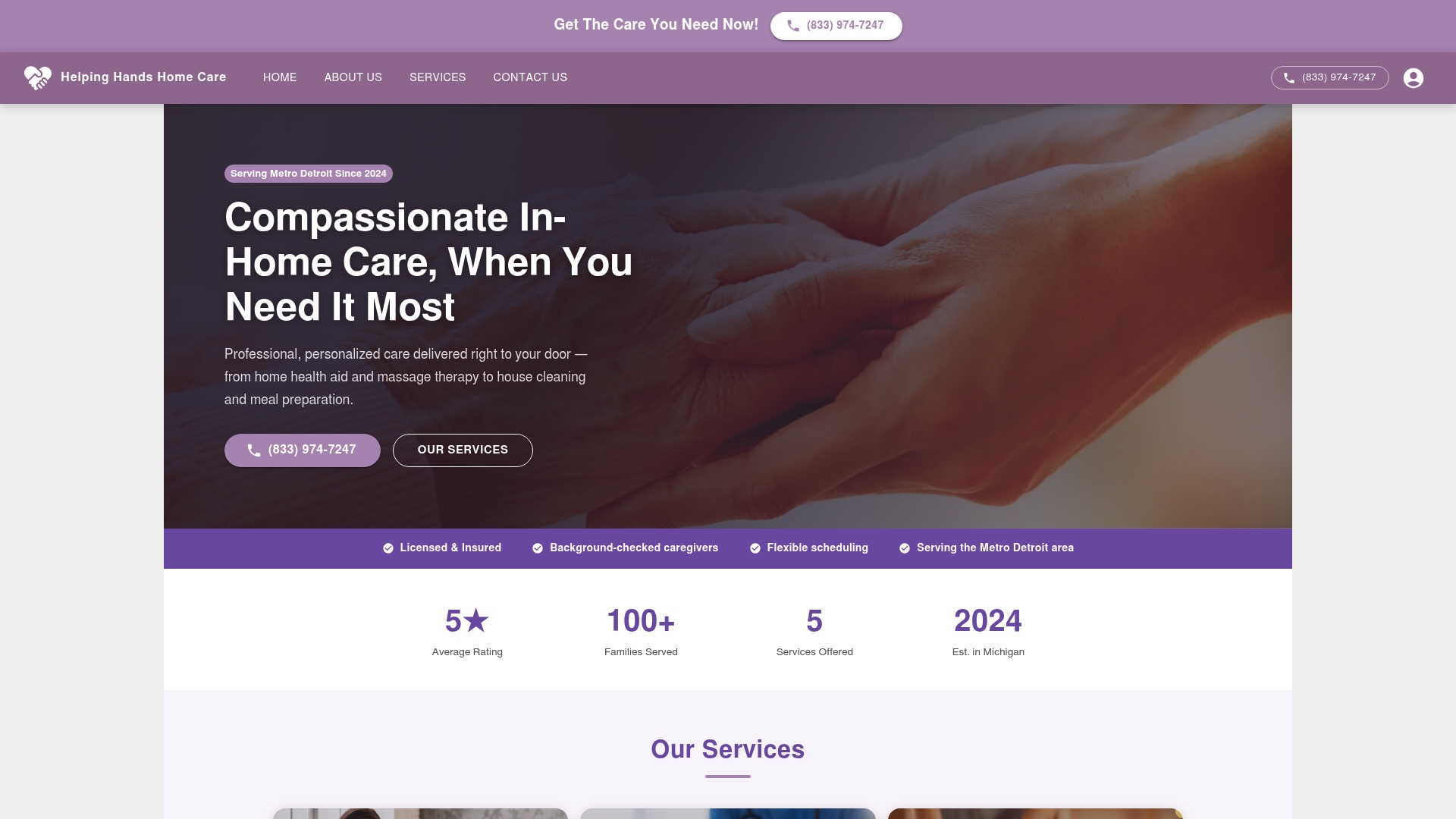
A well-written care plan only delivers results when the right people execute it. Helping-hands-home-care provides professional home health aid services designed to align directly with your loved one’s individualized care plan. From personal care and medication reminders to mobility assistance and companionship, every service is matched to the goals and schedules your plan specifies. Helping-hands-home-care also offers cleaning and massage services that support the broader well-being of elderly clients at home. Contact Helping-hands-home-care today to discuss how a dedicated home health aide can bring your care plan to life with consistency and compassion.
FAQ
What is a home care plan?
A home care plan is a physician- or clinician-directed document that outlines an elderly person’s diagnoses, care goals, specific interventions, visit schedules, and responsible parties. It serves as the clinical roadmap that keeps all caregivers aligned on the same objectives.
What are the required elements of a professional care plan?
A compliant professional care plan includes diagnoses, discipline-specific orders, visit frequency and duration, medications, durable medical equipment, measurable goals, and a physician signature. Each element is required for Medicare reimbursement and clinical accountability.
How often should a home care plan be updated?
Home care plans should be reviewed at least every 60 days for Medicare-certified care, and immediately after any hospitalization or significant change in health status. Treating the plan as a living document rather than static paperwork is what keeps care safe and current.
Can family caregivers create their own home care plan?
Yes. A family-friendly care plan organizes content into a person’s profile, medical needs, daily routines, safety protocols, emergency information, and goals. Family caregivers should clearly mark which tasks require a licensed professional and update the plan whenever health conditions change.
How do I avoid claim denials with a Medicare home care plan?
Obtain the physician signature within 30 days of the start of care and complete OASIS recertification within the 5-day window at the end of each 60-day period. Visit documentation must also match the plan’s ordered frequency to prevent billing discrepancies.