
VA Home Care Program Explained for Veterans in 2026
VA Home Care Program Explained for Veterans in 2026
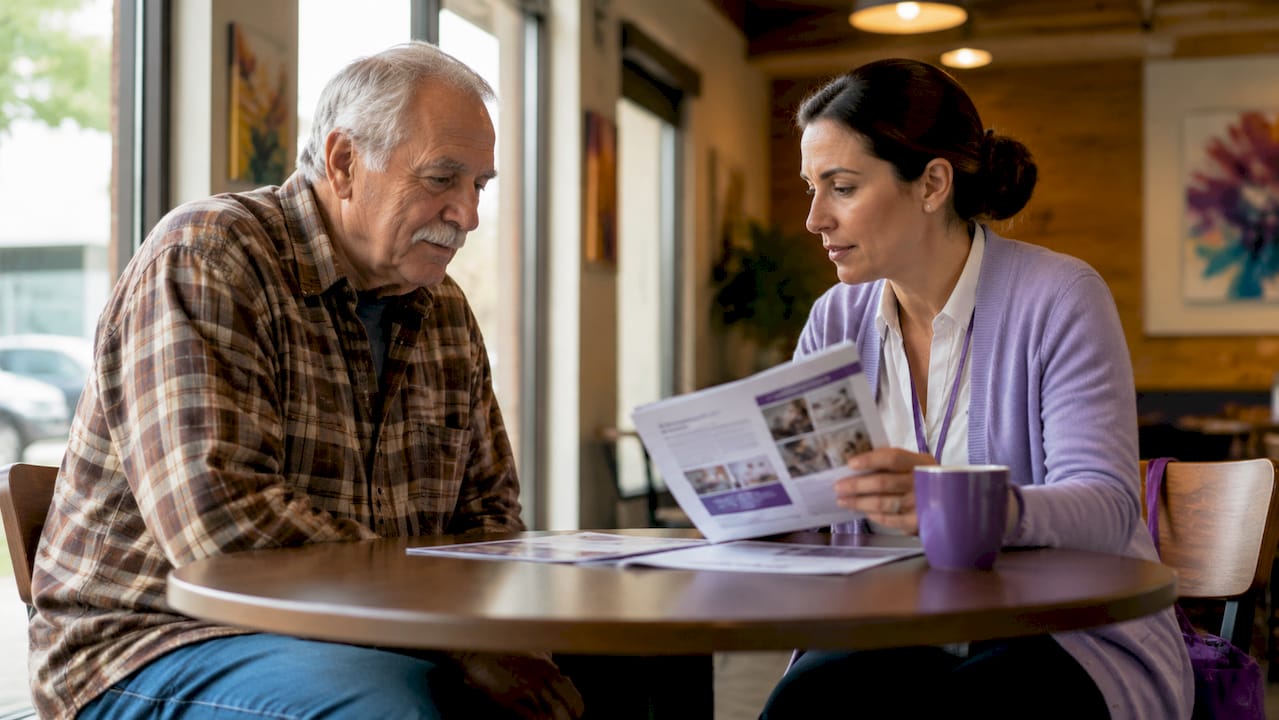
The VA home care program is a federally funded system that delivers personal care, medical services, and caregiver support directly to eligible veterans in their own residences. Programs like the Homemaker and Home Health Aide (H/HHA), Home-Based Primary Care (HBPC), and the Program of Comprehensive Assistance for Family Caregivers (PCAFC) each address different levels of need. Enrollment in VA health care is the required first step before accessing any of these services. Understanding what each program covers, who qualifies, and how to apply gives veterans and families the foundation to act with confidence.
Who is eligible for VA home care programs?
Eligibility for VA home care benefits rests on three factors: VA health care enrollment, clinical need, and, for some programs, disability rating. Every veteran must complete VA Form 10-10EZ to enroll and receive a priority group assignment before any home care services begin.
The disability rating threshold matters most when it comes to costs and program access:
- No copay: Veterans with a 50% or higher service-connected disability rating receive most VA home care services at no cost.
- PCAFC eligibility: A veteran must hold a 70% or higher disability rating and require personal care for at least 6 continuous months to qualify for the family caregiver program.
- Non-service-connected veterans: Many programs are accessible based on clinical need and financial eligibility, not solely service connection. Aging veterans with no combat-related disability can still qualify.
- Priority groups 1–6: Veterans in lower priority groups may face copays for non-service-connected care. Priority group 7 and 8 veterans pay the most out of pocket.
Service connection is not a universal requirement. The H/HHA program, for example, serves veterans regardless of whether their condition is service-connected. That distinction surprises many families who assume only combat injuries open the door to benefits.
Pro Tip: If you are unsure of your priority group, call your local VA medical center and ask a patient advocate to review your current enrollment status before applying for any home care program.
What VA home care programs and services are available?
The VA offers several distinct programs, each designed for a different level of need. Knowing the difference helps you request the right services from the start.
Homemaker and home health aide (h/hha)
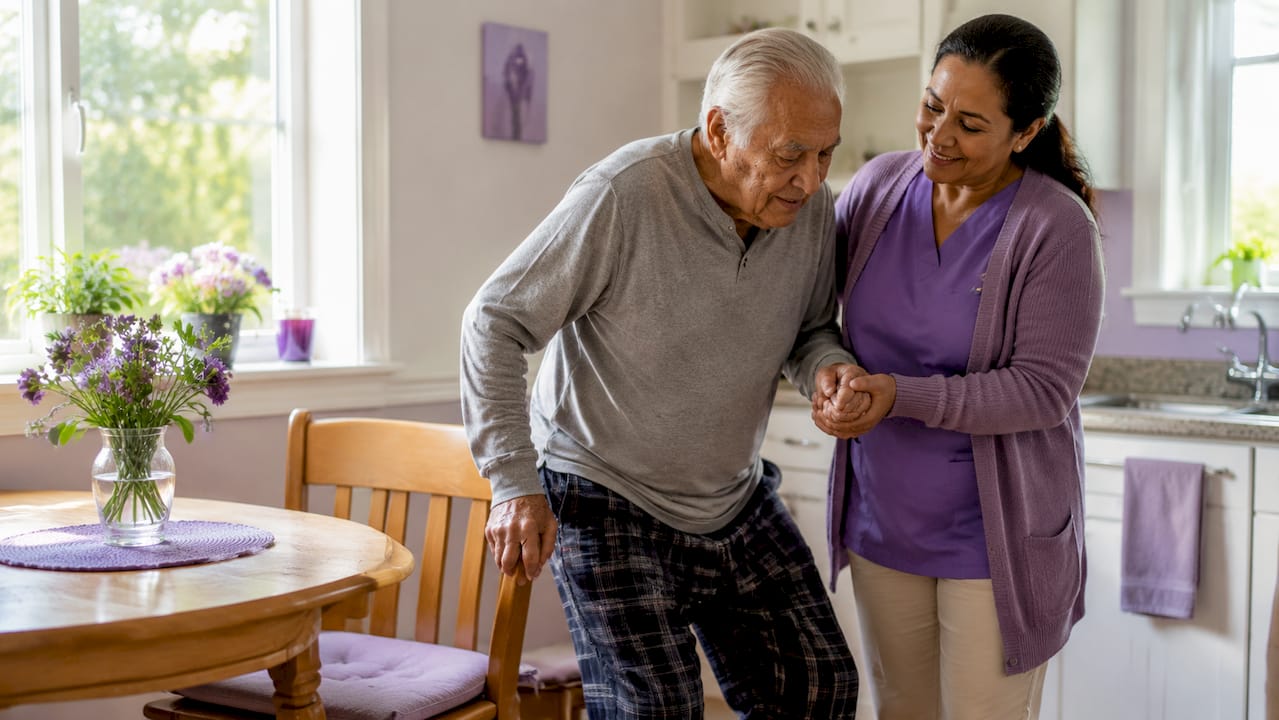
The H/HHA program provides personal care and ADL assistance to veterans who need help with bathing, dressing, grooming, and mobility. VA-trained aides or contracted providers deliver this support in the veteran’s home. This program is available regardless of service connection status, making it one of the most broadly accessible options.
Home-based primary care (HBPC)
HBPC sends interdisciplinary teams to veterans’ homes to manage complex chronic conditions. These teams include physicians, nurses, social workers, therapists, and dietitians. HBPC is designed for veterans whose conditions make regular clinic visits difficult or unsafe.
Program of comprehensive assistance for family caregivers (PCAFC)
PCAFC supports family members who provide primary care to eligible veterans. Approved caregivers receive monthly stipends, health insurance, counseling, respite, and travel benefits. This program recognizes that family caregivers carry a significant burden and deserve structured support, not just appreciation.
Other key programs
| Program | Primary Purpose | Key Feature |
|---|---|---|
| Skilled Home Health Care | Post-acute and wound care | Nursing and therapy visits after hospitalization |
| Veteran-Directed Care | Self-managed care budget | Veteran controls who provides care |
| Respite Care | Caregiver relief | Temporary relief for family caregivers |
| Aid and Attendance | Financial supplement | Pension benefit for veterans needing daily assistance |
| Housebound Benefit | Financial supplement | Pension for veterans confined to their home |
Pro Tip: Veteran-Directed Care is one of the least-known options. It gives veterans a personal budget to hire their own aides, including family members in some cases. Ask your VA social worker specifically about this program if you want more control over who provides your care.
The VA’s Connected Care program also extended home care reach significantly. As of 2023, it served over 2.5 million veterans through telehealth, enabling virtual check-ins and remote monitoring for veterans who cannot travel easily.
How does VA home care work in practice?
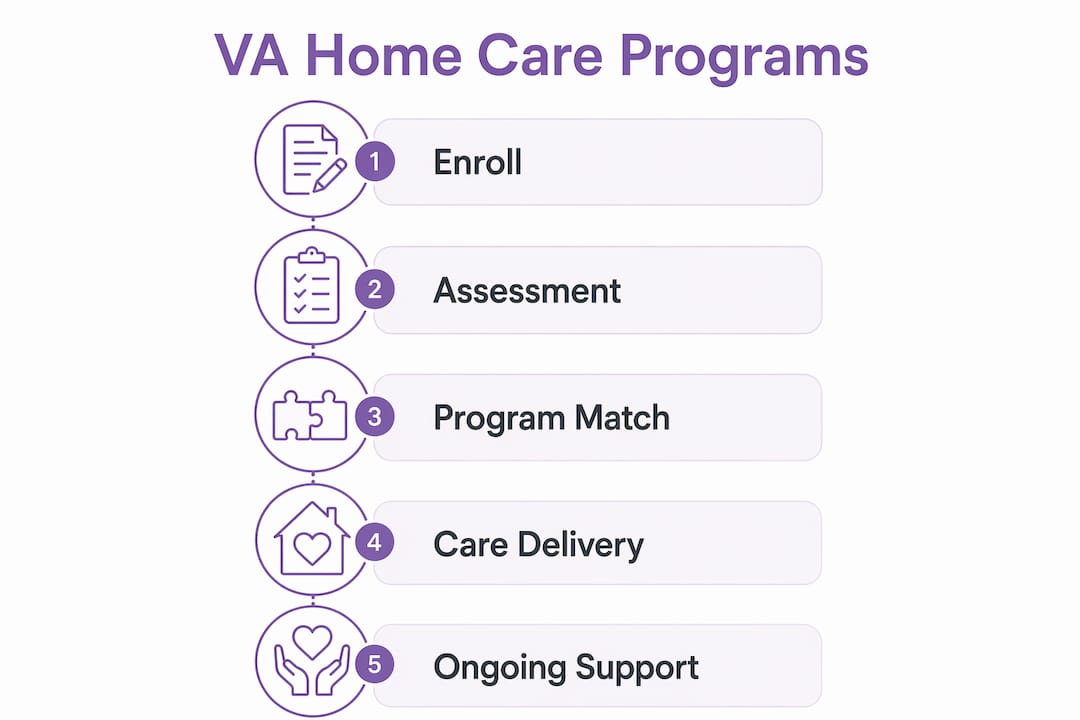
Applying for VA home care assistance follows a clear sequence. Knowing each step prevents delays and missed benefits.
- Enroll in VA health care. Complete VA Form 10-10EZ online at VA.gov, by mail, or in person at a VA medical center. This step is non-negotiable. Without enrollment, no home care program is accessible.
- Request a clinical assessment. Once enrolled, contact your VA primary care provider or social worker and request a home care evaluation. A VA care coordinator will assess your functional needs, living situation, and support network.
- Receive a care plan. The coordinator builds a plan that matches your needs to available programs. This plan specifies which services you qualify for, visit frequency, and any copay obligations.
- Apply for PCAFC separately if needed. Family caregivers must submit VA Form 10-10CG. The VA then evaluates both the veteran and the proposed caregiver to confirm eligibility.
- Access community care if VA capacity is limited. If the VA cannot provide care within 30 minutes for primary care or 60 minutes for specialty care, veterans qualify for referral to the Community Care Network. This is especially relevant for veterans in rural areas.
- Coordinate with Medicare or Medicaid. VA home care does not automatically replace Medicare or Medicaid benefits. In many cases, veterans can receive services from both systems simultaneously, covering gaps that one program alone would not fill.
The care coordinator role is central to this process. These professionals know which programs have current capacity, how to document clinical need correctly, and how to escalate cases when a veteran’s needs are urgent. Building a direct relationship with your coordinator shortens wait times and improves outcomes. For a broader look at home care services for seniors, including how to evaluate care options as a family, that resource covers the decision-making process in detail.
What do veterans get wrong about VA home care?
Several persistent misconceptions cause veterans to delay applying or assume they do not qualify. Clearing these up directly is worth your time.
The biggest myth is that VA home care is only for service-connected injuries. Many aging veterans qualify based on clinical need alone, regardless of whether their condition traces back to military service. A veteran managing diabetes, Parkinson’s disease, or post-surgical recovery may be fully eligible.
A second common mistake is assuming that years of non-use disqualify a veteran from enrollment. Enrollment in VA health care remains valid even if a veteran has not accessed VA services in years. Enrolling now, before a health crisis, preserves access to home care when it is needed most.
Rural veterans face a specific barrier: they often do not know they can request a community care referral. Veterans living in areas where the VA cannot meet access time standards should ask their coordinator directly about the Community Care Network. That referral can connect them to local providers approved by the VA.
“Veterans and their families should treat VA enrollment as a long-term investment, not a one-time transaction. The programs available today may be exactly what you need five years from now.”
Copay confusion is also common. Veterans in higher priority groups often assume all VA care is free. In reality, copay obligations depend on priority group assignment and whether the condition is service-connected. Reviewing your priority group assignment annually prevents billing surprises. For more detail on financial assistance options for home care, that resource covers VA benefits alongside other funding sources.
Key takeaways
The VA home care program gives eligible veterans access to personal care, medical support, and caregiver benefits at home, but enrollment and proactive engagement are the keys that unlock those services.
| Point | Details |
|---|---|
| Enrollment is the first step | Complete VA Form 10-10EZ before applying for any home care program. |
| Disability rating affects cost, not always access | A 50% rating removes copays; many programs serve veterans regardless of service connection. |
| PCAFC requires a 70% rating | Family caregivers of qualifying veterans receive stipends, insurance, and respite benefits. |
| Community Care Network fills rural gaps | Veterans can access local approved providers when VA travel time standards are not met. |
| Veteran-Directed Care offers the most flexibility | Veterans manage their own care budget and choose their own aides under this program. |
What i’ve learned helping veterans navigate this system
Working alongside veterans and their families over the years, I have seen one pattern repeat itself: the veterans who get the most out of VA home care are the ones who enrolled early and stayed engaged, not the ones who waited for a crisis.
The PCAFC is genuinely one of the most underused benefits in the entire VA system. Families who qualify for it often do not know it exists until a social worker mentions it almost in passing. Monthly stipends, health insurance for the caregiver, and structured respite care can transform a family’s ability to sustain long-term care at home. If you have a family member providing primary care to a veteran with a 70% or higher rating, apply for PCAFC now.
Veteran-Directed Care is the other program I encourage people to ask about specifically. Most VA social workers will not lead with it because it requires more administrative setup. But for veterans who want to hire a trusted neighbor, a family member, or a specific aide they already know, it is the right tool.
The VA system rewards persistence. Care coordinators carry heavy caseloads. Following up, documenting requests in writing, and asking for escalation when needed are not aggressive moves. They are how you get results. The programs exist. The funding is there. Your job is to claim what you have earned.
— Michael
How Helping-hands-home-care supports veterans at home
Helping-hands-home-care works directly with veterans and their families to provide quality in-home care that complements VA home health services. Whether a veteran needs daily living assistance, personal care support, or help maintaining a safe home environment, Helping-hands-home-care brings trained, compassionate aides to the door. The team understands the specific needs of aging veterans and coordinates smoothly alongside VA care plans. Explore the home health aide services Helping-hands-home-care offers to see how professional in-home support can fill the gaps that VA programs do not always cover. Contact Helping-hands-home-care today to discuss your veteran’s specific care needs.
FAQ
What is the VA home care program?
The VA home care program is a federally funded system that delivers personal care, medical services, and caregiver support to eligible veterans in their own homes. Programs include H/HHA, HBPC, PCAFC, and Veteran-Directed Care, each serving different levels of need.
Do you have to be service-connected to get VA home care?
No. Many VA home care programs are available based on clinical need and financial eligibility, not solely service connection. Aging veterans with non-service-connected conditions can qualify for programs like the Homemaker and Home Health Aide program.
How do you apply for VA home care benefits?
Start by enrolling in VA health care using VA Form 10-10EZ. Then request a home care assessment from your VA primary care provider or social worker, who will build a care plan matched to your needs.
What does PCAFC provide to family caregivers?
PCAFC provides monthly stipends, health insurance, mental health counseling, respite care, and travel benefits to approved primary caregivers of veterans with a 70% or higher service-connected disability rating who require personal care for at least 6 continuous months.
Can rural veterans access VA home care?
Yes. If the VA cannot meet access time standards, veterans qualify for referral to the Community Care Network, which connects them to approved local providers. Rural veterans should request this referral directly from their VA care coordinator.