
Know When to Increase Home Care for Aging Parents
Know When to Increase Home Care for Aging Parents

Increasing home care is defined as adding professional or structured support to an aging parent’s daily routine when their current level of assistance no longer keeps them safe or well. Families often miss the right moment because decline rarely arrives all at once. Instead, it builds through small, compounding changes across physical health, cognitive function, and the home environment. Knowing when to increase home care means learning to read those patterns before a crisis forces the decision. This guide gives you a practical, expert-grounded framework to assess your parent’s needs and act with confidence.
When to increase home care: key warning signs to watch
The clearest indicators for boosting home care got into three categories: physical, cognitive, and environmental. Recognizing signs across all three gives you a more reliable picture than any single symptom alone.
Physical warning signs
Physical decline is often the most visible signal. Watch for these indicators:
- Frequent falls or near-misses, even minor ones, since each fall raises the risk of the next
- Medication mismanagement: missed doses, double doses, or expired prescriptions left untouched
- Noticeable hygiene decline: unwashed hair, unchanged clothing, or body odor that was not present before
- Unexplained weight loss, which often points to skipped meals or difficulty preparing food
- Increased fatigue that limits previously routine activities like walking to the mailbox
Cognitive and behavioral warning signs
Cognitive changes are easier to dismiss as “just a bad day,” but patterns matter more than single events. Memory lapses that affect safety, such as leaving the stove on or forgetting to lock the door, cross a clear threshold. Confusion about time, place, or familiar faces signals something more serious than ordinary forgetfulness. Unsafe behaviors like driving when disoriented or wandering at night require immediate attention.
Environmental warning signs
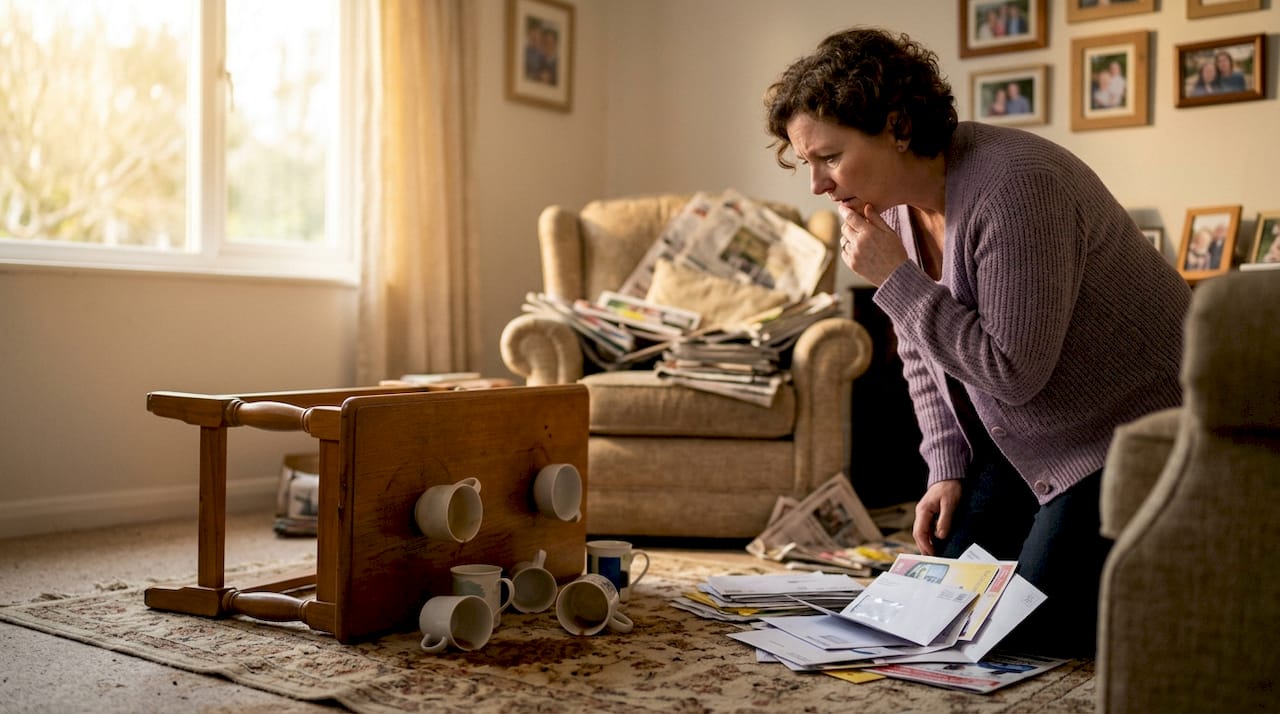
The home itself tells a story. Kitchen clutter, laundry piles, and unopened mail are critical early indicators of declining daily functioning before medical crises occur. Spoiled food left in the refrigerator, unpaid bills stacking up, or a yard that has gone unmaintained all point to a person who is losing ground on basic tasks. These environmental flags often appear weeks before a family notices a physical or cognitive change.
Pro Tip: Use a structured checklist during visits. Experts note that 4–8 moderate concern indicators across these three categories suggests contacting a doctor or care professional, while 16 or more signals urgent intervention.

| Warning Category | Key Signs |
|---|---|
| Physical | Falls, medication errors, hygiene decline, weight loss |
| Cognitive | Memory lapses affecting safety, confusion, unsafe behaviors |
| Environmental | Spoiled food, unpaid bills, clutter, neglected laundry |
| Threshold: moderate concern | 4–8 indicators across categories |
| Threshold: urgent intervention | 16 or more indicators across categories |
How to assess your parent’s home and daily routines
The home environment works as an informal diagnostic tool. Early signs of decline often appear in everyday household clues before severe health changes become obvious. A deliberate walk-through of your parent’s home during a visit reveals more than a conversation ever will.
Focus your observation on these areas:
- Kitchen: Check expiration dates, look for burned pots, and note whether the stove is being used safely
- Bathroom: Observe whether toiletries are being used and whether the space is reasonably clean
- Mailbox and bills: A pile of unopened mail often signals cognitive fatigue or overwhelm
- Laundry: Unwashed clothes or sheets suggest either physical difficulty or loss of motivation
- Bedroom: Look for signs of disrupted sleep, such as a bed that is never made or clothing piled on the floor
Beyond the physical space, observe your parent’s activities of daily living, known in care settings as ADLs. These include bathing, dressing, eating, toileting, and moving around the home. Difficulty with two or more ADLs is a widely recognized threshold for considering personal care assistance. You can find a detailed breakdown of what personal care assistance covers to understand what professional support actually looks like in practice.
Pro Tip: Reliable decisions require observing trends over weeks or months, not reacting to a single difficult visit. Keep a simple log of what you notice each time you see your parent.
Involve your parent’s primary care physician early. A doctor can order a formal functional assessment and flag medical causes behind behavioral changes. That clinical input strengthens your case when discussing increased care with other family members.
Practical steps to increase home care gradually
Starting with a small increase is almost always the right move. A few hours a week focused on specific tasks, such as errands, light housekeeping, or meal preparation, sets up a gradual increase aligned with evolving needs. This approach also gives your parent time to adjust to having help in the home, which dramatically improves long-term acceptance.
A step-by-step approach to scaling care
- Start with homemaker services. Cooking, cleaning, and grocery runs address immediate practical gaps without feeling intrusive.
- Add a personal care aide when hygiene, dressing, or bathing becomes difficult. Aides assist with ADLs while preserving as much independence as possible.
- Bring in a certified nursing assistant (CNA) if your parent has a chronic condition requiring regular monitoring, wound care, or medication management.
- Consider skilled nursing visits for post-hospital recovery or complex medical needs that go beyond what a CNA handles.
- Add respite care to give family caregivers a scheduled break, which prevents burnout before it becomes a crisis.
Communicating with your parent and family
Conversations about increasing care go better when they focus on supporting independence rather than taking it away. Framing help as a tool for staying home longer resonates with most older adults who fear losing control of their lives. Involve your parent in choosing the caregiver and setting the schedule whenever possible.
Family disagreements about care levels are common. Designate one family member as the primary coordinator to avoid conflicting messages. A family meeting with a social worker or care manager can resolve disputes that feel stuck.
Financial considerations
Professional home care averages $35 per hour with a typical minimum of 3–4 hours per week. Medicare generally does not cover non-medical home care, but veterans benefits, Medicaid waiver programs, and long-term care insurance often do. Contact your state’s Area Agency on Aging for a free needs assessment and a list of local funding options.
How to handle resistance and common obstacles
Resistance from a loved one is the most common obstacle families face when they try to increase in-home care. Most older adults resist not because they disagree with the need, but because accepting help feels like a loss of identity and control.
“Hiring help preserves independence by offloading difficult tasks rather than taking control away from seniors. The goal is to keep your parent living on their own terms for as long as possible, and professional support is the tool that makes that possible.” Harvard Health
Practical strategies for overcoming resistance include:
- Offer a trial period. Suggest two weeks of help with no long-term commitment. Most parents become comfortable once they experience the relief.
- Let your parent choose. Give them options on timing, tasks, and caregiver gender when possible.
- Involve the doctor. A physician’s recommendation carries more weight with many older adults than a family member’s concern.
- Address cost fears directly. Walk through the actual numbers and funding options together rather than leaving cost as an unspoken worry.
Caregiver burnout marked by chronic fatigue, depression, or an inability to manage your own life is itself a clear signal that professional support is overdue. Your wellbeing matters too, and a burned-out caregiver cannot provide consistent, quality care. Recognizing your own limits is not a failure. It is a responsible part of the care decision.
For families who want to understand the full case for professional help, the guide on why to hire a professional caregiver covers the key thresholds in plain language.
Key Takeaways
Recognizing a pattern of physical, cognitive, and environmental warning signs across multiple visits is the most reliable method for knowing when to increase home care for an aging parent.
| Point | Details |
|---|---|
| Use a three-category checklist | Assess physical, cognitive, and environmental signs together, not in isolation. |
| Act on patterns, not single events | Track changes over weeks or months before making a care decision. |
| Start small and scale up | Begin with homemaker services and add personal care or nursing support as needs grow. |
| Frame help as independence | Present increased care as a way to stay home longer, not as a loss of control. |
| Address burnout early | Family caregiver exhaustion is a direct indicator that professional support is needed. |
What I’ve learned from watching families wait too long
Families almost always wait longer than they should. The pattern I see repeatedly is this: a parent has a fall, recovers, and everyone breathes a sigh of relief. Then another fall happens, or a medication error, or a neighbor calls because something seemed off. By that point, the family is reacting to a crisis instead of managing a gradual transition.
The warning signs are almost always there weeks or months earlier. The kitchen tells the story. The mail pile tells the story. The unwashed laundry tells the story. Families miss these cues not because they are inattentive, but because they visit with love and optimism, and it is genuinely hard to see decline in someone you care about.
The counterintuitive truth is that adding help earlier actually preserves independence longer. Early intervention with home care prevents hospital readmissions and severe health emergencies by maintaining medication adherence and reducing falls. A parent who gets a few hours of support each week is far more likely to stay in their own home for years than one who holds out until a hospitalization forces a bigger change.
My honest advice: do not wait for a crisis to give you permission to act. If you are reading this article, you have already noticed something. Trust that instinct, use the checklist, and take the first small step. The families who act early report far less stress and far better outcomes for their parents.
— Michael
How Helping-hands-home-care supports families at every care level
When you are ready to take the next step, Helping-hands-home-care offers flexible, professional care designed to grow with your parent’s needs.

Helping-hands-home-care provides home health aide services that range from light homemaker support to personal care and skilled assistance. Care plans are built around your parent’s specific situation, not a one-size-fits-all schedule. The team works with families to assess current needs, identify the right level of support, and adjust services as those needs change over time. Whether your parent needs a few hours of help each week or daily in-home care, Helping-hands-home-care makes the process straightforward and respectful. Reach out to start a conversation about what the right level of care looks like for your family.
FAQ
What are the first signs that home care should be increased?
The earliest signs include medication errors, hygiene decline, unexplained weight loss, and environmental clues like spoiled food or unopened mail. These indicators, especially when they appear together, signal that current support is no longer enough.
How many warning signs justify calling a professional?
Experts recommend contacting a doctor or care professional when you identify 4–8 moderate concern indicators across physical, cognitive, and environmental categories. Sixteen or more indicators across those areas signal urgent intervention.
What if my parent refuses more help at home?
Frame increased care as a way to stay home longer and offer a short trial period with no long-term commitment. Involving the primary care physician in the conversation significantly improves acceptance.
Does Medicare cover increased home care services?
Medicare generally does not cover non-medical home care such as personal care aides or homemaker services. Veterans benefits, Medicaid waiver programs, and long-term care insurance are the most common funding sources for expanded in-home support.
How do I know if I am experiencing caregiver burnout?
Chronic fatigue, depression, or an inability to manage your own daily responsibilities are the primary signs of caregiver burnout. When burnout appears, increasing professional home care is both a practical and a health-driven necessity.
Recommended
- Talking to Parents About Home Care: A Family Guide | Helping Hands Home Care
- Signs You Need Home Care: A Family Caregiver Guide | Helping Hands Home Care
- Home Care Services for Seniors: A Family Guide | Helping Hands Home Care
- How to Prepare Home for Caregiver: 2026 Safety Guide | Helping Hands Home Care