
Mental Health Home Care for Elderly Family Members
Mental Health Home Care for Elderly Family Members
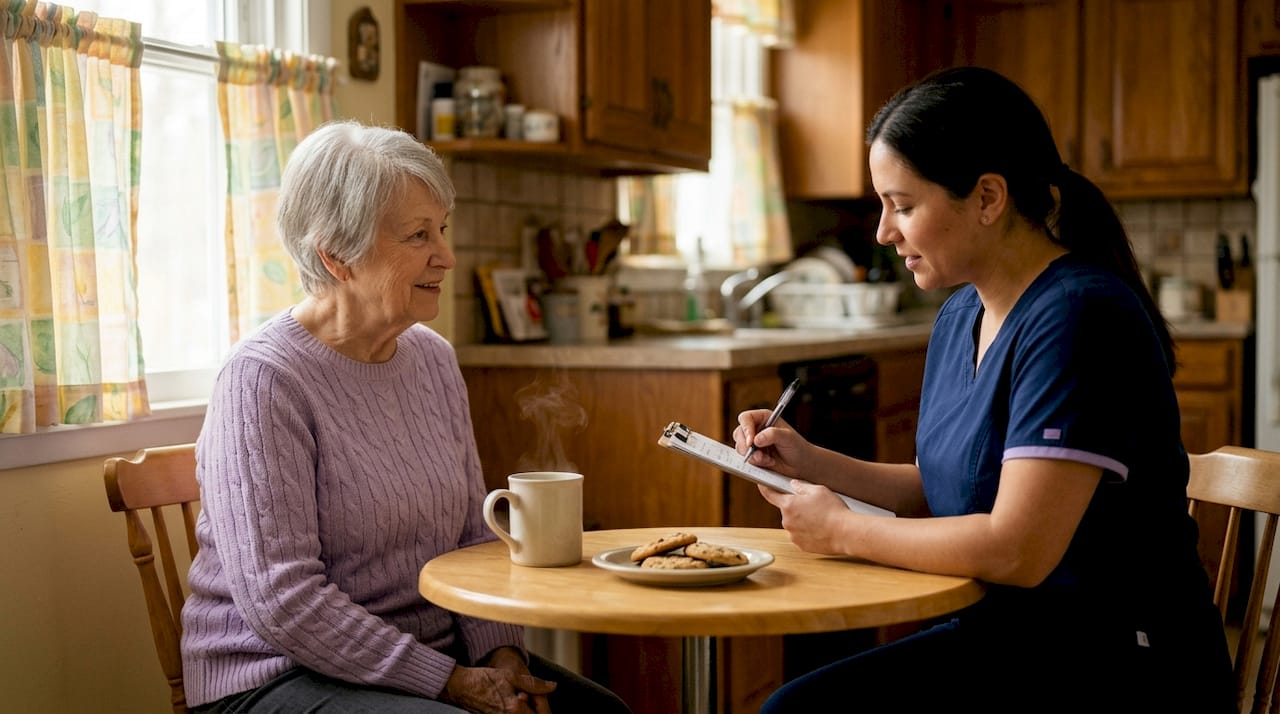
Mental health home care is defined as specialized, in-home support that combines clinical psychiatric services with day-to-day caregiving for individuals managing mental health conditions. This model matters most for older adults: depression affects 1 in 5 older adults yet is routinely mistaken for normal aging or medication side effects. Between 30% and 50% of home care patients show symptoms of depression, many of them undiagnosed. Understanding what is mental health home care is the first step toward getting your elderly family member the right support.
What is mental health home care and what services does it include?
Mental health home care is the industry term for a coordinated care model that delivers psychiatric and behavioral health services inside a person’s home. The recognized clinical categories include psychiatric nursing visits, medication management, behavioral health monitoring, and therapeutic coordination. These services differ from standard home health aide visits, which focus primarily on physical tasks like bathing and mobility.
Psychiatric nurses are the clinical backbone of this model. During each visit, they assess medication adherence, evaluate mood and cognitive function, screen for suicide risk, and communicate findings to the treating physician. This is not a social check-in. It is a structured clinical evaluation that generates documentation used to adjust treatment plans.
Other professionals fill critical supporting roles:
- Clinical social workers coordinate community resources, facilitate family communication, and provide short-term counseling.
- Counselors and peer support specialists offer emotional support and help clients build coping routines.
- Home health aides trained in behavioral health observe daily mood patterns and flag changes to the clinical team.
Telehealth has become a core delivery method for psychiatric home care, expanding access for housebound or rural seniors. Video consultations allow psychiatrists to conduct medication reviews and risk assessments without requiring the client to travel. That access gap was historically one of the biggest barriers to consistent mental health treatment for older adults.
Pro Tip: Ask any prospective agency whether their psychiatric nurses use a standardized mood assessment tool, such as the PHQ-9 or the Geriatric Depression Scale, at every visit. Agencies that do produce measurable outcomes. Agencies that do not are guessing.
How does mental health home care integrate with physical health?
Mental health and physical health are not separate tracks in quality home care. They are monitored together on every visit. Integrating mental health check-ins into routine home care is now considered a required quality standard, not an optional add-on. A caregiver who notices a client is eating less, sleeping more, and withdrawing from conversation is observing early warning signs of depression, not just behavioral quirks.
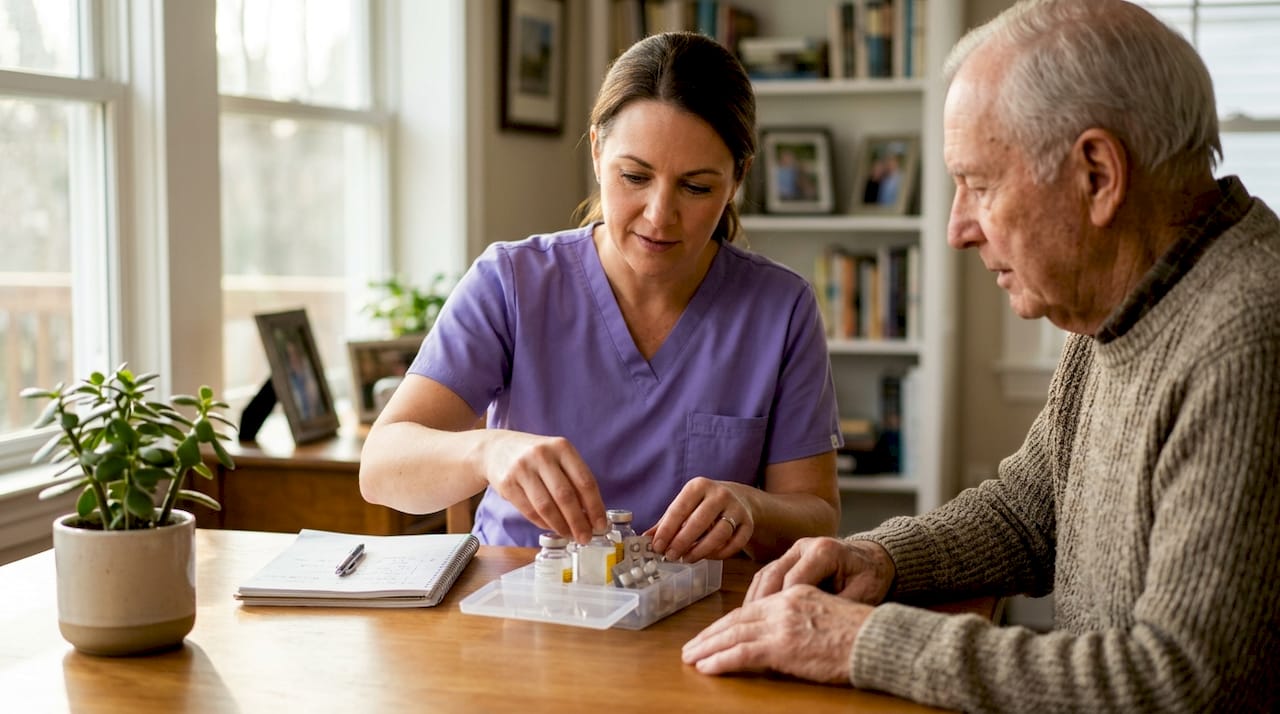
The practical value of this integration shows up in crisis prevention. Trained caregivers document subtle changes in mood, cognition, and social engagement alongside physical measurements like blood pressure and weight. That documentation creates a longitudinal picture that a physician or psychiatrist can use to intervene before a crisis develops.
| Care area | Physical-only approach | Integrated approach |
|---|---|---|
| Mood changes | Not tracked | Documented at every visit |
| Medication adherence | Pills counted | Adherence linked to mood and side effects |
| Cognitive function | Noted if severe | Screened with structured tools regularly |
| Crisis prevention | Reactive | Proactive, based on trend data |
| Care team communication | Siloed | Shared notes across disciplines |
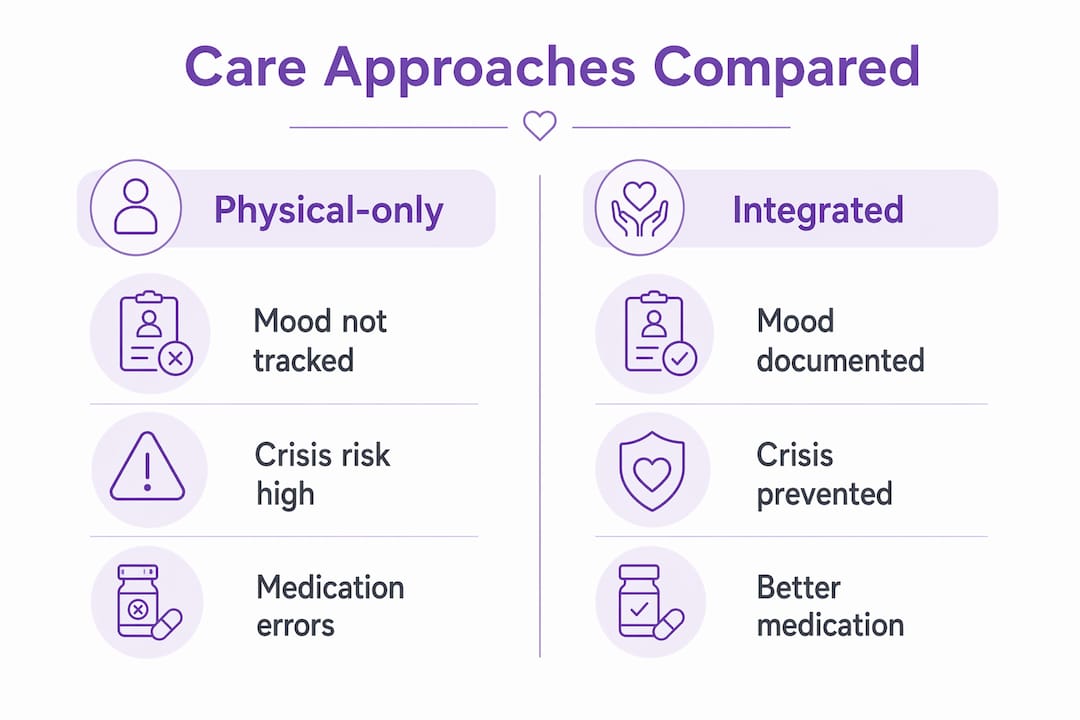
Untreated depression increases medication non-adherence by 50% and emergency department visits by 2.5 times. Those numbers show exactly why a physical-only care model fails older adults with unaddressed mental health needs.
Pro Tip: Request a copy of the agency’s care documentation template before signing any agreement. If the template has no fields for mood, behavior, or cognitive observations, the agency is not practicing integrated care.
Who should consider in-home mental health treatment and how to choose a provider?
In-home mental health treatment is appropriate when an elderly person shows signs that their mental health is affecting daily function, safety, or physical health. Families should look for these specific indicators:
- Persistent sadness or withdrawal lasting more than two weeks, especially after a loss or major life change.
- Unexplained medication non-adherence, which is often a behavioral symptom rather than forgetfulness.
- Increased emergency room visits without a clear physical cause.
- Cognitive changes such as confusion, memory lapses, or difficulty following conversations.
- Anxiety or agitation that disrupts sleep, eating, or daily routines.
- Refusal of previously enjoyed activities, which signals motivational decline rather than physical limitation.
Once you recognize these signs, the next step is selecting a provider. The standard recommendation is to contact 3 to 5 local home care agencies, request their licensing documentation and background-check protocols, and arrange pre-care meetings to assess personality fit. That process is not bureaucratic caution. It is the minimum due diligence for a service that will operate inside your family member’s home.
When you interview agencies, ask these specific questions. Does the agency employ licensed psychiatric nurses or contract them through a third party? What is the protocol when a regular caregiver calls in sick? How does the agency handle a client who refuses care? Caregiver training and transparency about staff turnover are among the most critical factors in care effectiveness. High turnover breaks the trust relationship that mental health care depends on.
Helping-hands-home-care conducts thorough background checks on all caregivers and uses a structured matching process to align caregiver personality with client needs. For families navigating this process for the first time, the step-by-step caregiver hiring guide from Helping-hands-home-care covers the full vetting process in practical detail.
Pro Tip: Do not evaluate agencies by phone alone. Arrange an in-person or video meeting between your family member and the proposed caregiver before care begins. The relationship quality between client and caregiver is the single strongest predictor of mental health care outcomes at home.
What are the limitations of mental health home care programs?
Mental health home care programs are not a substitute for every level of psychiatric care. Mental health home care is distinct from inpatient psychiatric treatment and outpatient therapy. It focuses on medical coordination and medication management, not full therapeutic replacement. Families who expect home-based psychiatric nurses to function as therapists will be disappointed, and more importantly, their family member will be underserved.
The clearest limitations include:
- Crisis situations requiring 24/7 monitoring. If a person is actively suicidal or experiencing a psychotic episode, home care cannot provide the level of supervision needed. Inpatient psychiatric admission is the appropriate level of care.
- Severe cognitive decline requiring memory care. Dementia at advanced stages typically requires a structured facility environment, not periodic home visits.
- Therapy replacement. Psychiatric home nurses manage medications and assess risk. They do not provide cognitive behavioral therapy or prolonged exposure therapy. Those require a licensed therapist in a clinical setting.
- Insurance coverage gaps. Private-pay home mental health services vary widely in cost and coverage. Medicare covers some psychiatric home visits under specific conditions, but coverage for counselors and peer support specialists remains inconsistent.
The Expanding Seniors’ Access to Mental Health Services Act is a bipartisan legislative effort to remove Medicare restrictions on clinical social workers in nursing and home care settings. That legislation signals a policy direction toward broader coverage, but families should verify current coverage directly with their insurer before assuming services are reimbursable. For a clear breakdown of payment options, the home care payment guide from Helping-hands-home-care outlines what Medicare, Medicaid, and private pay currently cover.
Key Takeaways
Mental health home care is the most effective way to deliver psychiatric support to elderly individuals who cannot or should not leave their home environment for treatment.
| Point | Details |
|---|---|
| Depression is widespread and underdiagnosed | Between 30% and 50% of home care patients show depressive symptoms, most of them untreated. |
| Integration with physical care is required | Every visit should document mood, cognition, and behavior alongside physical health metrics. |
| Vetting agencies takes real effort | Contact 3 to 5 agencies, verify licensing, and assess caregiver personality fit before committing. |
| Home care has defined limits | It manages medications and monitors risk but does not replace inpatient care or formal therapy. |
| Policy is improving access | Bipartisan legislation aims to expand Medicare coverage for clinical social workers in home settings. |
What I’ve learned watching families navigate this decision
Most families I’ve seen come to mental health home care too late. They spend months attributing their parent’s withdrawal, poor appetite, and medication refusal to “just getting older.” By the time they seek professional support, the situation has escalated to an emergency room visit that could have been prevented.
The single biggest mistake is treating mental health care as a separate category from physical home care. Families who hire a home health aide for physical tasks and assume the mental health piece will sort itself out are setting up for failure. The research is clear: multidisciplinary collaboration improves outcomes and reduces systemic costs. That is not a theory. It is what happens when you put trained eyes on the full picture at every visit.
I also want to flag something most articles skip: caregiver continuity matters more in mental health home care than in almost any other care context. An elderly person with depression or anxiety builds trust slowly. Rotating caregivers every few weeks destroys that trust and sets the client back. Before you sign with any agency, ask directly: “What is your average caregiver tenure, and what is your replacement protocol?” If the agency cannot answer that question clearly, walk away.
The policy environment is improving. Legislative efforts to expand Medicare access for clinical social workers are a genuine step forward. But do not wait for policy to catch up. The tools and providers to support your family member exist right now.
— Michael
Mental health support at home from Helping-hands-home-care
Helping-hands-home-care provides certified, background-checked caregivers trained to observe and document behavioral and cognitive changes alongside physical health tasks. Every care plan is built around the individual, with caregiver matching based on personality and care needs.
Families looking for in-home mental health support can schedule a consultation with Helping-hands-home-care to discuss their family member’s specific situation. The team reviews current conditions, care goals, and scheduling needs before recommending a plan. Helping-hands-home-care also offers wellness services at home that complement mental health care, including massage therapy for stress and anxiety relief. Contact Helping-hands-home-care to request an evaluation and get a care plan built around your family member’s actual needs.
FAQ
What is mental health home care for elderly adults?
Mental health home care is specialized in-home support that combines psychiatric nursing, medication management, and behavioral health monitoring for older adults. It delivers clinical mental health services inside the person’s home rather than in a clinic or hospital.
How does mental health home care work on a visit-by-visit basis?
Each visit typically includes a structured mood and cognitive assessment, a medication review, and documentation of behavioral changes. Findings are shared with the treating physician or psychiatrist to guide ongoing treatment adjustments.
Who provides mental health services at home?
Psychiatric nurses, clinical social workers, counselors, and trained home health aides each play defined roles. Psychiatric nurses handle clinical assessments and medication management, while aides observe daily patterns and report changes to the clinical team.
When is home care for mental health not enough?
Home care is not sufficient for active psychiatric crises, severe suicidal ideation, or advanced dementia requiring 24/7 supervision. Those situations require inpatient psychiatric admission or a specialized memory care facility.
Does Medicare cover in-home mental health treatment?
Medicare covers some psychiatric home visits under specific eligibility conditions, but coverage for counselors and peer support specialists remains limited. The Expanding Seniors’ Access to Mental Health Services Act is working to broaden that access for clinical social workers.