
What Is an Area Agency on Aging for Families Hiring Care?
What Is an Area Agency on Aging for Families Hiring Care?
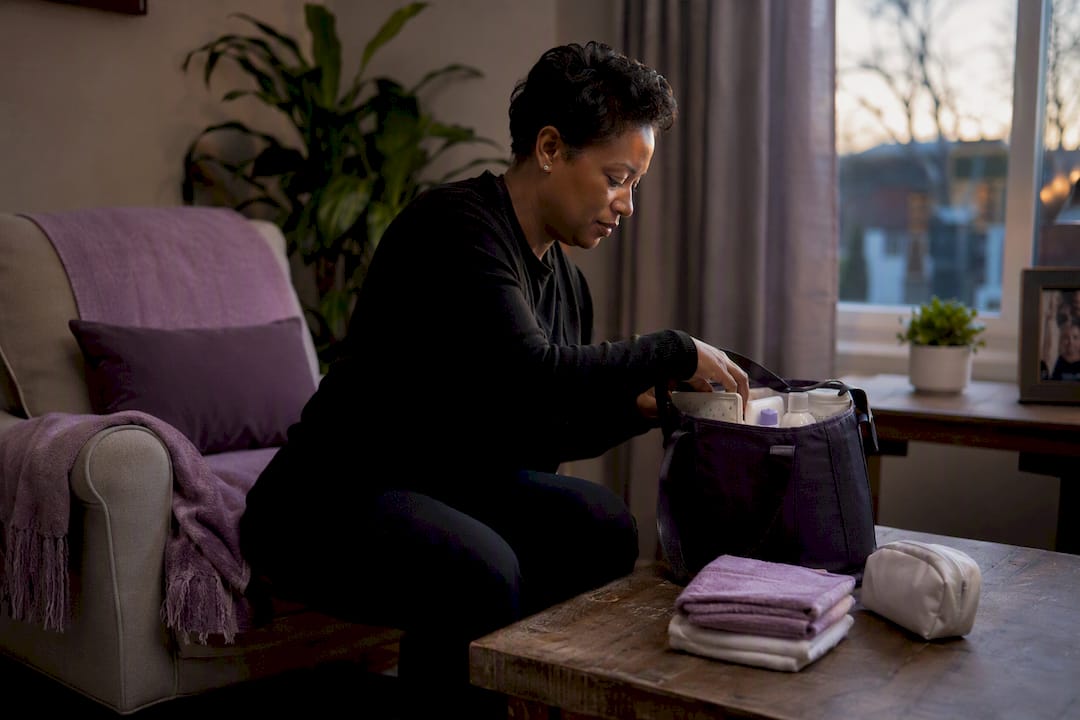
In this guide, “area agency on aging” refers to a local, paid in‑home care agency: a company that sends trained aides into a senior’s home for bathing, dressing, meal prep, transportation, and companionship. It’s a plain-language stand-in for the paid home care providers families actually search for when a parent starts struggling at home.
If you’re reading this at 11 PM after your mom fell for the second time this month, here’s your next move: call her doctor or hospital discharge planner first if she was recently hospitalized, since they can flag medical needs an aide should know about. If there’s no recent hospital stay, start calling agencies directly. Harvard Health notes that professional in‑home care can range from a few hours a week to round‑the‑clock support, and Medicare’s coverage of home health is narrower than most families expect.
- Recent hospital discharge → call the discharge planner first
- No hospital involvement, just gradual decline → start interviewing agencies like Helping Hands Home Care
- Unsure how much help is needed → ask for a free in‑home assessment before committing to hours
Key Takeaways
Choosing between a home care agency and a private hire comes down to who absorbs the legal, financial, and scheduling risk, and starting the search early beats waiting for a crisis.
| Point | Details |
|---|---|
| Definition matters | In this guide, an “area agency on aging” means a local paid in‑home care agency, not a government program. |
| Agencies absorb risk | Higher hourly rates buy screening, insurance, payroll handling, and backup coverage you’d otherwise manage yourself. |
| Private hire creates employer duties | Hiring directly usually makes you the employer of record, with payroll taxes and workers’ comp exposure. |
| Start before a crisis | Trial a few hours weekly for meal prep or cleaning so trust builds before needs escalate. |
| Verify trust signals in writing | Ask any agency, including Helping Hands Home Care, for insurance proof, background check dates, and a written contract before signing. |
Table of Contents
- What Services Do Area Agencies for Seniors Actually Provide?
- Should You Hire an Agency or a Caregiver Directly?
- When Should You Start Looking for In-Home Help?
- How Do You Choose a Reputable Home Care Agency?
- How Much Does In-Home Care Cost, and Who Pays for It?
- How Helping Hands Home Care Supports Families
- A Caregiver’s View on What Actually Matters
- Ready to Get Started With Helping Hands Home Care?
- Where to Learn More
- Frequently Asked Questions
- Sources
What Services Do Area Agencies for Seniors Actually Provide?
A local in‑home care agency covers far more ground than most families assume before they start looking. The core offerings break down into a handful of categories, and most agencies let you mix and match based on what your relative actually needs.
- Personal care: bathing, dressing, toileting, grooming, and mobility assistance
- Household tasks: light cleaning, laundry, tidying up common areas
- Meal preparation: cooking, grocery planning, and help with special diets
- Medication reminders: prompting at scheduled times (not administering medication, in most states)
- Transportation: rides to appointments, pharmacy runs, errands
- Companionship: conversation, games, supervision for someone who shouldn’t be alone
- Skilled home health: nursing or therapy visits, but only when ordered by a physician
Services scale with need. A parent who’s mostly independent might use several hours a week for cleaning and meal prep. Someone recovering from a stroke or living with advancing dementia might need coverage around the clock. Harvard Health points out that most non-medical home care is billed hourly and paid out of pocket, while skilled nursing visits are usually billed separately and may be partially covered by Medicare. Companies like Helping Hands Home Care typically bundle personal care and household support into one hourly rate, then price cleaning or massage as add-on services.
Should You Hire an Agency or a Caregiver Directly?
This is the decision that trips up most families, and it comes down to who takes on the risk. Hiring through an agency costs more per hour, but the agency absorbs the legal and administrative weight that comes with employing someone in your parent’s home. Hiring privately can save money hourly, but it quietly turns you into an employer.
| Factor | Agency | Private/Direct Hire |
|---|---|---|
| Hourly rate vs. bundled services | Higher hourly rate, often bundled | Lower hourly rate, billed separately |
| Employer of record | Agency | Family |
| Screening and background checks | Agency runs and manages | Family must arrange and verify |
| Insurance and liability | Agency carries coverage | Family typically assumes liability |
| Backup / continuity of care | Agency supplies a substitute | Family scrambles to find coverage |
| Supervision and clinical oversight | Agency supervises staff | Family supervises alone |
| Minimum hours / scheduling flexibility | Often has minimums | Usually more flexible |
Agency hire, the upside and downside:
- Prescreened caregivers, backup coverage, and liability protection, according to AARP
- Costs more per hour and may come with minimum shift lengths
Private hire, the upside and downside:
- Lower hourly cost and often more schedule flexibility
- You become the employer of record, which means payroll taxes, potential overtime rules, and workers’ compensation exposure, per the Special Needs Alliance
Most families underestimate that last point until a caregiver gets injured on the job or a tax notice shows up months later.
When Should You Start Looking for In-Home Help?
Waiting for a crisis is the single most common mistake families make. Watch for these signs that it’s time to bring in outside support:
- Trouble with daily tasks like bathing, dressing, or getting out of a chair
- A fall, or a near-fall your parent downplays
- Missed medications or a pillbox that doesn’t match the calendar
- Noticeable weight loss or an empty refrigerator
- Withdrawal from friends, hobbies, or phone calls
- You feel constantly exhausted or resentful from managing it all yourself
Starting small, before things escalate, gives everyone room to adjust. Harvard Health recommends treating the search like hiring for any professional role: interview a few agencies, ask about training and matching, and start with light support rather than waiting until a hospital stay forces the decision.
Pro Tip: Book a trial run of two or three hours a week for something low-stakes, like meal prep or light housekeeping. It builds trust before anyone needs to depend on a stranger for bathing or dressing.
How Do You Choose a Reputable Home Care Agency?
Ask these questions on your very first call. The answers separate agencies worth hiring from ones you should hang up on.
- Are your caregivers employees, and is the agency the employer of record?
- What does your background check cover, and how recent is it for the caregiver you’d assign to us?
- Can you send proof of liability and workers’ compensation insurance?
- What training do your aides have (CNA, home health aide certification, dementia-specific training)?
- Who supervises caregivers day to day, and how often do they check in?
- What’s your minimum hours requirement, and how flexible is scheduling?
- What happens if our regular caregiver is sick, on vacation, or quits?
- Can we see a sample contract before we commit to anything?
Watch for red flags along the way: hesitation to provide insurance proof, vague answers about who actually employs the caregivers, no written contract, or an inability to produce client references. A checklist like this, built around AARP’s guidance on hiring a caregiver, tends to expose weak agencies within the first five minutes of a phone call. For a deeper walkthrough of what to ask before signing anything, see how to choose the right home care agency.
How Much Does In-Home Care Cost, and Who Pays for It?
Agency rates run higher than private hire because you’re paying for more than caregiving hours. The American Caregiver Association notes that agencies build screening, payroll administration, insurance, and backup coverage into that hourly rate. Private-pay agencies commonly mark up an aide’s base wage to cover that overhead, while direct hiring shifts those costs (and the paperwork) onto the family.
Medicare’s role is smaller than most people expect. It covers limited, physician-ordered skilled home health, not ongoing personal care or housekeeping, which means most families pay out of pocket for day-to-day help. Options worth exploring include:
- Private pay (the most common arrangement for non-medical care)
- Long-term care insurance, if your relative has a policy
- Medicaid Home and Community-Based Services waivers, where your relative qualifies
For a full breakdown of what’s typically covered and what isn’t, Helping Hands Home Care’s payment guide walks through the options by category.
How Helping Hands Home Care Supports Families
Helping Hands Home Care provides home health aide services, personal care assistance, house cleaning, meal preparation, and therapeutic massage across the metro Detroit area. Getting started usually follows a simple sequence: an in-home assessment, a written care plan built around your relative’s actual needs, a caregiver match based on personality and skill fit, and ongoing supervision with regular check-ins.
Before signing anything, ask for the same trust signals you’d ask any agency for:
- Written confirmation of employer-of-record status
- Background check policy, including how recent the check is
- Certificates of liability and workers’ compensation insurance
- Licenses, certifications, and training records (CNA, HHA, dementia-specific training)
- Client references you can actually call
- A sample contract with clear cancellation and backup-care terms
You can review examples of how care plans typically look in practice through examples of personal care assistance.
A Caregiver’s View on What Actually Matters
Good caregiving starts with dignity, not tasks. Safety matters, but so does matching a caregiver’s personality to the person they’re supporting, someone patient for a parent who moves slowly, someone talkative for one who craves conversation. Families deserve caregivers who communicate openly and adjust plans as needs change, not a rigid schedule that ignores how someone’s actually doing that week.

Ready to Get Started With Helping Hands Home Care?
Helping Hands Home Care skips the guesswork that comes with private hiring, no researching payroll tax rules, no scrambling for backup coverage, no wondering if you’re legally exposed if a caregiver gets hurt in your parent’s home. You get a screened, trained, insured caregiver, and if that caregiver is out sick, someone else steps in the same week.
Getting started is a single phone call. During your first conversation, expect questions about your relative’s daily routine, any medical conditions, and how many hours of support you’re picturing, whether that’s a few hours weekly for house cleaning or daily visits from a home health aide. Every plan comes with a written contract and proof of insurance you can review before agreeing to anything. Browse the full range of services and request your in-home assessment this week.
Where to Learn More
- Harvard Health for guidance on timing the decision to hire help
- AARP for a breakdown of agency versus private-hire tradeoffs
- American Caregiver Association for a hiring walkthrough aimed at families
- Special Needs Alliance for the legal risks of direct hire
- Helping Hands Home Care’s licensing guide for what a licensed agency should be able to show you
Frequently Asked Questions
What does “area agency on aging” mean in this guide? Here, it refers to a local paid in‑home care agency that sends trained caregivers to a senior’s home for personal care, household help, and related support, not a government program.
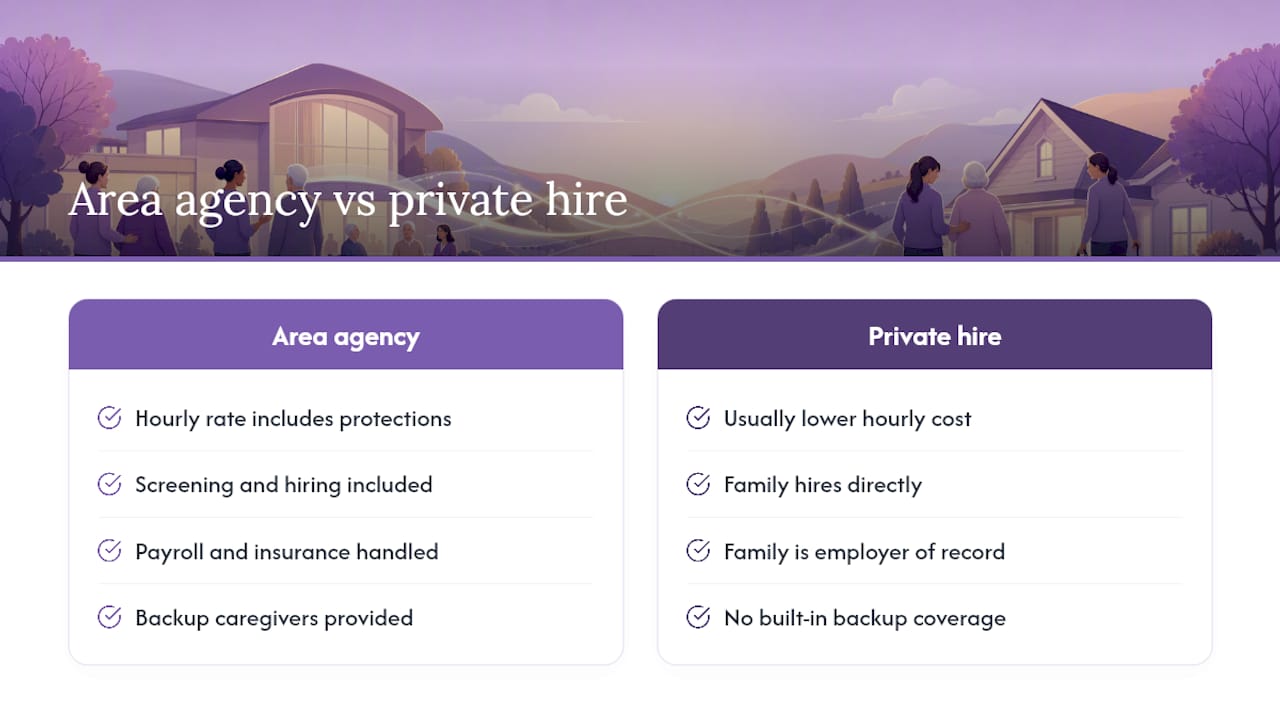
How do area agency services differ from hiring a caregiver privately? Area agency services include screening, insurance, payroll handling, and backup coverage built into the hourly rate. Private hire usually costs less per hour but makes the family the employer of record.
What do area agencies do that a private caregiver can’t offer? They supply a substitute caregiver when someone is sick, supervise staff, and carry liability insurance, protections a single private caregiver typically can’t provide on their own.
How do I find an area agency near me? Ask your relative’s doctor or hospital discharge planner for referrals, search online directories, or contact a local provider like Helping Hands Home Care directly for an assessment.
What are the benefits of area agencies for seniors compared to no help at all? Regular in-home visits catch health changes early, reduce fall risk, and ease the isolation that often comes with living alone, according to Harvard Health.
Sources
- When should you hire in‑home help or health aides? | Harvard Health Blog
- How to hire a caregiver: Complete guide for families | American Caregiver Association
- The pitfalls of caregiver employment: paying, withholding and reporting requirements | Special Needs Alliance
- Hiring a caregiver | AARP
Recommended
- Examples of Personal Care Assistance for Elderly Families | Helping Hands Home Care
- Licensed Home Care Agency: What Families Need to Know | Helping Hands Home Care
- How to Hire an In-Home Caregiver Step by Step | Helping Hands Home Care
- How to Choose the Right Home Care Agency for Your Family | Helping Hands Home Care