
What Is Companion Care? A Guide for Families
What Is Companion Care? A Guide for Families
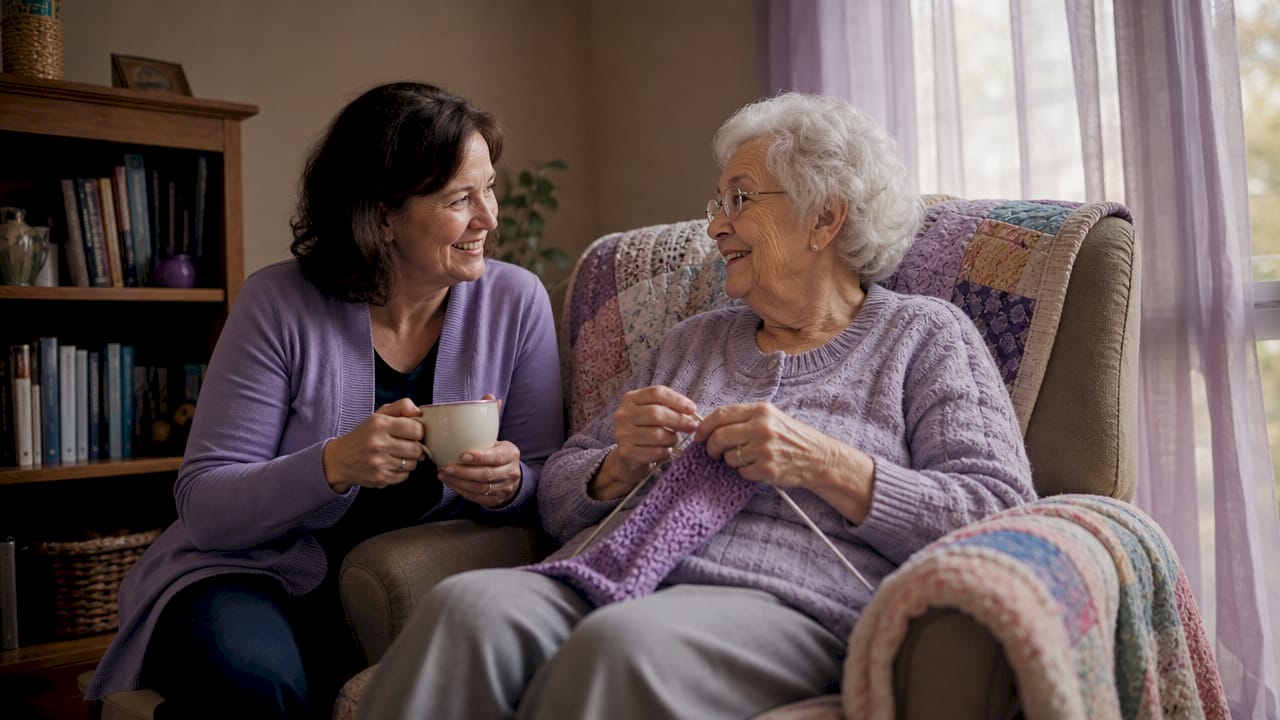
Companion care is defined as non-medical, in-home support designed to provide seniors with social connection, emotional support, and light practical assistance. It does not include clinical procedures, hands-on personal care like bathing, or medication administration. The industry term for this service category is “non-medical home care” or “homemaker/companion care,” and understanding that distinction matters before you sign any service agreement. Typical rates run around $34 per hour with a four-hour minimum per visit, meaning most families spend roughly $200 per session. Helping-hands-home-care provides this type of licensed homemaker support for seniors who want to stay independent at home.
What is companion care and what does it include?
Companion care covers the daily tasks and social interactions that keep seniors engaged, safe, and comfortable at home. The focus is on quality of life, not clinical outcomes. Common companion care duties include meal preparation, light housekeeping, errand running, medication reminders, and emotional support through conversation and shared activities.
Here is what a typical companion care plan looks like in practice:
- Conversation and social engagement: Talking, playing cards, reading together, or watching a favorite program. This is the core of the service.
- Meal planning and preparation: Helping plan nutritious meals and preparing them, without clinical dietary management.
- Light housekeeping: Tidying living spaces, doing laundry, and washing dishes. This is not deep cleaning.
- Errands and transportation: Grocery runs, pharmacy pickups, and rides to appointments or community events.
- Medication reminders: Prompting a senior to take their medication at the right time. Companion caregivers do not administer medications.
- Safety monitoring: Keeping a watchful eye on the senior’s general well-being and alerting family members if something seems off.
- Routine support: Helping maintain daily structure, which research links to better mental health outcomes in older adults.
Pro Tip: Ask any agency for a written list of included tasks before signing. “Companionship” can mean very different things depending on the provider, and vague contracts lead to unmet expectations.
Companion care supports seniors’ independence by reducing loneliness and preserving social connections, two factors that directly affect physical and cognitive health in older adults. The emotional component is often underestimated by families who focus only on physical tasks.

How does companion care differ from personal care and home health care?
Families often confuse companion care with personal care or nursing care, and that confusion leads to mismatched expectations and budget surprises. Understanding these distinctions is the first step toward building a care plan that actually fits your loved one’s needs.
Companion care is strictly non-medical and does not involve hands-on assistance with activities of daily living (ADLs) such as bathing, dressing, or toileting. Personal care steps in when a senior needs that physical help. Home health care, delivered by licensed nurses or therapists, handles clinical tasks like wound care, injections, or post-surgical monitoring.
| Care type | Services included | Hands-on with body? | Requires clinical license? | Typical cost range |
|---|---|---|---|---|
| Companion care | Conversation, meal prep, errands, reminders | No | No | $29–$37/hr |
| Personal care | Bathing, dressing, grooming, toileting | Yes | Sometimes | Higher than companion |
| Home health care | Nursing, therapy, wound care, injections | Yes | Yes | Highest tier |
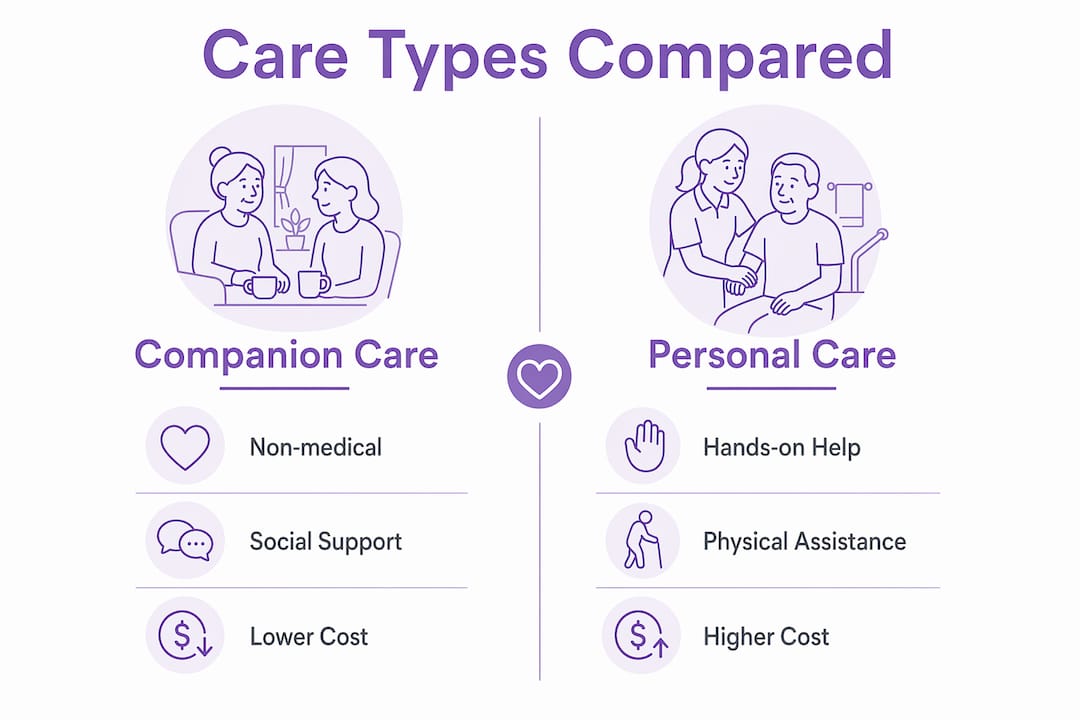
Personal care services carry higher pricing than companion care because they require more training and carry greater liability. Home health care sits at the top of the cost scale because it involves licensed clinical professionals.
Pro Tip: If your loved one needs help with both companionship and bathing, ask agencies whether they offer combined care plans. Many providers can pair a companion caregiver with a personal care aide on alternating visits, which keeps costs lower than upgrading the entire care level.
Companion caregivers often have backgrounds in social work or healthcare-related fields, but they are trained specifically to deliver emotional and practical support without performing clinical procedures. That boundary protects both the caregiver and the senior.
What does companion care cost, and what should families budget for?
The national median rate for companion care sits at approximately $34 per hour, with regional variation pushing rates from $29 to $37 per hour. That hourly figure looks manageable until you factor in minimum shift policies.
Most agencies require a four-hour minimum per visit. That means a quick two-hour check-in still costs you the equivalent of four hours of service, roughly $136 to $148 at median rates. Families who plan for hourly costs without accounting for minimums routinely underestimate their monthly spend.
Several factors influence what you actually pay:
- Location: Urban markets and high cost-of-living states push rates toward the top of the range. Rural areas often land closer to $29 per hour.
- Agency vs. private hire: Licensed agencies charge more than private caregivers, but they handle background checks, insurance, and caregiver replacement if someone calls in sick.
- Frequency and scheduling: Regular weekly visits sometimes come with lower per-visit rates than one-off bookings.
- Scope of tasks: Adding more complex tasks or longer shifts can shift the rate upward.
| Cost factor | Lower end | Higher end |
|---|---|---|
| Hourly rate | $29/hr | $37/hr |
| Minimum shift | 4 hours | 4 hours |
| Typical visit cost | ~$116 | ~$148 |
| Monthly (3x/week) | ~$1,392 | ~$1,776 |
Families researching financial assistance for home care should know that Medicaid waiver programs in many states cover non-medical companion care for qualifying seniors. Long-term care insurance policies also frequently include companion care benefits, though coverage limits vary by plan.
What types of companionship care services are available?
Companion care is not one-size-fits-all. Types of companionship services range from structured in-home visits to flexible outings, and the right format depends on the senior’s personality, health status, and social preferences.
The main formats families choose from include:
- In-home social companionship: A caregiver visits the senior at home for conversation, games, crafts, or shared meals. This works well for seniors with limited mobility or those who prefer familiar surroundings.
- Accompanied outings: The caregiver escorts the senior to community events, religious services, restaurants, or parks. This format actively fights social isolation by keeping seniors connected to the world outside their home.
- Safety-focused presence: Some seniors do not need much conversation but benefit from having someone nearby to monitor their well-being and respond quickly if something goes wrong.
- Routine-based visits: Scheduled visits at the same time each day or week build predictability, which research links to reduced anxiety in seniors with mild cognitive decline.
- Flexible or on-call companionship: Less structured visits that adapt to the senior’s schedule week to week. This suits active seniors whose social calendars vary.
Specialized companionship can also adapt as a senior’s needs evolve. A senior who starts with weekly social visits may eventually need daily check-ins or a combination of companion and personal care. Choosing a provider who can scale services over time saves families the disruption of switching agencies later.
How can families choose the right companion care provider?
Selecting a companion care provider requires more than comparing hourly rates. The quality of the relationship between caregiver and senior determines whether the service actually delivers its core benefit: genuine human connection.
Follow these steps to make a well-informed choice:
- Assess your loved one’s specific needs. List the tasks they need help with and the social activities they enjoy. A senior who loves gardening needs a caregiver who will engage with that interest, not just sit in silence.
- Verify caregiver qualifications. Ask agencies whether caregivers have backgrounds in social work, gerontology, or healthcare-related fields. Companion caregivers are trained for emotional and practical support, not clinical care, but relevant experience still matters.
- Check agency reputation. Look for state licensing, liability insurance, and caregiver background checks. Read reviews from other families, and ask for references.
- Prioritize compatibility. Request a trial visit before committing to a long-term schedule. Personality fit between caregiver and senior is the single biggest predictor of a successful arrangement.
- Understand the contract terms. Confirm minimum shift requirements, cancellation policies, and what happens if your assigned caregiver is unavailable.
- Use community resources. Your local Area Agency on Aging can provide referrals, cost comparisons, and guidance on state-funded programs that offset companion care expenses.
Reviewing a family guide to home care services before your first agency call gives you a clearer picture of what questions to ask and what red flags to watch for.
Key Takeaways
Companion care is a non-medical service that reduces senior isolation through social engagement, light practical support, and consistent human presence, with costs averaging $34 per hour and a four-hour minimum per visit.
| Point | Details |
|---|---|
| Non-medical by definition | Companion care excludes bathing, dressing, and all clinical procedures. |
| Core value is connection | Social engagement and routine, not physical tasks, drive the primary benefit. |
| Budget for minimums | A four-hour minimum means most visits cost $116–$148 regardless of actual time spent. |
| Know the care tiers | Personal care and home health care cost more and serve different needs than companion care. |
| Compatibility matters most | Caregiver-to-senior personality fit predicts success more reliably than credentials alone. |
Why companion care deserves more credit than it gets
Most families come to companion care as a last resort, after a fall, after a hospital stay, or after a doctor raises the alarm about isolation. That timing is a mistake. Companion care works best as a preventive measure, not a crisis response.
I have seen seniors decline faster from loneliness than from physical illness. The research backs this up, but you do not need a study to recognize it. A senior who stops talking, stops eating well, and stops leaving the house is in real danger, and a companion caregiver addresses all three of those patterns directly.
The most common misconception I encounter is that companion care is “just babysitting.” That framing misses the point entirely. A skilled companion caregiver reads a senior’s mood, adjusts their approach, builds genuine trust over weeks and months, and becomes a consistent presence that family members living across the country simply cannot replicate. That relationship has measurable value.
The second misconception is about cost. Families hear “$34 an hour” and assume they can schedule short visits. The four-hour minimum changes the math completely. Plan your budget around visit costs, not hourly rates, and you will avoid the sticker shock that derails so many care arrangements in the first month.
My honest advice: start companion care before you think you need it. The transition is smoother, the relationship builds gradually, and your loved one retains more independence because they have consistent support before a crisis forces the issue.
— Michael
Companion care from Helping-hands-home-care
Helping-hands-home-care provides licensed homemaker services that cover the full range of companion care, from daily conversation and meal preparation to errands and light housekeeping. Every caregiver is vetted, trained, and matched to each senior’s personality and preferences.

Families who want flexible, professional in-home support without the uncertainty of private hiring can schedule a personalized consultation through Helping-hands-home-care’s home health aid services. For seniors who would also benefit from a cleaner home environment, Helping-hands-home-care’s house cleaning services complement companion care visits and reduce the physical burden on aging adults. Contact Helping-hands-home-care to discuss a care plan built around your loved one’s actual needs.
FAQ
What is companion care for seniors?
Companion care is non-medical, in-home support that provides seniors with social engagement, emotional connection, and light practical assistance such as meal prep, errands, and housekeeping. It does not include bathing, dressing, or any clinical procedures.
What does companion care include?
Companion care typically includes conversation, meal preparation, light housekeeping, errand running, medication reminders, and safety monitoring. Emotional companionship and routine support are the defining features of the service.
What is the difference between companion care and personal care?
Companion care is non-hands-on and focuses on social support, while personal care involves direct physical assistance with bathing, dressing, and grooming. Personal care carries higher pricing because it requires more training and a higher level of caregiver certification.
How much does companion care cost?
The national median rate is approximately $34 per hour, with most agencies requiring a four-hour minimum per visit, bringing a typical visit cost to around $136–$148. Regional rates range from $29 to $37 per hour.
Who needs companion care?
Seniors who live alone, show signs of social isolation, or need light daily support without clinical care are the primary candidates. Companion care also benefits seniors recovering from illness who need a consistent, trusted presence at home.
Recommended
- Home Care Services for Seniors: A Family Guide | Helping Hands Home Care
- Home Care vs. Adult Day Programs: Family Guide 2026 | Helping Hands Home Care
- Helping Hands Home Care | Compassionate Support, Every Step of the Way.
- Examples of Personal Care Assistance for Elderly Families | Helping Hands Home Care