
Michigan Veteran Home Care Benefits: 2026 Guide
Michigan Veteran Home Care Benefits: 2026 Guide

Michigan veteran home care benefits are tax-free monthly pension payments that can cover a significant portion of in-home care costs for eligible veterans and their families. The VA’s Aid and Attendance program is the primary vehicle for these benefits. For 2026, payments reach up to $2,424 per month for a single wartime veteran, $2,874 per month for a veteran with a spouse, and $1,558 per month for a surviving spouse. Michigan home health aide services average around $6,483 per month, so even partial coverage from Aid and Attendance makes a real financial difference for families.
What are the main Michigan veteran home care benefit programs?
Two distinct programs cover home care for Michigan veterans. Understanding the difference between them shapes how you apply and what you receive.
VA Aid and Attendance is a pension enhancement. It pays tax-free monthly cash directly to the veteran or surviving spouse. You choose your own care provider and pay them directly from those funds. This flexibility is the program’s biggest advantage. You are not locked into VA-assigned caregivers.

VA Homemaker and Home Health Aide services work differently. These are VA-authorized care programs where the VA assigns a provider, sometimes with a copay based on your income. VA home-based care options include in-home aides, adult day health programs, and assisted living, depending on your condition and eligibility.
The cash benefit model of Aid and Attendance is what most Michigan families find most useful for private in-home care. The monthly payment is reduced by your countable income, but unreimbursed medical expenses reduce that countable income. That means the more you spend on care, the higher your benefit can climb.
- Aid and Attendance: needs-based pension enhancement, cash paid directly to veteran
- VA Homemaker/Home Health Aide: service-based, VA assigns provider, possible copay
- Both programs can run simultaneously in some cases
- Aid and Attendance funds can pay any private provider, including family members in certain situations
Pro Tip: Track every out-of-pocket medical expense your family pays, including prescriptions, doctor visits, and care costs. These reduce your countable income and can push your monthly Aid and Attendance payment to its maximum.
Who qualifies for Michigan veteran home care benefits?
Eligibility for Aid and Attendance rests on four pillars: military service, care need, income, and assets. Missing any one of them disqualifies the claim.
Service requirement: The veteran must have served at least 90 days of active duty, with at least one day during a wartime period. Surviving spouses of qualifying wartime veterans are also eligible.
Care need: The veteran or surviving spouse must need help with at least two Activities of Daily Living (ADLs), such as bathing, dressing, or eating. A physician must document this need in writing.
Income and assets: The VA uses a “countable income” figure. Unreimbursed medical expenses reduce countable income, which increases the benefit amount. Families often miss deductible expenses like home health aide costs, insurance premiums, and prescription costs. There is also a net worth limit, which the VA adjusts periodically.
Here is a step-by-step look at the qualification process:
- Confirm wartime service dates using the veteran’s DD-214 discharge papers.
- Obtain a physician’s statement documenting ADL limitations.
- Calculate countable income by subtracting unreimbursed medical expenses from gross income.
- Verify net worth falls within VA limits.
- Contact an accredited Veteran Service Officer (VSO) to review your numbers before filing.
Pro Tip: Do not estimate your countable income on your own. Professional claim reviewers model the full calculation using your actual medical expenses. A VSO can do this for free and often finds deductions families miss entirely.
Surviving spouses face the same care need and income tests. The service requirement transfers from the deceased veteran’s record. The surviving spouse does not need to have served personally.
How do Michigan veterans apply for home care benefits?
The Michigan Veterans Affairs Agency (MVAA) is your first call. MVAA provides free claims assistance and connects veterans with accredited VSOs across the state. Their main line is 800-MICH-VET (800-642-4838), with technicians available on weekdays and trained 211 agents available after hours.
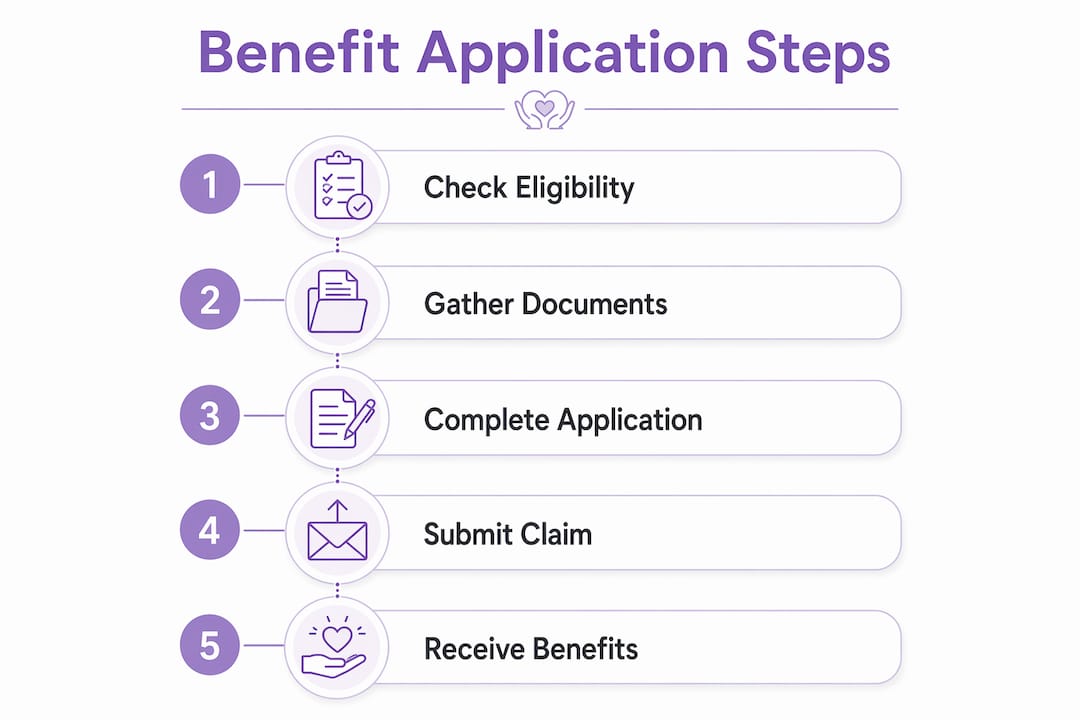
Follow these steps to file a successful claim:
- Gather documents first. You need the DD-214, a physician’s statement of care needs, proof of income, and a list of all unreimbursed medical expenses for the past 12 months.
- Contact your county VSO. Every Michigan county has at least one accredited VSO. They review your file before submission and catch errors that cause delays.
- File VA Form 21-2680 (Examination for Housebound Status or Permanent Need for Regular Aid and Attendance) along with VA Form 21P-527EZ for pension claims.
- Submit to the VA Pension Management Center. Michigan claims route through the Milwaukee Pension Management Center.
- Track your claim through the VA’s online portal at VA.gov or through your VSO.
Non-accredited pension consultants cannot legally charge fees for initial VA pension claims. Accredited VSOs and MVAA technicians provide the same assistance for free. Never pay a third party to file a basic Aid and Attendance claim.
Common mistakes that delay claims include missing the physician’s statement, failing to list all unreimbursed medical expenses, and submitting incomplete financial records. Plan for a processing time of several months after submission. The VA does not backdate benefits to the application date in all cases, so filing early matters.
Michigan Medicaid and Aid and Attendance are separate programs with different income rules. Veterans can often receive both simultaneously, but you must coordinate the applications carefully. A VSO or elder law attorney can map out which program to apply for first based on your income and asset picture.
What home care services can veterans pay for with Aid and Attendance?
Aid and Attendance cash payments cover a wide range of in-home support services. The VA does not restrict spending to a narrow list, which gives Michigan families real options.
| Service Type | Examples | Typical Monthly Cost in Michigan |
|---|---|---|
| Personal care | Bathing, dressing, grooming, toileting | $3,000–$5,000 |
| Homemaker services | Meal prep, light housekeeping, laundry | $1,500–$3,000 |
| Home health aide | Skilled personal care, medication reminders | ~$6,483 |
| Companion care | Supervision, transportation, errands | $1,500–$2,500 |
Michigan home health aide costs average $6,483 per month. A married veteran receiving the maximum Aid and Attendance benefit of $2,874 per month covers roughly 44 percent of that cost. Combined with Social Security income or Medicaid, many families can fund full-time in-home care.
Key services Aid and Attendance funds can cover:
- Personal care assistance with ADLs
- Homemaker and companion services
- Private duty nursing for medical needs at home
- Transportation to medical appointments
- Medication management support
VA Aid and Attendance benefits work best as a cost offset for home care and assisted living. Nursing home costs typically exceed VA payment maximums, making Medicaid the primary payer at that stage. Planning ahead for that transition is worth doing early.
You can pay a private provider directly from your Aid and Attendance funds. The provider does not need VA certification. This is the key difference from VA-authorized service programs, where the VA selects and contracts the caregiver. For families who want to choose their own home health aide services, the cash benefit model gives full control.
Common challenges and expert tips for maximizing your benefits
Most claim denials trace back to three problems: incomplete documentation, miscalculated countable income, and late filing. Each one is avoidable.
Documentation gaps are the most common issue. The physician’s statement must specifically describe the veteran’s inability to perform ADLs. A general note about poor health is not enough. Ask the physician to list each ADL limitation by name.
Income miscalculations cost families money every month. Families often underestimate how unreimbursed medical expenses lower countable income and increase the benefit. Keep receipts for every out-of-pocket health cost, including hearing aids, dental work, and home care invoices.
Late filing means lost money. Aid and Attendance benefits are not retroactive beyond the month of application in most cases. File as soon as the veteran meets the care need criteria, even if the financial picture is still being sorted out.
- Involve an accredited VSO before you file, not after a denial
- Request a copy of your VA rating decision to understand how the VA calculated your benefit
- Appeal denials within one year using a Supplemental Claim with new evidence
- Coordinate Medicaid applications with your VSO to avoid income conflicts
- Review your benefit amount annually, as medical expenses change and can increase your payment
Pro Tip: Review your Aid and Attendance payment every year. If your unreimbursed medical expenses have increased, file an updated expense list with the VA. Your monthly payment can go up without a new full application.
For Michigan families managing multiple benefit sources, the financial assistance options for elderly home care available through state and federal programs can work together when coordinated correctly.
Key Takeaways
Michigan veterans who qualify for Aid and Attendance and work with an accredited VSO receive the highest benefit amounts and the fewest claim delays.
| Point | Details |
|---|---|
| Know your maximum payment | In 2026, Aid and Attendance pays up to $2,874/month for a veteran with a spouse. |
| Reduce countable income | Track all unreimbursed medical expenses to increase your monthly benefit amount. |
| Use MVAA and VSOs for free | MVAA and accredited VSOs file claims at no cost and reduce errors that cause denials. |
| Cash benefits offer flexibility | Aid and Attendance funds pay any private provider, including your chosen home care agency. |
| Coordinate with Medicaid | Veterans can often receive both Aid and Attendance and Medicaid simultaneously with proper planning. |
What I’ve seen Michigan veteran families get wrong about these benefits
Most families I talk to assume the VA will reach out when a veteran becomes eligible. That never happens. The VA does not proactively notify veterans about Aid and Attendance. The burden is entirely on the family to apply, and many never do.
The second mistake is waiting until a crisis. I have seen families scramble to file a claim after a fall or a hospital discharge, when the veteran already needs full-time care. The application process takes months. Filing early, even before care needs are urgent, puts the benefit in place when you need it.
The third thing families get wrong is treating Aid and Attendance as an all-or-nothing benefit. Because countable income reductions from medical expenses can push the payment toward its maximum, a family that looks financially ineligible on paper may actually qualify once expenses are properly calculated. A VSO runs those numbers for free. There is no reason not to check.
The VA home care program details for 2026 are more favorable than most families realize. The cash benefit model, the flexibility to choose your own provider, and the ability to stack benefits with Medicaid make this one of the most underused financial tools available to Michigan veterans. Use it.
— Michael
How Helping-hands-home-care supports Michigan veterans at home
Helping-hands-home-care provides professional in-home care services for Michigan veterans and their families, including personal care, homemaker support, and companion services. Aid and Attendance cash benefits can pay directly for these services, giving your family full control over who provides care and when.

Helping-hands-home-care works with families navigating VA benefits to match the right level of care to each veteran’s needs. Whether your family is just starting the benefits process or already receiving Aid and Attendance payments, our home health aide services are designed to fit your care plan and your budget. Contact Helping-hands-home-care to discuss how your veteran’s benefits can fund quality in-home support today.
FAQ
What are Michigan veteran home care benefits?
Michigan veteran home care benefits are VA pension enhancements, primarily Aid and Attendance, that pay tax-free monthly cash to eligible wartime veterans and surviving spouses to help cover in-home care costs.
How much does Aid and Attendance pay in Michigan in 2026?
In 2026, Aid and Attendance pays up to $2,424 per month for a single veteran, $2,874 for a veteran with a spouse, and $1,558 for a surviving spouse, reduced by countable income.
Who qualifies for veteran home care benefits in Michigan?
Qualifying veterans must have served at least 90 days of active duty with one day during a wartime period, need help with daily activities, and meet the VA’s income and net worth limits.
Can Aid and Attendance pay for a private home care provider?
Yes. Aid and Attendance cash benefits can pay any private in-home care provider the veteran chooses, without requiring VA certification of that provider.
Where do Michigan veterans go to apply for home care benefits?
Contact the Michigan Veterans Affairs Agency at 800-MICH-VET (800-642-4838) or your county VSO. Both provide free, accredited claims assistance and help you avoid the documentation errors that delay benefits.
Recommended
- VA Home Care Program Explained for Veterans in 2026 | Helping Hands Home Care
- Michigan Winter Home Care Challenges: A Caregiver’s Guide | Helping Hands Home Care
- In-Home Care Eligibility Explained: 2026 Guide | Helping Hands Home Care
- Macomb County In-Home Care Options: 2026 Guide | Helping Hands Home Care