
Home Care Billing Process: A Clear Guide for Families
Home Care Billing Process: A Clear Guide for Families

The home care billing process is straightforward once you know what to expect. Families or clients pay directly for private in-home elder care services, typically without insurance stepping in to cover the cost. That means you receive invoices based on actual hours of care delivered, pay on a weekly or biweekly cycle in most cases, and manage everything through a combination of written statements and online portals. Here is what the process looks like at a glance:
- Who pays: The client, a family member, or a designated fiduciary pays the agency directly.
- Billing cycles: Weekly or biweekly billing is most common; some agencies offer monthly cycles for established clients.
- How invoices arrive: Through secure online portals, email, or mailed statements.
- Payment methods: Credit and debit cards, ACH bank transfers, and personal checks are all widely accepted.
- Automated payments: Setting up autopay from the start prevents late fees and care interruptions.
- Payment terms: Agencies spell out due dates, late fees, and cancellation policies in the initial service agreement.
Understanding these basics puts you in control before the first caregiver ever walks through the door.
Table of Contents
- How home care billing differs from home health billing
- How the billing workflow actually runs, step by step
- What payment options look like and how to track billing clearly
- Best practices to avoid billing problems and keep care running smoothly
- Key Takeaways
How home care billing differs from home health billing
This is where families run into the most confusion, and the financial consequences can be significant. Home care and home health sound nearly identical, but they are billed in completely different ways.
Home health refers to skilled medical services, such as wound care, physical therapy, or skilled nursing, ordered by a physician. Medicare covers these services under a prospective payment model tied to 30-day periods of care, with payment going directly to the certified home health agency. Families pay little or nothing out of pocket for covered services. The Centers for Medicare & Medicaid Services implemented the Patient-Driven Groupings Model (PDGM) effective January 1, 2020, which bases payment on clinical characteristics rather than therapy visit volume.
Home care, by contrast, covers non-medical support: bathing assistance, meal preparation, companionship, light housekeeping, and similar daily tasks. Medicare does not cover these services. Families pay the agency directly, billed by the hour or by the shift. There is no claims process, no prior authorization, and no reimbursement waiting period. You get a bill; you pay it.
The practical difference matters enormously for budgeting:
- Medicare-covered home health ends when skilled care is no longer medically necessary. The non-medical support that often follows falls entirely on the family’s budget.
- Families frequently assume their existing health insurance or Medicare will cover home care aides, then face unexpected out-of-pocket costs when it does not.
- Long-term care insurance policies may cover some home care costs, but coverage limits, waiting periods, and approved-agency requirements vary widely by policy.
For a deeper look at what Medicare does and does not cover, the Medicare eligibility guide from Helping-hands-home-care breaks it down clearly. You can also review Medicare and assisted living coverage for context on how insurance intersects with home-based care decisions.
How the billing workflow actually runs, step by step
Once care begins, billing follows a defined sequence. Knowing each step helps you catch errors early and understand why a charge appears on your invoice.
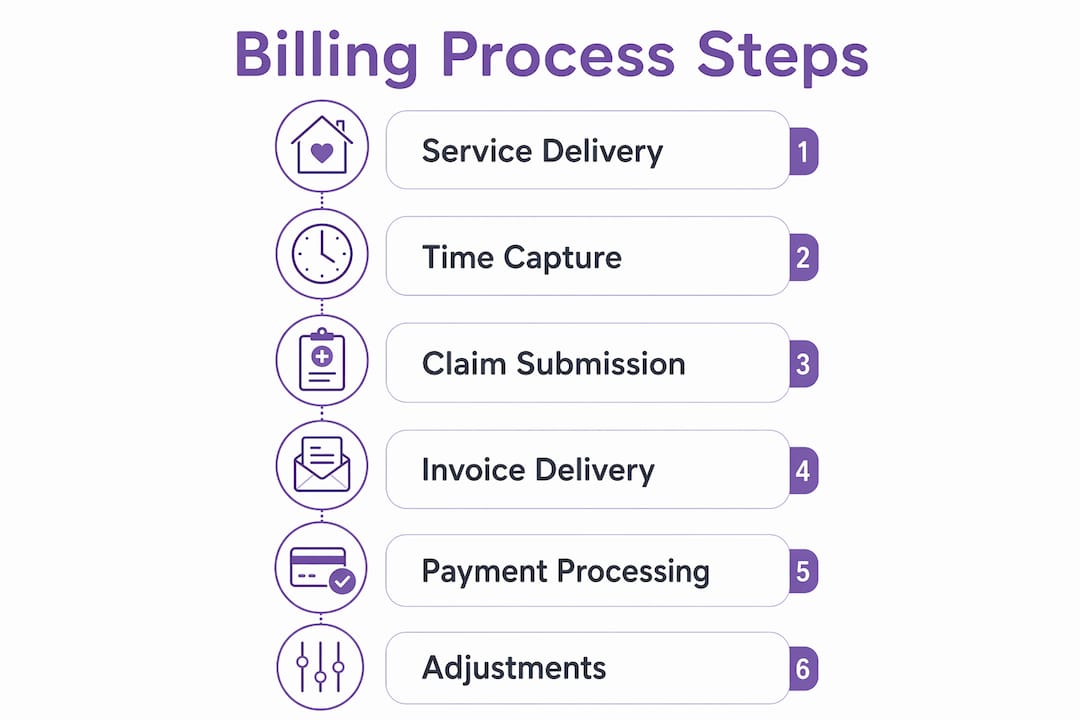
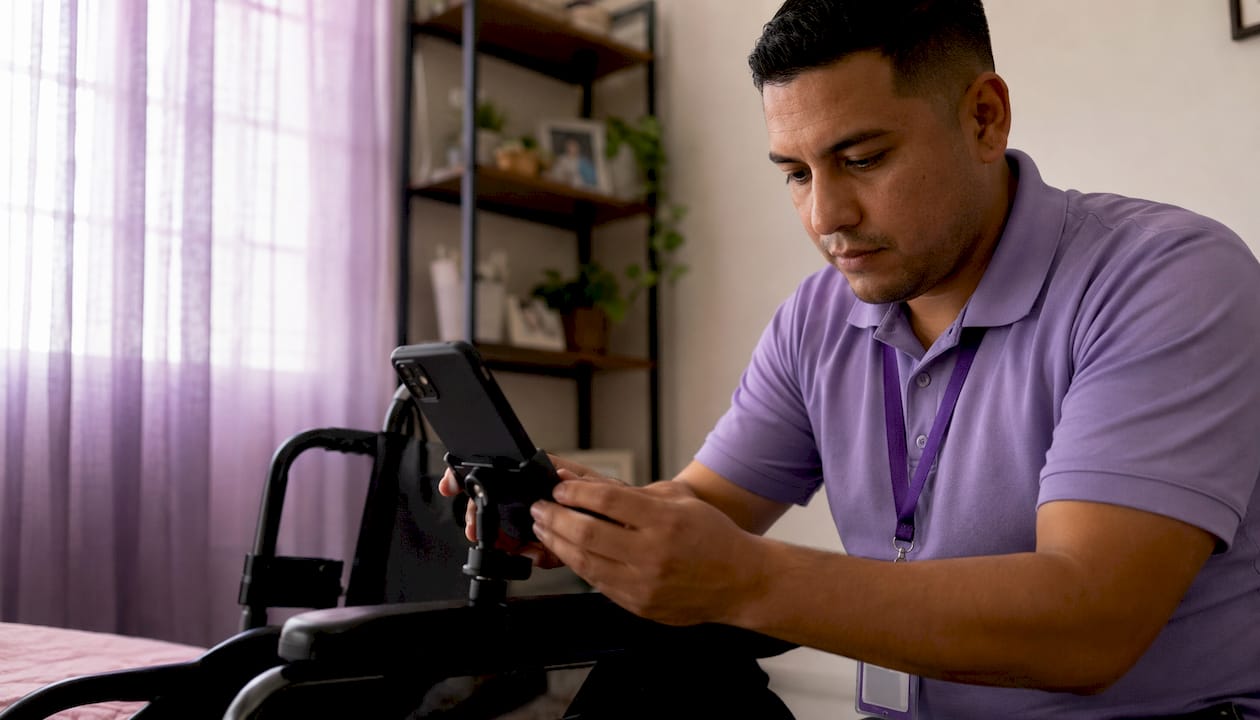
Step 1: Service delivery and time capture. Every visit starts with the caregiver clocking in, usually through a mobile app tied to an Electronic Visit Verification (EVV) system. EVV is federally mandated for Medicaid-funded home care and widely used in private-pay agencies as well. The clock-out time, location, and service type are all recorded automatically. Even a minor timing error by the caregiver can affect the hours billed, so accurate clock-ins matter.
Step 2: Schedule and visit confirmation. The agency’s scheduling system matches the completed visit against the authorized care plan. If a visit was missed, shortened, or changed, a coordinator reviews and resolves the discrepancy before billing proceeds. This step is where EVV data integration pays off: auto-generating invoices from verified visit data reduces billing errors and prevents disputes.
Step 3: Invoice generation. The agency compiles verified hours and services into an itemized invoice. A typical home care invoice shows:
- The billing period covered
- Each visit date, caregiver name, and hours worked
- The hourly rate or flat service rate
- Any applicable taxes or fees
- The total amount due and the payment due date
Step 4: Invoice delivery. Invoices reach families through a secure client portal, email, or standard mail, depending on the agency’s system and your preference. Most agencies now default to portal delivery for speed and record-keeping.
Step 5: Payment processing. Families submit payment by their chosen method. The agency applies it to the account and updates the balance in real time within the portal.
Step 6: Late payments and adjustments. If a payment is missed, most agencies apply a grace period before a late fee kicks in. Billing adjustments for canceled visits, schedule changes, or service upgrades are handled through a credit or revised invoice on the next billing cycle.
What payment options look like and how to track billing clearly
Private-pay clients represent the simplest billing relationship in home care: no claims, no payer negotiations, no denial management. Payment flows directly from the family to the agency, and the options are flexible.
Common payment methods:
- Credit or debit card: Processed immediately; some agencies charge a small convenience fee.
- ACH bank transfer: Draws directly from a checking account; typically no fee and settles within one to two business days.
- Personal check: Still accepted by most agencies, though it adds processing time.
- Automated recurring payments (autopay): The agency charges the card or bank account on a set schedule. Agencies that enroll over half of clients on autopay experience reductions in late payments by up to 60% and days in accounts receivable by 30–40%.
Think of private-pay home care billing less like a medical bill and more like a subscription. Consistent, on-time payment keeps care uninterrupted. A missed payment does not just create a balance; it can trigger a pause in scheduled visits.
Billing transparency tools make a real difference for families managing care from a distance or juggling multiple responsibilities. Secure client portals give you real-time access to visit logs, invoices, payment history, and upcoming charges. You can verify that Tuesday’s three-hour visit was logged correctly without calling the agency. That kind of visibility reduces disputes and gives families confidence that billing reflects actual care delivered. For a full breakdown of payment options for seniors, Helping-hands-home-care has a dedicated resource worth bookmarking.
Best practices to avoid billing problems and keep care running smoothly
Most billing disputes trace back to one of two things: unclear expectations at the start or inattention to invoices along the way. Both are preventable.
- Get payment terms in writing before care begins. The service agreement should spell out the billing cycle, due dates, late fees, and the cancellation policy. Agencies that include billing terms in client agreements and review them with families at intake have far fewer disputes down the line.
- Enroll in autopay from day one. It removes the risk of a forgotten payment disrupting care. Most agencies make enrollment simple during the intake process.
- Review every invoice when it arrives. Check visit dates, hours, and rates against your own records. Errors are rare with EVV-integrated billing, but they happen, and catching one early is far easier than disputing a month of charges.
- Keep your payment information current. An expired card or a closed bank account is one of the most common causes of accidental late payments.
- Communicate changes promptly. If your loved one’s schedule changes or a visit needs to be canceled, notify the agency as early as possible. Most cancellation policies have a notice window, and missing it can result in a charge for the visit.
Pro Tip: Use the agency’s client portal to set up invoice notifications. A quick email or text alert when a new invoice posts means you never miss a billing cycle, and you can approve or question charges before the due date.
Helping-hands-home-care’s in-home health aid services are built around this kind of financial transparency, with clear billing practices designed to keep families informed at every step.
Key Takeaways
Private-pay home care billing is a direct, family-managed process where clear payment terms, automated payments, and real-time portal access are the most effective tools for avoiding financial surprises.
| Point | Details |
|---|---|
| Private pay means direct billing | Families pay the agency directly; no insurance intermediary handles home care invoices. |
| EVV drives billing accuracy | Caregiver clock-in data auto-generates invoices, reducing errors and disputes. |
| Autopay reduces late payments | Agencies enrolling over half of clients on autopay see late payments decrease by up to 60% and days in accounts receivable fall by 30–40%. |
| Home care is not Medicare-covered | Medicare pays for skilled home health only; non-medical home care is an out-of-pocket expense. |
| Portal access prevents surprises | Real-time visit logs and invoice tracking let families verify charges before payment is due. |
Recommended
- Home Care Services for Seniors: A Family Guide | Helping Hands Home Care
- In-Home Care Eligibility Explained: 2026 Guide | Helping Hands Home Care
- Home Care Assessment Process Explained for Families | Helping Hands Home Care
- Home Care vs. Adult Day Programs: Family Guide 2026 | Helping Hands Home Care