
Home Care vs Nursing Home: 2026 Cost and Care Guide
Home Care vs Nursing Home: 2026 Cost and Care Guide
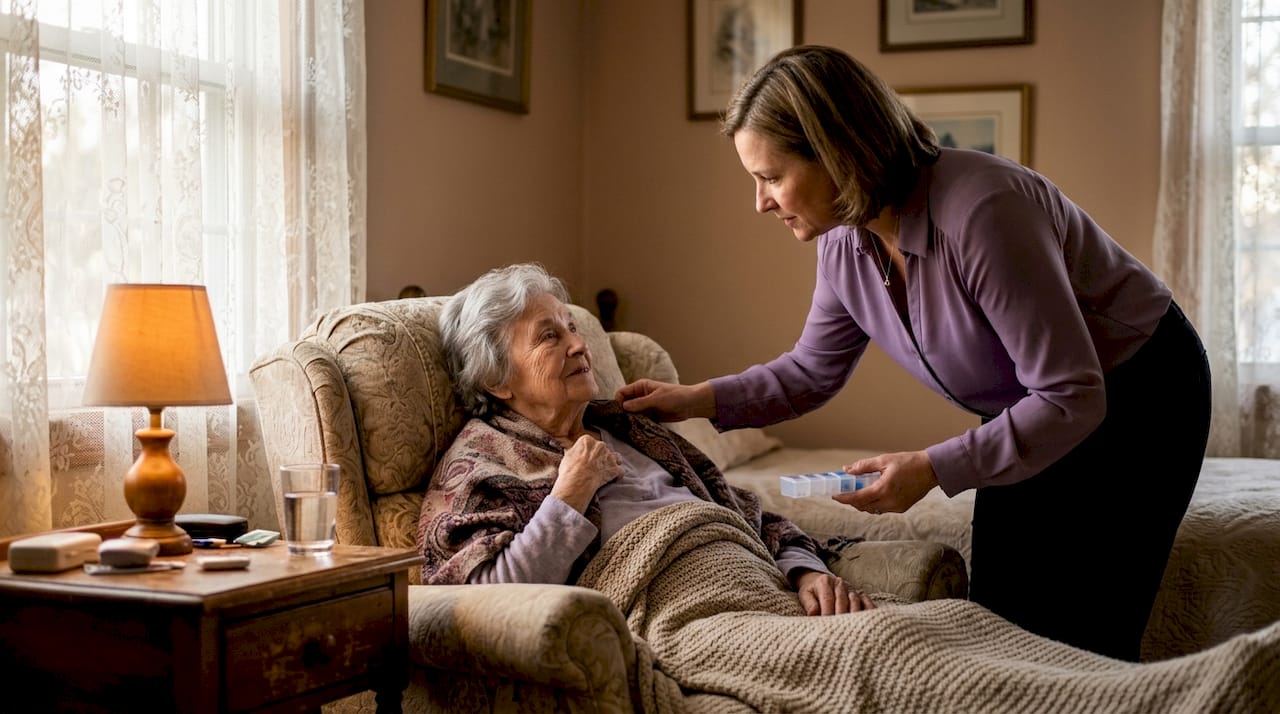
Home care is defined as professional support and medical assistance delivered inside a person’s own residence, while a nursing home is a licensed residential facility providing 24/7 skilled nursing and supervision. These two options represent the most common elder care paths families face, and the right choice depends on medical need, cost, and personal preference. The home care vs nursing home decision carries real financial and emotional weight. Getting it right early prevents costly transitions later.
How do home care and nursing home costs compare?
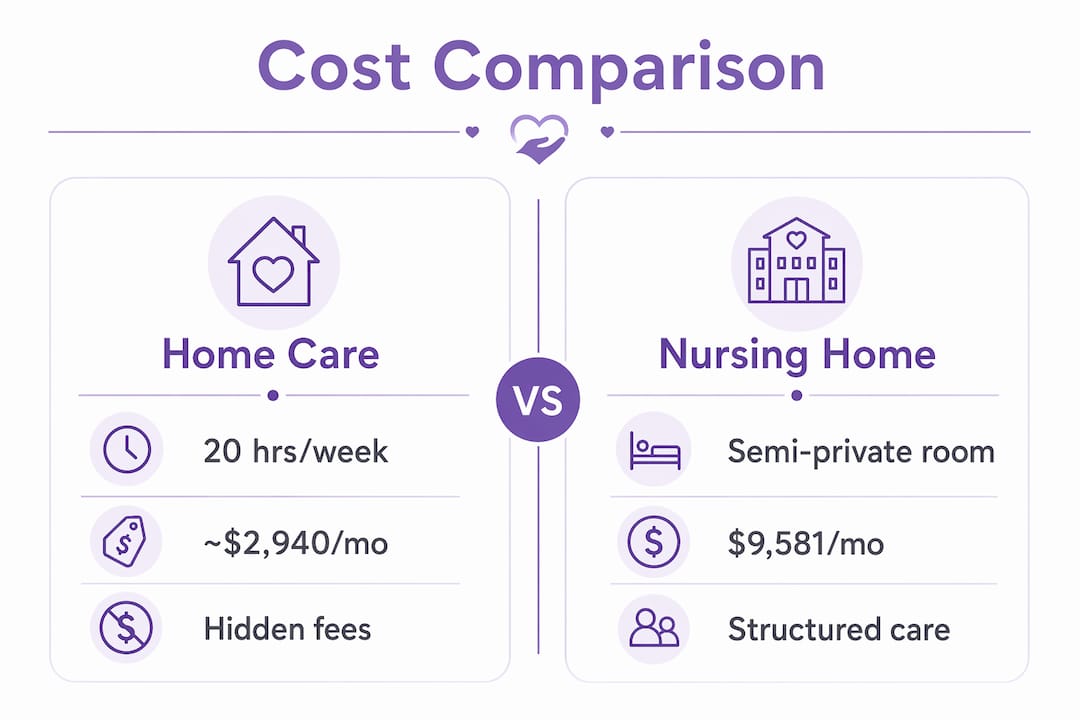
The national median nursing home cost for a semi-private room runs approximately $9,581 per month. Home care at 44 hours per week averages around $6,478 per month, making it the more affordable option at moderate care levels.
That gap closes fast as care hours increase. The cost breakeven point between home care and a nursing home falls at roughly 40–50 hours per week. Beyond that threshold, home care becomes the more expensive choice.
24/7 home care can cost $15,000–$20,000 or more per month because it requires multiple rotating aides. That figure often exceeds what a nursing home charges. Families who assume home care is always cheaper are frequently surprised at this crossover.
Pro Tip: Before comparing monthly rates, calculate the actual hours of care your relative needs each week. That single number tells you which option will cost less.
| Care type | Hours per week | Estimated monthly cost |
|---|---|---|
| Home care | 20 hours | ~$2,940 |
| Home care | 44 hours | ~$6,478 |
| Home care | 24/7 | $15,000–$20,000+ |
| Nursing home (semi-private) | 24/7 | ~$9,581 |
Hidden home care costs such as medication management, medical supplies, and home modifications add roughly $300–$800 per month on top of hourly rates. These expenses rarely appear in the initial quote. Families who budget only for the aide’s hourly wage consistently underestimate the real total.
What are the emotional and social impacts of each option?
Place attachment to a familiar home environment produces measurable benefits for elderly well-being. Seniors who remain at home maintain their routines, their neighborhoods, and their sense of identity. That continuity matters more than most families realize when weighing clinical factors alone.
Nursing homes offer structured social programming, group meals, and on-site activities. Yet 61% of nursing home residents still report moderate loneliness despite those built-in social opportunities. Proximity to other residents does not automatically translate into meaningful connection.
Home care carries its own emotional risks. The burden on family caregivers can escalate into burnout, especially when informal caregiving fills gaps between paid aide visits. Burnout is one of the leading reasons families eventually transition to a facility, even when they initially preferred home care.
Key emotional factors to weigh for each option:
- Home care: Familiar surroundings, personal routines, one-on-one attention, but potential isolation if mobility is limited
- Nursing home: Built-in social structure, professional oversight, but risk of loneliness and loss of personal autonomy
- Family caregiver role: Home care demands ongoing coordination; facilities shift that burden to professional staff
- Cognitive conditions: Seniors with dementia often benefit from the consistency of home but may need facility-level supervision as the condition progresses
“The emotional cost of uprooting a parent from their home is real and should be weighed alongside clinical and financial factors. Dignity and familiarity are not soft considerations.”
When is a nursing home more appropriate than home care?
Nursing homes are the right choice when a person requires 24/7 clinical supervision for conditions like complex wound care, IV therapy, or post-surgical recovery. These are medical needs that a home aide cannot safely manage alone. Attempting to replicate that level of care at home creates safety gaps.
Specific situations that point toward nursing home placement:
- High fall risk. A senior who falls frequently needs an environment with immediate staff response and fall-prevention infrastructure.
- Wandering behavior. Dementia-related wandering requires secured facilities that a private home cannot replicate without major renovation.
- Advanced skilled nursing needs. Conditions requiring daily wound care, catheter management, or IV medication demand licensed nursing staff on site.
- Caregiver exhaustion. When the family’s informal caregiving capacity is fully depleted, a facility provides the consistency that no single household can sustain.
- Unsafe home environment. Some homes cannot be modified to meet safety standards, making in-home care a genuine physical risk.
Pro Tip: Assess fall history and wandering behavior first. Those two factors alone often determine whether home care is medically viable, regardless of cost preferences.
Most families begin with part-time home care and progress through adult day programs and assisted living before nursing home placement becomes necessary. That staged progression is normal and practical. Recognizing where a loved one sits on that continuum prevents both premature facility placement and dangerous delays.
The role of a home caregiver has real limits. Professional aides handle personal care, medication reminders, and companionship well. They are not equipped to manage acute medical crises or provide the round-the-clock clinical monitoring a nursing home delivers.
How to decide between home care and nursing homes
The decision framework starts with one honest question: how many hours of care does your relative need each week? Below 40 hours, home care is almost always the more affordable and preferable option. Above 50 hours, the cost and clinical calculus shifts toward a facility.
Financial factors to evaluate
- Actual care hours needed. Use a geriatric care manager’s assessment, not a family estimate.
- Hidden home care costs. Budget for supplies, home modifications, and medication management, not just the aide’s hourly rate.
- Medicaid coverage. Medicaid covers nursing home care more comprehensively than home care in most states. Families near the Medicaid eligibility threshold should verify their state’s home care waiver program before committing to either option.
- Long-term care insurance. Many policies cover both options but at different reimbursement rates. Read the policy before assuming coverage is equal.
Practical factors to evaluate
Home modification feasibility is a factor families often overlook. Installing grab bars, ramp access, and a hospital-grade bed can cost several thousand dollars upfront. Some homes, particularly older multi-story properties, cannot be made safe at any reasonable cost.
Availability of informal caregiving also shapes the decision. A family with multiple nearby relatives who can share coordination tasks can sustain home care longer than a family where one adult child carries the entire load. Caregiver burnout is not a personal failure. It is a predictable outcome when unpaid labor exceeds sustainable limits.
Respite care is an underused middle option. Short-term nursing home stays or adult day programs give family caregivers recovery time while keeping the long-term plan centered on home care. Families who use respite care regularly sustain home care arrangements significantly longer than those who do not.
Financial assistance for home care is available through Veterans Affairs benefits, state Medicaid waiver programs, and some nonprofit organizations. These funding sources can make home care viable for families who would otherwise default to a nursing home purely on cost grounds.
Key Takeaways
Home care is the better choice for moderate care needs, but nursing homes become necessary and cost-effective when care requirements exceed 50 hours per week or involve 24/7 clinical supervision.
| Point | Details |
|---|---|
| Cost crossover at 40–50 hours | Home care exceeds nursing home costs when weekly care hours pass the 50-hour mark. |
| Hidden costs matter | Budget an extra $300–$800 per month for supplies, modifications, and medications beyond hourly rates. |
| Loneliness exists in both settings | 61% of nursing home residents report loneliness; home care requires active social planning too. |
| Staged transitions are normal | Most families move from part-time home care through adult day programs before nursing home placement. |
| Medicaid favors facilities | Nursing home Medicaid coverage is more comprehensive than home care coverage in most states. |
What I’ve learned from watching families make this decision
Families almost always underestimate how fast care needs escalate. A parent who needs 10 hours of help per week in january can need 40 hours by june. The families who plan for that progression fare far better than those who treat the initial care level as permanent.
The second mistake I see repeatedly is treating cost as the only variable. A nursing home at $9,581 per month may actually be the more humane and financially sound choice for someone who needs 60 hours of weekly care. Refusing to consider it because “home is better” can lead to unsafe conditions and caregiver collapse.
The third pitfall is ignoring the family caregiver’s limits. Adult children who take on full coordination of home care without professional support burn out within months. That burnout often forces a rushed nursing home placement under crisis conditions, which is the worst possible way to make that transition.
My honest view: start with home care when it is medically appropriate, plan the staged transition before you need it, and treat the nursing home option as a clinical tool rather than a failure. The families who hold both options open simultaneously make better decisions than those who commit to one path and refuse to revisit it.
— Michael
Professional home care support from Helping-hands-home-care
Choosing the right care level is only the first step. Having a trusted provider makes the difference between a plan that works and one that falls apart under daily pressure.

Helping-hands-home-care offers professional home health aide services tailored to each client’s care level, from a few hours of weekly support to more intensive daily assistance. Beyond personal care, Helping-hands-home-care also provides professional house cleaning and massage therapy to support the overall well-being of elderly clients at home. Contact Helping-hands-home-care directly to discuss your relative’s specific needs and get a personalized care plan.
FAQ
What is the average cost of a nursing home in 2026?
The national median nursing home cost for a semi-private room is approximately $9,581 per month. Costs vary by state and facility type.
Is home care cheaper than a nursing home?
Home care is cheaper at moderate hours, around $6,478 per month at 44 hours per week. The cost crossover happens at 40–50 hours per week, after which nursing home care often costs less.
What medical needs require a nursing home instead of home care?
Nursing homes are necessary for 24/7 skilled nursing needs such as complex wound care, IV therapy, and continuous clinical monitoring. High fall risk and dementia-related wandering also typically require facility-level care.
Does Medicaid cover home care?
Medicaid covers nursing home care more broadly than home care in most states. Some states offer Medicaid home care waiver programs, but eligibility and coverage limits vary significantly by location.
What are the alternatives to a nursing home?
Common nursing home alternatives include part-time home care, adult day programs, and assisted living facilities. Staged care transitions starting with home care and progressing through these options delay or prevent nursing home placement for many families.
Recommended
- Home Care vs. Adult Day Programs: Family Guide 2026 | Helping Hands Home Care
- Difference Between Home Care Types: Family Guide 2026 | Helping Hands Home Care
- Home Care Services for Seniors: A Family Guide | Helping Hands Home Care
- Medicare Home Care Explained: 2026 Eligibility Guide | Helping Hands Home Care