
A Clean Home Environment Is Central to Senior Wellbeing
A Clean Home Environment Is Central to Senior Wellbeing
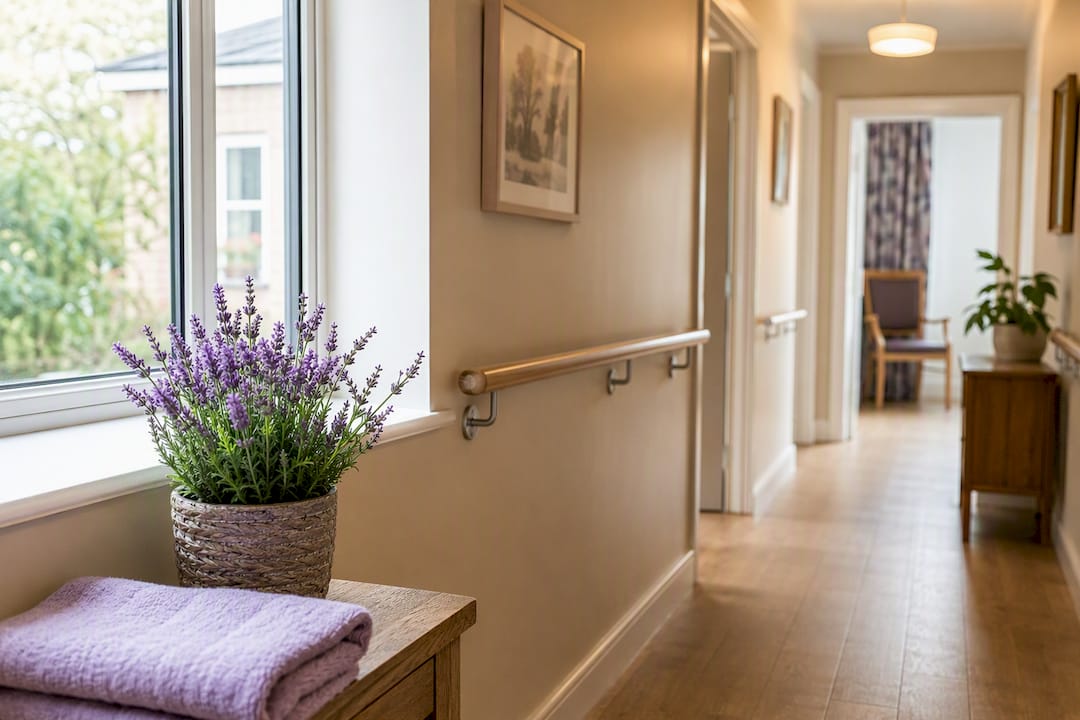
A clean, clutter-free, and well-ventilated home reduces falls, lowers infection risk, and boosts mood and independence for older adults. The CDC reports that the unintentional fall death rate for adults 65 and older hit 69.9 per 100,000 in 2023, and a big share of those falls trace back to fixable home hazards. Peer-reviewed research on housing quality backs this up: cluttered, poorly lit homes correlate with worse outcomes, while services like Helping Hands Home Care show what proactive upkeep looks like in practice. Three moves matter most:
- Clear the main walking paths in every room today.
- Add basic bathroom safety features before an accident forces the issue.
- Set up a recurring light housekeeping schedule rather than waiting for a crisis.
Key Takeaways
A clean, organized, and well-ventilated home measurably reduces fall risk, infection exposure, and emotional strain for older adults, while professional light housekeeping helps sustain those gains.
| Point | Details |
|---|---|
| Fall risk is measurable | The 65+ fall death rate reached 69.9 per 100,000 in 2023, driven largely by fixable home hazards. |
| Prioritize immediate fixes | Clear main paths and add bathroom grab bars before waiting for an incident to force the issue. |
| Clean surfaces daily | Wipe high-touch surfaces daily and ventilate rooms for 10 to 15 minutes to lower infection and respiratory risk. |
| Declutter with empathy | Involve the senior, use a “maybe” box, and photograph meaningful items instead of removing things abruptly. |
| Noise and social contact count | Quieter homes support better sleep, and safer homes invite more visitors and stronger social ties. |
Table of Contents
- The Role of a Clean Environment in Senior Physical Safety
- Which Cleaning Habits Actually Protect Older Adults From Illness?
- How Clutter and Poor Lighting Affect Mood and Cognitive Health
- What Does a Room-by-Room Safety Checklist Look Like?
- How Light Housekeeping Supports Independence at Home
- Small Design Changes That Reduce Long-Term Risk
- How Helping Hands Home Care Puts This Into Practice
- Does Reducing Noise at Home Improve Senior Wellbeing?
- How Do Clean, Safe Homes Support Social Connection?
- Ready to Make Your Loved One’s Home Safer?
- A Dignity-First Take on Home Safety
- Frequently Asked Questions
- Sources
The Role of a Clean Environment in Senior Physical Safety
Falls aren’t a minor inconvenience for older adults. They’re the leading cause of injury-related death for people 65 and up, and the numbers back that up starkly.
In 2023, the fall death rate for adults 65+ reached 69.9 per 100,000 people, and emergency departments have logged close to 3 million older-adult fall visits in recent years.
Most of these incidents don’t come from dramatic accidents. They come from ordinary household hazards: a stack of mail on the floor, a rug that slides on hardwood, a hallway light that burned out weeks ago, a bathtub with nothing to grab onto. A study in the Journal of the American Geriatrics Society found that 26.5% of community-dwelling older adults live with clutter or tripping hazards in the home right now.
Fixing this doesn’t require a renovation. It requires sequence:
- Today: Clear the main paths between the bed, bathroom, and kitchen. Nothing on the floor that isn’t furniture.
- This week: Secure or remove loose rugs, add non-slip mats in the bathroom and kitchen, and swap out any burned-out bulbs.
- This month: Install grab bars near the toilet and shower, and consider a home safety evaluation from an occupational therapist or a home-care provider that offers a room-by-room action plan.
Which Cleaning Habits Actually Protect Older Adults From Illness?
Older immune systems recover more slowly from respiratory infections, which makes routine cleaning less about tidiness and more about health protection. High-touch surfaces, door handles, light switches, faucet handles, and remote controls, carry the highest germ load in any home, and they deserve daily attention rather than a weekly pass with the rest of the house.
- Wipe high-touch surfaces daily; deep-clean floors, bathrooms, and kitchen counters weekly.
- Open windows for 10 to 15 minutes daily when weather allows. Stale indoor air lets airborne particles and moisture linger, and poor ventilation is tied to respiratory strain in older adults.
- Follow product labels exactly. Older adults are more sensitive to strong fumes from bleach or ammonia based cleaners, especially in small, poorly ventilated bathrooms.
- Call in professional help for mold, deep carpet cleaning, or any job that involves harsh chemicals in a tight space.
How Clutter and Poor Lighting Affect Mood and Cognitive Health
A disorganized home does more than create trip hazards. Research on housing conditions links clutter, damp, and disorder to reduced independence and higher care needs down the road, largely because a chaotic environment adds a constant low hum of stress that wears on mental health over time.
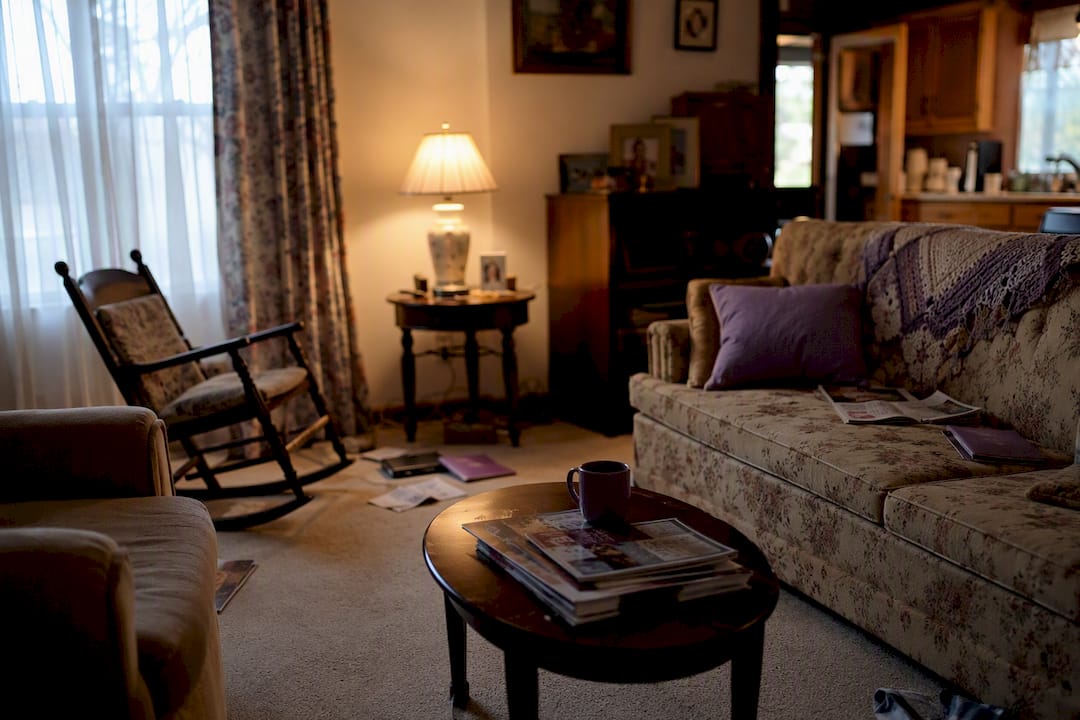
Light matters just as much as order. A scoping review on interior design and older adult health recommends ambient lighting above 200 lux and task lighting between 500 and 750 lux for reading or cooking, plus natural light exposure to support sleep cycles and mood regulation. Adding a small plant or two, or simply keeping curtains open during the day, does real work here.
Decluttering has to be handled with care, though. Possessions carry identity for many older adults, and stripping a home too fast can damage someone’s sense of belonging in it.
- Involve the senior in every decision. Never sort a room while they’re out.
- Create a “maybe” box for uncertain items instead of forcing an immediate decision.
- Photograph meaningful objects before letting any of them go.
- Work in small sessions. One drawer or one shelf at a time beats a weekend blitz.
Pro Tip: Ask “what does this represent to you?” before asking “do you want to keep this?” It shifts the conversation from loss to memory, and people open up faster.
What Does a Room-by-Room Safety Checklist Look Like?
Some fixes matter more than others. Here’s where to start, organized by the rooms where risk concentrates.
- Bathroom: Install grab bars near the toilet and inside the shower, add a non-slip mat or textured strips in the tub, and place a motion-sensor night light for late-night trips.
- Kitchen: Keep the floor completely clear, store daily-use items within easy reach, and never leave the stove unattended, especially with hearing or vision changes in play.
- Living areas and bedroom: Widen walking paths, secure or remove area rugs, and add a bedside lamp within arm’s reach of the bed. Bed height should let feet touch the floor when seated.
- Entryways and stairs: Install handrails on both sides of stairs where possible, remove loose entry mats, and add motion-activated outdoor lighting near the front door.
Maintenance has a rhythm to it, too:
- Weekly: A quick tidy of high-traffic areas and a check for anything new on the floor.
- Monthly: A closer look at bathroom grip surfaces, light bulbs, and any new clutter accumulation.
- Seasonally: A full walk-through for loose rugs, worn stair treads, and outdoor lighting before weather changes.
A step-by-step preparation checklist can make this easier to run consistently rather than sporadically.
How Light Housekeeping Supports Independence at Home
Light housekeeping, laundry, wiping high-touch surfaces, clearing floors, changing bed linens, sounds minor until you consider what it replaces: hours of physical strain an older adult would otherwise spend on tasks that put them at fall risk in the first place.
Research on domestic activity among older adults also points to something less obvious: doing some light housework, when it’s safe and manageable, supports physical movement and a sense of role fulfillment. The goal isn’t to eliminate all activity. It’s to offload the tasks that create hazard or exhaustion while preserving the ones that keep someone engaged in their own home.
- Schedule recurring visits (weekly or biweekly works for most households) rather than one-off cleanings.
- Ask any provider about background checks, training, and how they coordinate with family or a primary-care physician.
- Treat the visit as more than chores. A cleaning visit that includes conversation does double duty for safety and mood.
- Keep the senior involved in what gets cleaned and how, autonomy matters even in small tasks.
Small Design Changes That Reduce Long-Term Risk
Good design does the safety work quietly, without turning a home into something that looks clinical.
The design research here is specific: keep frequently used items stored between floor level and 120 centimeters to cut down on reaching and climbing, and preserve roughly 150 centimeters of turning radius in main pathways for anyone using a walker or wheelchair down the road.
- Swap round doorknobs for lever handles, easier to grip for arthritic hands.
- Add handrails on both sides of any staircase, not just one.
- Use motion-sensor night lights in hallways and bathrooms instead of relying on memory to flip a switch.
- Choose adjustable shelving so storage height can change as mobility needs shift.
If a home has multiple hazards or the senior has had a fall already, an occupational therapy assessment is worth requesting. It’s a targeted evaluation, not a generic checklist, and it usually catches things a family walk-through misses.
How Helping Hands Home Care Puts This Into Practice
Helping Hands Home Care builds safety and dignity into every visit rather than treating them as separate goals. A typical light housekeeping visit covers floor clearing, high-touch surface cleaning, and linen changes. A safety-focused visit adds a walk-through for new hazards, loose rugs, dim lighting, blocked paths.
- Families can review service options through the company’s home care guide before scheduling a first visit.
- Visits can combine cleaning with companionship, so the senior gets social contact alongside a safer home.
- Care plans adjust as needs change, more housekeeping support, added safety checks, or occasional therapeutic massage for comfort.
Does Reducing Noise at Home Improve Senior Wellbeing?
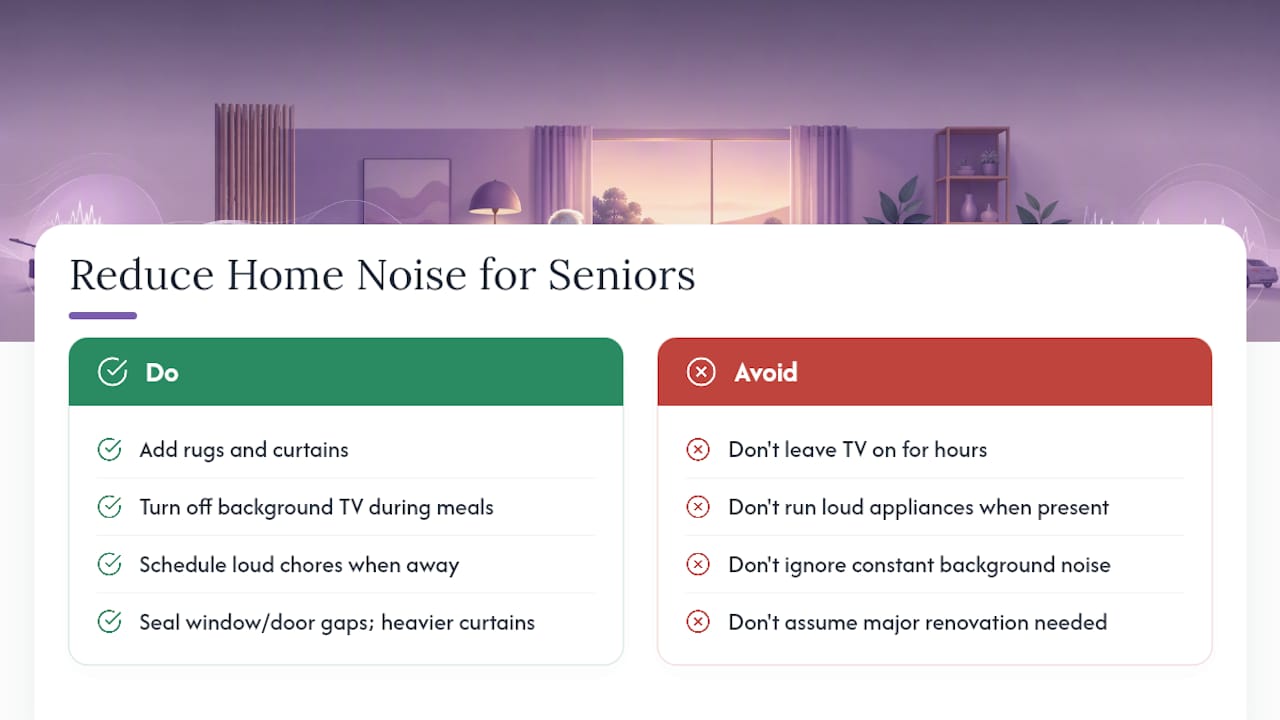
Noise is an underrated hazard in senior wellbeing conversations, and it deserves more attention than it usually gets. Constant background noise, a television left on for hours, traffic from a busy street, an appliance that hums louder than it should, does measurable damage over time to sleep quality, stress levels, and even cognitive processing in older adults, whose hearing and attention systems are often already working harder to compensate for age-related changes.
A quieter home supports better rest, and better rest supports nearly everything else on this list: mood, memory, balance, and immune function. Loud, chaotic soundscapes also make it harder for seniors with mild hearing loss to track conversations or notice important cues, like a smoke alarm or a knock at the door, which ties noise reduction directly back to safety.
Simple changes help more than expensive ones. Rugs and curtains absorb sound and reduce echo in hard-floored rooms. Turning off background television during meals or rest periods gives the nervous system a real break instead of constant low-level stimulation. Scheduling loud chores, vacuuming, blenders, washing machines, for times when the senior is out of the house or in a different room limits unnecessary noise exposure. If a home sits near consistent outdoor noise, sealing gaps around windows and doors or adding heavier curtains can cut down on intrusion without a major renovation.
None of this requires soundproofing a whole house. It requires paying attention to noise the way you’d pay attention to clutter or lighting: as a factor that either supports calm or quietly erodes it every single day.
How Do Clean, Safe Homes Support Social Connection?
A home that feels safe and cared for tends to open its doors more often, and that matters more than it sounds like it should. Seniors living in cluttered or hazard-heavy homes are less likely to invite visitors, host family gatherings, or feel comfortable having a home-care aide, cleaner, or neighbor stop by regularly. Embarrassment about a messy or unsafe space becomes its own kind of isolation, one that compounds the physical risks already in play.
Clean, organized surroundings remove that friction. Family members visit more comfortably when they’re not stepping over boxes or worrying about a parent tripping on a loose rug. Neighbors and friends stop by more freely. Home-care visits themselves become a built-in source of regular social contact, not just a service transaction, and that contact matters for cognitive health as much as physical safety.
There’s a compounding effect here worth naming directly: a safer home invites more visitors, more visitors mean more social engagement, and more social engagement is one of the strongest known protective factors against cognitive decline and depression in older adults. It’s not a stretch to say that fixing a loose stair railing or clearing a hallway can indirectly support someone’s social life. The environment and the relationships built inside it aren’t separate concerns. They reinforce each other, for better or worse, depending on how the home is maintained.
Families weighing regular support might find it useful to see how professional cleaning intersects with caregiving more broadly, since the two rarely function in isolation once a senior’s needs start to shift.
Ready to Make Your Loved One’s Home Safer?
None of this has to happen all at once, and it shouldn’t. Start with whatever poses the most immediate risk, usually the bathroom or the main walking path, and build outward from there. If keeping up with cleaning, laundry, and safety checks has become more than a family can manage on top of everything else, that’s exactly the gap house cleaning services are built to fill. Helping Hands Home Care schedules recurring visits around a family’s actual routine, not a rigid template, and coordinates with family members so nothing falls through the cracks. Reach out through Helping Hands Home Care to talk through what a safer, cleaner home could look like for your loved one.
A Dignity-First Take on Home Safety
The data on falls and clutter is clear enough. What gets missed is that safety fixes done to a senior instead of with them can backfire, breeding resentment or resistance that undoes the benefit. The best interventions I’ve seen work start with a conversation, not a checklist.
Frequently Asked Questions
How does a clean environment affect senior wellbeing?
A clean, organized home lowers fall risk, reduces exposure to germs on high-touch surfaces, and supports better sleep and mood through improved air quality and lighting. The CDC’s fall data and design research on lighting and layout both point to the same conclusion: environment shapes physical and mental outcomes directly.
What are the biggest home hazards for older adults?
Clutter on walking paths, loose rugs, poor lighting, and bathrooms without grab bars top the list. A study on tripping hazards found that over a quarter of community-dwelling older adults live with clutter or trip hazards right now.
How often should a senior’s home be professionally cleaned?
Weekly or biweekly visits work well for most households, covering high-touch surfaces, floors, and linens. Frequency should scale up if mobility or cognitive changes make daily upkeep harder to manage independently.
Can decluttering harm an older adult’s wellbeing?
Yes, if it’s done without input. Possessions carry identity and memory, so abrupt removal can damage a senior’s sense of home. Working in small sessions and involving them in every decision avoids that harm.
Does noise really affect senior health, or is it just a comfort issue?
Constant noise disrupts sleep and raises stress levels, both of which affect balance, memory, and immune function over time. Reducing background noise, especially near rest periods, supports broader health goals beyond simple comfort.
Sources
- Housework and older adult wellbeing (PMC article)
- Bathroom modifications, clutter, and tripping hazards study (Journal of the American Geriatrics Society)
- Scoping review: impact of interior design factors on older adults’ health
Recommended
- How Cleaning Services Protect Elderly Safety at Home | Helping Hands Home Care
- In-Home Cleaning Benefits for Elderly: 2026 Guide | Helping Hands Home Care
- Professional Elder Home Cleaning: What Families Need to Know | Helping Hands Home Care
- Professional Home Cleaning Service Benefits for Urban Homes | Helping Hands Home Care