
Types of Dementia Care at Home: A Family Guide
Types of Dementia Care at Home: A Family Guide
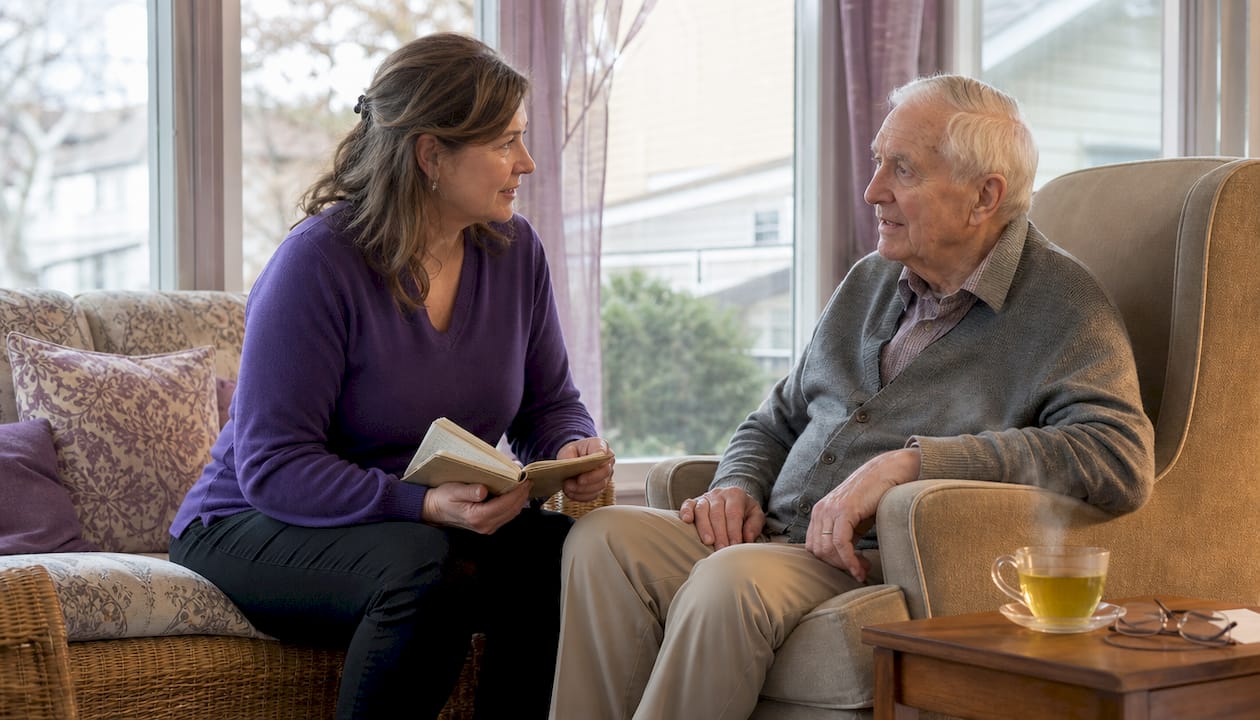
Dementia home care is defined as professional support delivered inside the person’s own home, structured across three distinct levels: companion/homemaker, personal care/custodial, and skilled nursing care. Each level corresponds to a different stage of dementia, from mild memory loss to advanced cognitive decline. The Alzheimer’s Association and Medicare each draw clear lines between these categories, especially around coverage eligibility. Understanding the types of dementia care at home before a crisis hits is what separates families who manage well from those who scramble.
1. What are the types of dementia care at home?
Dementia home care options fall into three recognized categories, and the right one depends entirely on where the person is in their disease progression. Companion and homemaker care covers non-medical support. Personal care handles hands-on physical assistance. Skilled nursing addresses clinical needs that require licensed professionals.
Most families start with one type and move through all three. The transition is rarely sudden, but it is inevitable. Care needs evolve from social supports in early stage to clinical nursing and palliative care as dementia progresses. Planning for that arc from the beginning prevents reactive, crisis-driven decisions.
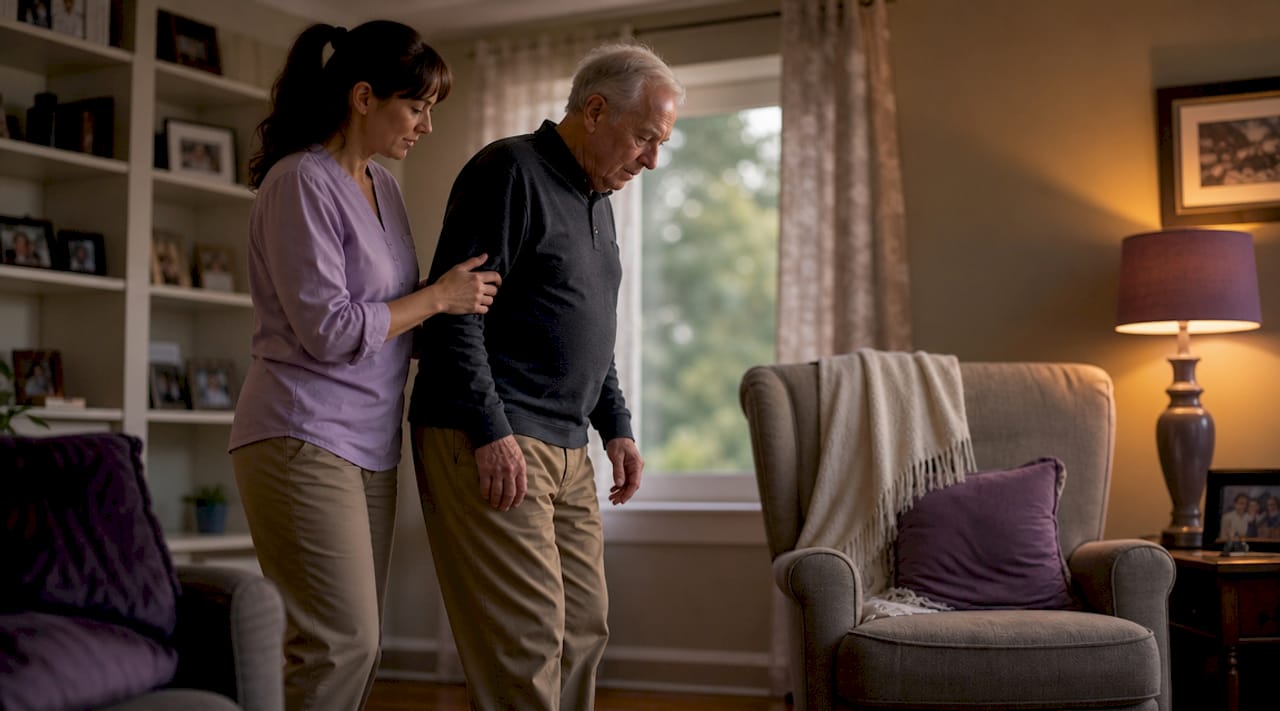
Medicare draws a hard line between these categories. Non-medical home care, including companion and personal care, is generally not covered by Medicare. Skilled home health care qualifies only under specific clinical criteria. That distinction shapes every financial conversation families need to have early.
2. Companion and homemaker care for early-stage dementia
Companion and homemaker services are the first line of in-home dementia support, designed for people with mild symptoms who still live relatively independently. These services are non-medical. A caregiver does not administer medications or perform clinical tasks. The focus is on safety, engagement, and daily structure.
Typical companion and homemaker tasks include:
- Supervision to prevent wandering or accidents
- Socialization and conversation to reduce isolation
- Meal preparation and light housekeeping
- Transportation to appointments or social activities
- Medication reminders (not administration)
- Engagement in hobbies, puzzles, or memory activities
These services are appropriate when the person can still manage most personal care independently but needs someone present for safety and companionship. Families often use this level of care to give themselves a break while keeping their loved one at home. For a detailed breakdown of what this looks like in practice, the guide on companion care for families covers the full scope.
Medicare does not cover companion or homemaker services. Families typically pay out of pocket or through long-term care insurance. That cost reality makes early planning critical.
Pro Tip: Introduce a professional caregiver while the person with dementia still has enough capacity to build a relationship. Starting care early reduces resistance and agitation later, when transitions become much harder.
3. How personal care and custodial services support moderate-stage needs
Personal care, also called custodial care, becomes necessary when dementia reaches the moderate stage and the person can no longer manage basic daily tasks safely on their own. This is the most labor-intensive phase for families. The care is hands-on, physical, and often emotionally demanding.
Personal care tasks typically include:
- Bathing, grooming, and oral hygiene
- Dressing and undressing
- Toileting and incontinence management
- Mobility assistance and fall prevention
- Meal preparation and feeding support
- Medication reminders and monitoring
Family caregivers provide 30+ hours weekly during middle-stage dementia, and professional support often reaches 30 to 60+ hours per week as behavioral changes intensify. That number surprises most families. It means one caregiver is not enough. Multi-caregiver rotation becomes the norm, not the exception.
Behavioral symptoms like agitation, sundowning, and repetitive questioning peak during this stage. Person-centered care, meaning routines built around the individual’s history, preferences, and rhythms, reduces these episodes significantly. A caregiver who knows that someone always had coffee at 7:00 AM and listened to jazz can use those anchors to calm distress.
Most families shift to full-time or near-full-time home care during this stage. Rotating caregivers prevent burnout, but they require coordination. Agencies handle scheduling automatically. Private hire arrangements put that burden on the family. For concrete examples of what personal care looks like day to day, the resource on personal care assistance tasks is worth reviewing.
4. What skilled nursing care involves for advanced dementia at home
Skilled nursing care at home is the most medically intensive form of in-home dementia support. It requires licensed nurses or therapists and addresses clinical needs that go beyond what personal care aides can legally perform.
Skilled nursing services for advanced dementia include:
- Wound care and dressing changes
- Medication management and injections
- Catheter care and tube feeding
- Monitoring for infections, pressure sores, and respiratory issues
- Physical or occupational therapy to maintain function
- Coordination with palliative or hospice care teams
Skilled nursing care at home may be coordinated with palliative services for late-stage dementia, addressing pain, comfort, and dignity alongside clinical needs. Palliative care does not mean giving up. It means shifting the goal from cure to quality of life. Families who understand this distinction make better decisions under pressure.
Medicare covers skilled nursing at home, but the criteria are strict. A physician must order the services, the person must be homebound, and there must be a documented skilled need. Simple personal care, even when extensive, does not qualify. Medicare’s skilled home health benefit requires a skilled need following a qualifying event, which often excludes coverage for the bulk of dementia care costs.
Planning for skilled nursing before the crisis arrives gives families time to understand Medicare eligibility, identify qualified providers, and avoid emergency placements that bypass the person’s wishes entirely.
For families considering this transition, the guide on palliative care at home explains when and how to integrate end-of-life support services.
5. How to choose between agency-based and private-hire dementia care
The choice between hiring through an agency or directly employing a caregiver is one of the most consequential decisions families make. Both options work. Neither is universally better. The right choice depends on the family’s capacity to manage administrative responsibilities.
Agency-based care offers:
- Background checks and credential verification
- Payroll, taxes, and workers’ compensation handled by the agency
- Backup caregivers when the primary is sick or unavailable
- Liability coverage and professional oversight
Private hire may appear less expensive at first glance. The hourly rate is often lower. But private hire carries hidden burdens including employer liability, payroll tax obligations, scheduling gaps, and no backup when the caregiver calls out sick. Families who choose private hire often underestimate how much time they spend managing the employment relationship rather than caring for their loved one.
A hybrid approach works for some families. An agency handles the primary caregiver placement and backup coverage. A trusted private individual fills supplemental hours at a lower cost. This model scales as dementia progresses without requiring a complete restructuring of care.
Agencies offer ease in payroll, backup, insurance, and vetting, which matters most when care needs are high and family bandwidth is low. That is almost always the case in moderate to advanced dementia.
Pro Tip: Build respite care into the plan from the start. Caregiver burnout is the most common reason home care arrangements collapse. Schedule regular breaks before exhaustion forces the issue.
6. How to evolve a dementia home care plan over time
Dementia is not static, and neither is the care plan. The most effective approach treats the care plan as a living document, reviewed and updated as the person’s needs change. Families who build this habit avoid the reactive scrambles that lead to poor decisions under pressure.
Signs that the current care level is no longer sufficient include:
- Increased falls or near-miss accidents at home
- Significant weight loss or dehydration
- New incontinence or hygiene problems
- Escalating agitation, aggression, or wandering
- The primary caregiver showing signs of burnout or health decline
Person-centered care plans evolve as dementia progresses, starting with social engagement and companionship in early stages, adding personal care, and eventually integrating skilled nursing support. Each transition should be planned, not triggered by a hospitalization or fall.
Early interventions with occupational therapists, social workers, and allied health professionals provide safety assessments, legal planning support, and behavioral symptom management throughout all stages. These professionals identify risks before they become emergencies. Bringing them in early is one of the highest-value investments a family can make.
Caregiver support networks matter as much as the care plan itself. Support groups, respite programs, and counseling reduce the emotional toll on family members who are managing care alongside their own lives. The care plan should include the caregiver’s needs, not just the person with dementia.
For a side-by-side comparison of how these care types differ in scope and purpose, the guide to home care types offers a clear breakdown.
Key takeaways
The most effective dementia home care plan matches the care type to the stage of the disease, starting with companion services and scaling to skilled nursing as needs increase.
| Point | Details |
|---|---|
| Three core care types | Companion, personal care, and skilled nursing each map to a specific stage of dementia. |
| Medicare coverage gap | Non-medical and personal care are not covered by Medicare; skilled nursing requires strict eligibility. |
| Caregiver hours spike in middle stage | Professional support of 30 to 60+ hours per week is common during moderate dementia. |
| Agency vs. private hire | Agencies cost more upfront but eliminate hidden employer burdens that exhaust families. |
| Plan early, update often | Person-centered care plans should be reviewed regularly, not only after a crisis. |
What I’ve learned from watching families navigate dementia care
The families who handle this best are not the ones with the most money or the most time. They are the ones who planned before they had to. Every family I have seen wait until a fall or a hospitalization to start thinking about care types ends up making decisions under pressure, with fewer options and higher costs.
The other thing that surprises people is how personal the care has to be. Generic routines do not work well for dementia. A caregiver who knows that someone spent 40 years as a nurse responds very differently to confusion than one who treats every person the same way. Person-centered care reduces agitation in a way that no medication fully replicates. That is not a soft claim. It shows up in outcomes.
The administrative side of care is also underestimated. Families who choose private hire to save money often spend more time managing employment logistics than they would have spent working extra hours to pay for an agency. The hidden costs are real, and they are not just financial.
My honest advice: start with companion care earlier than you think you need to. Build the relationship. Then scale from there. The person with dementia will cooperate far more when the caregiver is already familiar.
— Michael
Helping-hands-home-care: professional dementia care at home
Helping-hands-home-care provides trained caregivers for every stage of dementia, from early-stage companion services to hands-on personal care for moderate needs.
The caregivers at Helping-hands-home-care are trained specifically for dementia-related behavioral challenges, including sundowning, wandering, and agitation. Scheduling, backup coverage, and caregiver matching are handled by the agency, so families focus on their loved one rather than logistics. Explore the full range of home health aide services or review all available care service options to find the right fit for your family’s current needs.
FAQ
What is dementia home care?
Dementia home care is professional support delivered inside the person’s home, covering non-medical companion services, hands-on personal care, and skilled nursing depending on the stage of the disease.
Does Medicare cover in-home dementia care?
Medicare covers skilled nursing at home under strict eligibility criteria, but does not cover companion or personal care services, which are the most commonly needed types for dementia patients.
How many hours of care does a dementia patient need at home?
During moderate-stage dementia, professional care needs typically reach 30 to 60+ hours per week, often requiring multiple rotating caregivers to prevent burnout.
When should skilled nursing care begin for dementia?
Skilled nursing care becomes appropriate when the person needs clinical services such as wound care, injections, or catheter management, and when palliative or hospice support is being considered for advanced dementia.
What is the difference between companion care and personal care for dementia?
Companion care covers non-medical supervision, socialization, and household tasks suited to early-stage dementia. Personal care adds hands-on physical assistance with bathing, dressing, and toileting for moderate-stage needs.
Recommended
- Home Care Services for Seniors: A Family Guide | Helping Hands Home Care
- Talking to Parents About Home Care: A Family Guide | Helping Hands Home Care
- Difference Between Home Care Types: Family Guide 2026 | Helping Hands Home Care
- Home Care vs. Adult Day Programs: Family Guide 2026 | Helping Hands Home Care