
Cancer Patient Home Care: What It Is and How It Works
Cancer Patient Home Care: What It Is and How It Works
What is cancer patient home care?
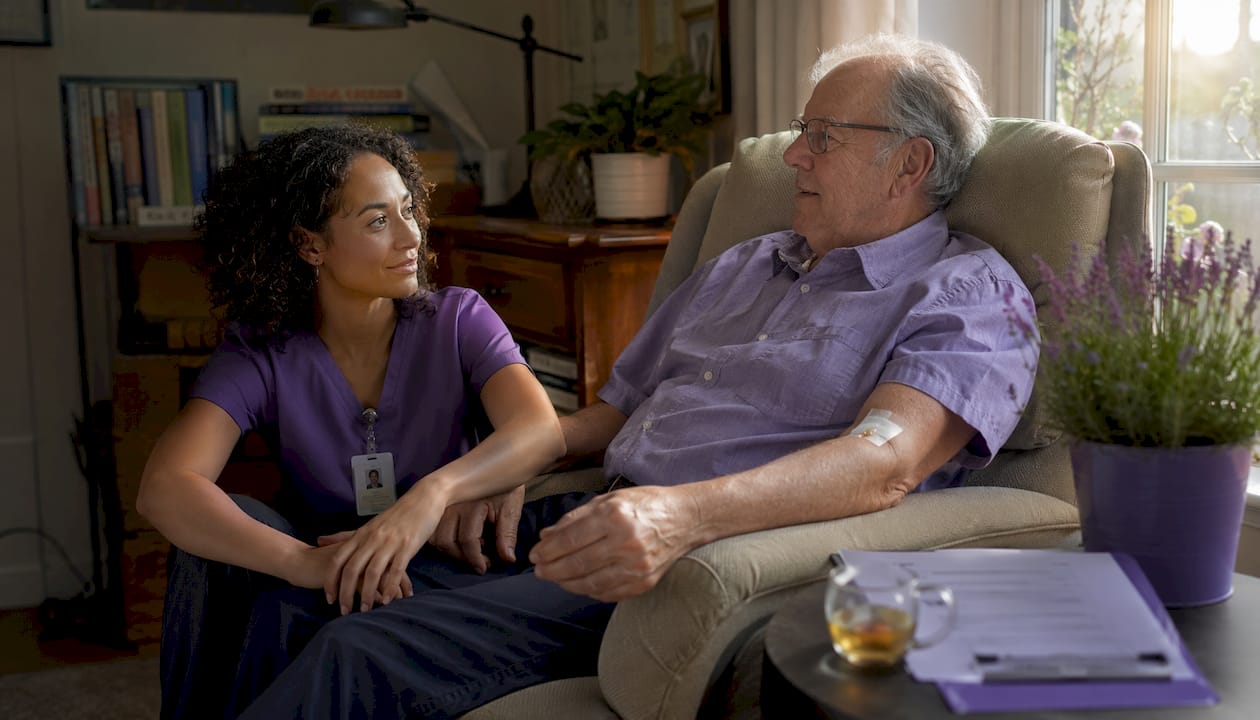
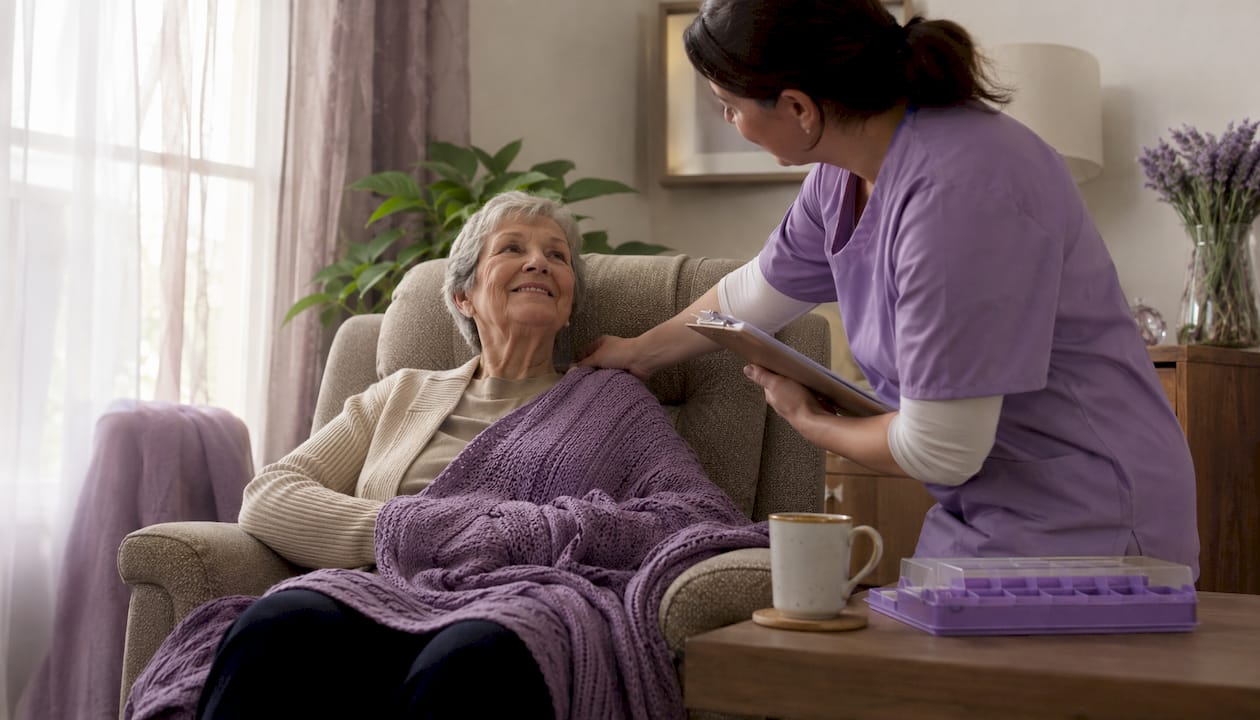
Cancer patient home care is skilled medical treatment and personal support delivered in a patient’s own home, covering everything from IV infusions and wound care to help with bathing and meals. It is not a single service but a spectrum, ranging from intermittent skilled nursing visits covered by Medicare to ongoing personal care assistance that families often pay for privately.
The core components break down into two broad categories:
- Skilled home health care: Registered nurses (RNs) and licensed practical nurses (LPNs) providing wound care, injections, IV therapy, medication management, and monitoring of unstable health conditions
- Personal care assistance: Help with bathing, grooming, dressing, meal preparation, and light housekeeping provided by home health aides
- Therapy services: Physical, occupational, and speech-language therapy to restore function and maintain independence
- Symptom management: Pain control, nausea treatment, fatigue monitoring, and nutritional support coordinated with the oncology team
- Caregiver education: Teaching family members how to manage complex care tasks, recognize warning signs, and report changes to the medical team
Medicare covers 100% of approved home health services for patients who qualify, though patients pay 20% of the Medicare-approved amount for durable medical equipment such as walkers or oxygen. Qualifying requires a doctor’s certification that the patient is “homebound,” meaning leaving home takes considerable effort due to illness or injury.
What types of home care services are available to cancer patients?
The range of services available is wider than most families expect, and understanding the distinctions prevents costly surprises.
- Skilled nursing visits: An RN or LPN comes to the home on a scheduled basis to administer injections, manage IV lines, perform wound care, monitor vital signs, and educate patients and caregivers on disease management
- Home health aide services: Aides assist with personal hygiene, dressing, ambulation, and feeding; Medicare covers aide visits only when the patient is simultaneously receiving skilled nursing or therapy
- Physical and occupational therapy: Therapists work to restore strength, balance, and the ability to perform daily tasks after surgery or treatment-related deconditioning
- Speech-language pathology: Addresses swallowing difficulties and communication problems that can arise from head and neck cancers or certain medications
- Medical social services: Social workers help patients and families navigate community resources, financial assistance programs, and emotional challenges
- Palliative care at home: Focuses on comfort and quality of life at any stage of illness, not just end of life; it can run alongside curative treatment
- Hospice care: A distinct program reserved for patients in the final phase of illness when curative treatment is no longer the goal; it carries separate Medicare coverage and eligibility criteria
- Specialized oncology home care: Programs like Huntsman at Home, operated by Huntsman Cancer Institute at the University of Utah, deliver oncology-specific visits seven days a week, with on-call support from 8 AM to 8 PM and after-hours phone advice for urgent needs
One common misconception is that Medicare covers around-the-clock custodial care. It does not. Medicare typically does not cover 24/7 personal care unless it is directly linked to ordered skilled services. Families who need continuous supervision usually turn to private long-term care insurance or out-of-pocket funds.
Who provides home care for cancer patients?
Home care for cancer patients is a team effort, not a single provider relationship. Each professional on the team has a defined scope and specific responsibilities.
- Registered nurses (RNs): Assess the patient’s overall condition, administer skilled treatments, develop and update the care plan, and communicate changes to the oncology team
- Licensed practical nurses (LPNs): Carry out many of the same clinical tasks as RNs under supervision, including wound care, injections, and medication administration
- Home health aides: Certified aides assist with personal care and basic mobility; they do not perform skilled medical procedures
- Physical therapists: Design exercise programs to rebuild strength and prevent falls, particularly important after surgery or prolonged bed rest
- Occupational therapists: Help patients adapt daily routines and home environments to maintain independence despite physical limitations
- Speech-language pathologists: Address eating, swallowing, and communication challenges that cancer or its treatment can cause
- Medical social workers: Connect families with community resources, support groups, financial aid, and counseling services
- Oncology nurse navigators: Often based at the hospital or cancer center, these nurses coordinate the handoff between inpatient and home care, making sure nothing falls through the gap
- Home care agency coordinators: Manage scheduling, documentation, and communication between all team members and the supervising physician
The oncology team at the hospital does not disappear once a patient goes home. A well-run home care arrangement keeps the treating oncologist informed of any changes in the patient’s condition, creating a feedback loop that catches complications early.
Which cancer treatments can be safely delivered at home?
More treatments than most people realize can be administered safely outside a hospital setting, provided a skilled nurse is involved and the care plan is properly structured.
- Oral chemotherapy and targeted therapies: Patients take these medications at home; a nurse monitors for side effects, checks adherence, and coordinates lab work
- Topical treatments: Applied at home with nurse education and periodic assessment
- Subcutaneous and intramuscular injections: Nurses administer growth factors, anticoagulants, and supportive medications such as erythropoietin-stimulating agents
- IV infusions: Hydration, antibiotic therapy, and certain chemotherapy agents can be delivered through a central line or PICC line at home by a skilled nurse
- Catheter care: Urinary catheters and central venous access devices require regular maintenance and monitoring to prevent infection
- Pain management: Nurses assess pain levels, adjust medication schedules in coordination with the physician, and teach caregivers how to recognize breakthrough pain
- Nausea and dehydration management: IV fluids and antiemetic medications can be given at home, avoiding an emergency room visit for what is often a manageable side effect
- Wound care: Post-surgical wounds and radiation skin reactions are cleaned, dressed, and monitored at home visits
- Medication reconciliation: Nurses review all medications to catch dangerous interactions, a particular risk in cancer patients taking multiple drugs simultaneously
Pro Tip: Ask the oncology team to send a written care plan to the home health agency before discharge, not after. A same-day handoff prevents the 24-to-48-hour gap where patients are most vulnerable to complications.
What are the goals and benefits of home care for cancer patients?
The primary goal is straightforward: maintain quality of life and prevent unnecessary hospital admissions while keeping the patient in a familiar, comfortable environment. The benefits extend to both patients and the people caring for them.
- Comfort and dignity: Patients recover and manage treatment in their own space, surrounded by family, which consistently improves emotional well-being
- Reduced hospital readmissions: Skilled nurses catch early warning signs, from infection to dehydration, before they escalate into emergencies
- Caregiver education and confidence: Home health agencies teach family members how to perform wound care, manage medications, and recognize symptoms that need immediate attention
- Respite for family caregivers: Scheduled professional visits give family caregivers time to rest, reducing the risk of burnout that integrated care programs specifically address
- Preserved independence: Therapy services help patients maintain or regain the ability to perform daily tasks, which directly supports their sense of autonomy
- Cost efficiency: Home health care is generally less expensive than equivalent care in a hospital or skilled nursing facility, and for Medicare-eligible patients, approved services carry no cost-sharing beyond the Part B deductible for equipment
The benefits are not theoretical. Research using linked SEER-Medicare data shows that home health use rates following a cancer diagnosis are 16.3% for Traditional Medicare patients and 10.3% for Medicare Advantage patients, reflecting how central home care has become to the cancer treatment continuum.
When and how do you get home care for a cancer patient?
Timing matters. The best outcomes come from starting the conversation before discharge, not after a crisis at home.
- Indicators that home care is needed: Extreme fatigue that limits mobility, post-surgical wound care requirements, IV medication needs, difficulty managing oral medications safely, or a caregiver who cannot manage complex tasks alone
- Who initiates the process: The treating oncologist, a hospital discharge planner, or a nurse navigator typically writes the referral; patients and families can also request it directly
- Medicare certification requirements: A doctor must certify the patient as homebound and order the specific services needed; homebound status means leaving home is not recommended due to the patient’s condition, or requires considerable effort and assistance
- Face-to-face requirement: Medicare requires a face-to-face visit with a doctor or allowed provider before certifying a patient for home health services
- Selecting a Medicare-certified agency: Only agencies certified by Medicare can bill for covered services; the Medicare Care Compare tool at medicare.gov lists certified agencies by zip code
- Starting conversations early: Early planning with discharge planners or nurse navigators prevents gaps in care following hospital discharge, particularly for patients transitioning from inpatient oncology units
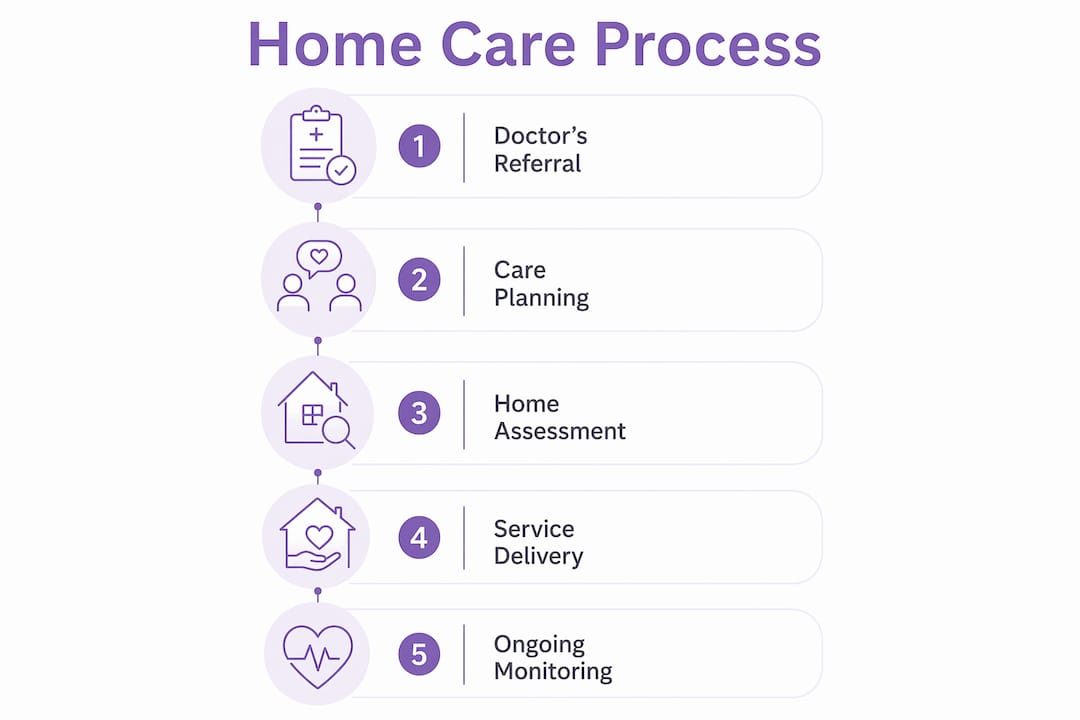
| Step | What happens | Who is responsible |
|---|---|---|
| Doctor’s referral | Physician orders home health services and certifies homebound status | Oncologist or allowed provider |
| Agency selection | Family or discharge planner identifies a Medicare-certified agency | Patient, family, discharge planner |
| Home assessment | Agency nurse visits to evaluate needs and write the care plan | Home health agency RN |
| Care plan approval | Doctor reviews and signs the care plan | Supervising physician |
| Services begin | Skilled visits start; schedule is set based on medical need | Home health agency team |
| Ongoing review | Care plan is updated regularly as the patient’s condition changes | Agency and physician together |
For patients on Medicare Advantage rather than Traditional Medicare, expect additional steps. MA plans often require prior authorization and may conduct utilization reviews that Traditional Medicare does not. Understanding your specific plan’s rules before discharge saves time and avoids denied claims. A detailed breakdown of home care payment options can help families plan ahead.
What should families ask before starting cancer patient home care?
Walking into a home care arrangement without asking the right questions leads to mismatched expectations and gaps in coverage. These are the questions that actually matter.
- What specific services are authorized under the care plan? Not every service a family wants is automatically covered; the care plan defines the scope
- Which tasks are home health aides permitted to perform? Aides cannot administer medications or perform skilled procedures; knowing this boundary prevents dangerous assumptions
- How often will a nurse or therapist visit, and for how long? Frequency varies by medical need; Medicare allows up to 8 hours of combined skilled nursing and aide care per day, up to 28 hours per week under standard authorization
- How does the agency communicate with the oncology team? Ask for a specific point of contact and a process for reporting changes in condition
- What happens after hours or on weekends? Some agencies offer on-call nursing support; others do not; know the answer before a Saturday night crisis
- Is caregiver training included? Family members should receive hands-on instruction for wound care, medication management, and symptom monitoring
- What respite options are available? Ask whether the agency can arrange additional visits or connect families with community respite programs when caregiver fatigue sets in
- How is the care plan updated as the patient’s condition changes? Care plans are legal documents that must be reviewed regularly; ask how often and who initiates the review
How do you support caregivers and prevent burnout during cancer home care?
Caregiver burnout is one of the most predictable and most overlooked risks in cancer home care. Family members often take on complex medical tasks with minimal training, while simultaneously managing their own jobs, households, and emotional stress.
- Structured education from the start: Home health agencies should teach caregivers wound care, medication schedules, and how to recognize symptoms like fever, bleeding, or sudden confusion that require immediate medical attention
- Scheduled respite visits: Regular professional visits give family caregivers a defined break; even a few hours of relief per week reduces cumulative stress
- Emotional support resources: Social workers connected to the home care team can refer caregivers to counseling, support groups, and community programs
- Clear communication channels: Caregivers need a direct line to a nurse, not just a general agency phone number, when something changes at 10 PM
- Early planning conversations: Families who discuss care needs and boundaries before a crisis hits are far better positioned to sustain care over weeks or months
- Documentation habits: Keeping a simple daily log of symptoms, medications given, and any changes in the patient’s condition helps nurses and physicians make faster, better-informed decisions
Pro Tip: Caregiver burnout rarely announces itself. Watch for the caregiver skipping their own meals, losing sleep consistently, or expressing resentment. These are early signals, not character flaws, and they respond well to practical burnout prevention strategies before the situation becomes a crisis.
The role of a home caregiver is demanding in ways that are hard to anticipate. Agencies that build caregiver support into the care plan from day one produce better outcomes for patients and families alike.
How does home care coordinate with the hospital and oncology team?
The handoff between hospital and home is where care most often breaks down. A patient discharged on a Friday afternoon with a new medication regimen and a wound that needs daily dressing changes needs a home nurse at the door by Monday at the latest, ideally sooner.
Effective coordination depends on a few specific practices. The home health agency receives a complete discharge summary, including current medications, recent lab values, and the oncologist’s treatment plan, before the first home visit. The agency’s RN then contacts the supervising physician within 24–48 hours to confirm the care plan and flag any discrepancies between what was ordered and what the patient actually needs at home.
Ongoing communication runs in both directions. When a home nurse notices that a patient’s pain is poorly controlled or that a wound is showing signs of infection, that information goes back to the oncology team the same day, not at the next scheduled appointment. Specialized oncology home care programs formalize this loop, with dedicated staff who maintain a direct relationship with the cancer center. The result is a system where the patient’s care does not pause at the hospital door.
What safety measures and equipment does home care for cancer patients require?
A home that works fine for a healthy adult can become a hazard for a cancer patient dealing with fatigue, neuropathy, or post-surgical mobility limits. Addressing safety before the patient arrives home prevents falls, infections, and medication errors.
Common equipment ordered through Medicare-certified agencies includes hospital-grade beds, walkers, wheelchairs, shower chairs, grab bars, and oxygen equipment when needed. A physician must order durable medical equipment as part of the care plan; patients pay 20% of the Medicare-approved amount after meeting the Part B deductible.
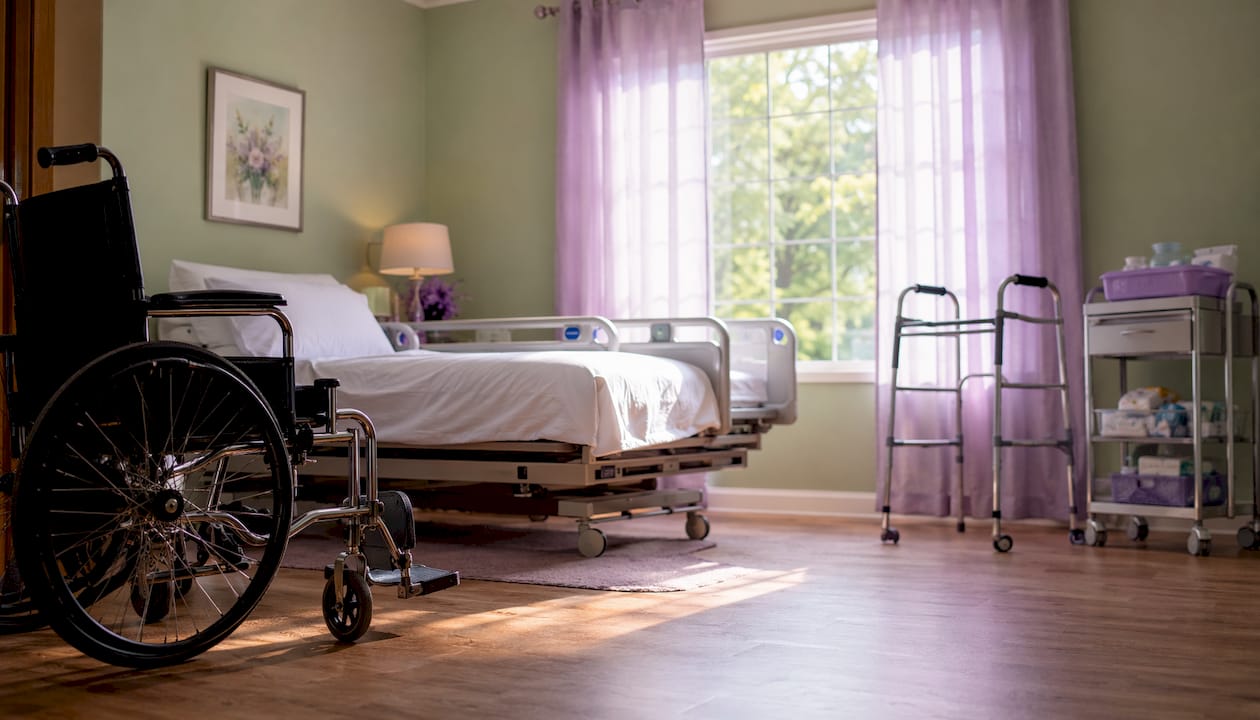
Infection control is a particular concern. Cancer patients on chemotherapy often have suppressed immune systems, making hand hygiene, proper wound care technique, and clean supply storage more critical than in standard home care. Nurses assess the home environment on the first visit and recommend modifications, from removing trip hazards to reorganizing medications to prevent accidental double-dosing. Families preparing the home in advance can use a 2026 home safety guide to get ahead of the most common risks.
What palliative and end-of-life care options are available at home?
Palliative care and hospice are not the same thing, and conflating them leads families to delay comfort-focused support that patients could be receiving much earlier.
Palliative care focuses on symptom relief and quality of life at any point in a cancer diagnosis, including during active treatment. A palliative care team working alongside the oncology team manages pain, nausea, fatigue, and emotional distress without requiring the patient to give up curative treatment. This care can be delivered at home through skilled nursing visits, social work support, and coordination with the treating physician.
Hospice is a separate program for patients whose illness is no longer responding to curative treatment and whose life expectancy is six months or less if the disease follows its expected course. Under Medicare’s hospice benefit, care shifts entirely to comfort, and the hospice team takes over coordination of all related services at home. Families often report that they wished they had called hospice sooner; the program provides nursing visits, aide services, chaplain support, counseling, and bereavement support for family members after the patient’s death. For families navigating this transition, a clear explanation of palliative care at home can make the decision less overwhelming.
How Helping-hands-home-care supports cancer patients at home
Helping-hands-home-care provides professional, compassionate home health aid services for cancer patients and their families across our service area. From personal care assistance and daily living support to coordination with your medical team, our caregivers bring reliable, skilled attention directly to your home. We also offer house cleaning services to help families maintain a safe, healthy living environment during treatment, and therapeutic massage to support comfort and pain management. Contact Helping-hands-home-care to discuss a care plan built around your family’s specific needs.
Key Takeaways
Cancer patient home care spans skilled medical services and personal support, and understanding both sides helps families plan effectively and avoid coverage gaps.
| Point | Details |
|---|---|
| Home care is a spectrum | Services range from Medicare-covered skilled nursing to privately funded personal care assistance. |
| Medicare covers approved services fully | Patients pay nothing for covered home health visits but must meet homebound certification requirements. |
| Insurance plan affects access | Traditional Medicare patients use home health at a rate of 16.3% post-diagnosis versus 10.3% for Medicare Advantage patients. |
| Early coordination prevents gaps | Starting home care conversations before hospital discharge avoids the dangerous window where patients are most at risk. |
| Caregiver burnout needs proactive attention | Respite visits, caregiver education, and clear communication channels reduce burnout before it becomes a crisis. |
Recommended
- Chronic Illness Home Care: A Family Caregiver’s Guide | Helping Hands Home Care
- Why Home Care Improves Recovery for Elderly Patients | Helping Hands Home Care
- Palliative Care at Home Explained for Families | Helping Hands Home Care
- Post-Hospital Home Care: A Family Guide to Recovery | Helping Hands Home Care