
Alzheimer Home Care Explained: A Family Guide
Alzheimer Home Care Explained: A Family Guide

Alzheimer home care is defined as the stage-specific, professional and family-provided support delivered inside the home to help individuals with Alzheimer’s disease maintain safety, dignity, and daily function. Understanding this type of care matters because the disease progresses through distinct stages, each demanding a different level of support. Families who plan early, know what services exist, and understand the real costs make better decisions and experience less crisis. This guide breaks down alzheimer home care explained in plain terms, covering disease stages, service types, costs, and practical strategies for family caregivers.
How do Alzheimer’s disease stages shape home care needs?
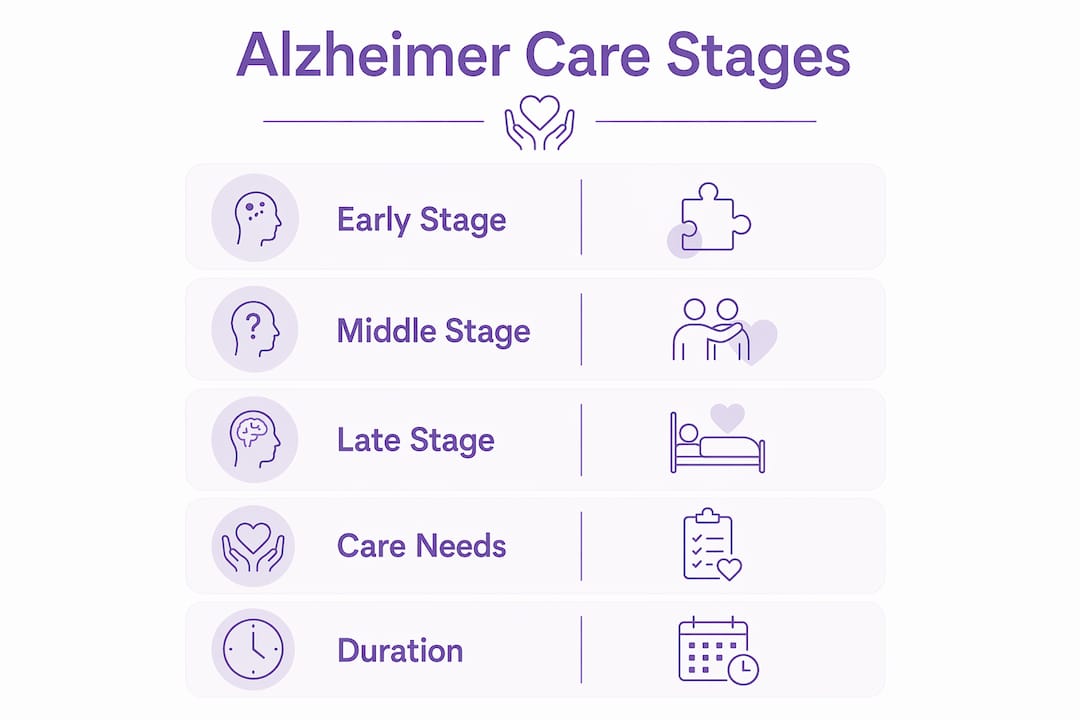
Alzheimer’s disease progresses through three broad stages: early, middle, and late. Each stage changes what your loved one can do independently and what kind of support they need at home.
Early stage
In the early stage, most people with Alzheimer’s remain largely independent. They may forget recent conversations, misplace items, or struggle with complex tasks like managing finances. Care at this point typically means reminders, help with scheduling, and light supervision. Families often handle this stage without professional help, though starting conversations about future care now saves significant stress later.
Pro Tip: Talk to your loved one about their care preferences while they can still participate. Use resources like the National Institute on Aging to find unbiased guidance on planning.
Middle stage
The middle stage is the longest and most demanding phase. It lasts between 2 and 10 years, during which the person loses the ability to manage daily tasks without help. Bathing, dressing, meal preparation, and medication management all require hands-on assistance. Behavioral and psychological symptoms of dementia, known as BPSD, peak during this stage. Agitation, wandering, and sleep disruption are common. Non-pharmacological interventions, such as consistent daily routines and structured activities, reduce caregiver distress and improve the person’s well-being. This is the stage when most families bring in professional home care for the first time.

Late stage
The late stage typically lasts 1–3 years. The person loses the ability to communicate verbally, becomes fully dependent for all personal care, and is at high risk for infections and falls. 24-hour supervision becomes necessary, either through live-in care or rotating shifts of professional caregivers. Families managing this stage alone face serious burnout risk. Understanding signs that care needs have escalated helps families act before a crisis forces the decision.
| Stage | Typical Duration | Primary Care Needs |
|---|---|---|
| Early | 2–4 years | Reminders, light supervision, financial oversight |
| Middle | 2–10 years | Personal care, behavioral support, medication management |
| Late | 1–3 years | Full personal care, 24-hour supervision, comfort care |
What types of home care services are available for Alzheimer’s patients?
Home care for Alzheimer’s falls into two broad categories: non-medical companion care and skilled nursing care. Knowing the difference helps families match the right service to the right stage.
Non-medical companion care covers the tasks that make up most of daily life. Caregivers help with meal preparation, light housekeeping, medication reminders, transportation, and companionship. This type of care does not require a nursing license and forms the foundation of most Alzheimer’s home care plans.
Skilled nursing care involves medical monitoring, wound care, catheter management, and other clinical tasks that require a licensed nurse and a physician’s order. Most people with Alzheimer’s need skilled nursing only during specific medical episodes, not as their primary ongoing care.
Beyond these two categories, families have access to several support structures:
- Adult day programs: Structured daytime programs outside the home that provide social engagement, meals, and supervision. They give family caregivers a reliable break during work hours.
- Respite care: Short-term professional care, ranging from a few hours to several weeks, that allows family caregivers to rest, travel, or recover. Respite care and adult day programs improve caregiver outcomes and delay the need for nursing home placement.
- Agency-based care vs. private caregivers: Hiring through a caregiving agency means the agency handles payroll, background checks, and caregiver substitutions when someone calls in sick. Private hiring costs less per hour but shifts full legal and management responsibility to your family.
Pro Tip: Before committing to any caregiver, schedule a trial period of at least two weeks. Watch how they handle agitation, redirection, and routine. A poor match worsens care quality and creates instability for your loved one.
When evaluating any provider, ask specifically about their experience with dementia-related behaviors, their staff turnover rate, and how they handle emergencies. The role of a home caregiver goes well beyond basic tasks, and the right fit matters enormously.
How can families prepare and manage Alzheimer home care effectively?
Effective Alzheimer home care does not happen by accident. It requires deliberate planning, clear communication, and a willingness to adapt as the disease progresses.
-
Modify the home for safety. Remove tripping hazards, install grab bars in bathrooms, add door alarms to prevent wandering, and lock away medications and cleaning products. A home safety assessment before care begins prevents injuries and reduces caregiver stress.
-
Handle legal and financial matters early. Establish durable power of attorney, healthcare proxy, and advance directives while your loved one can still participate in those decisions. Waiting until the middle or late stage makes this far more complicated.
-
Coordinate caregivers with a written care plan. If multiple family members and professional caregivers share responsibility, a written daily schedule prevents gaps and miscommunication. Include medication times, behavioral triggers, preferred routines, and emergency contacts.
-
Manage behavioral symptoms with structure. BPSD symptoms like agitation and wandering peak in the middle stage. Consistent daily routines, familiar music, and reduced environmental stimulation are proven non-pharmacological strategies. Consult a geriatric care manager or neurologist when behaviors become unsafe.
-
Use federal and local resources. Area Agencies on Aging and Medicare.gov offer free, unbiased tools to assess care providers and connect families with local programs. These resources reduce the guesswork in finding qualified help.
-
Protect yourself from burnout. Caregiver burnout leads to depression, anxiety, and physical illness. Scheduling regular respite, joining a caregiver support group, and accepting help from others are not optional extras. They are what makes long-term care sustainable.
Pro Tip: Treat your own health as part of the care plan. A caregiver who is depleted cannot provide quality care. Compare home care versus adult day programs to find the respite structure that fits your schedule.
What does Alzheimer home care typically cost?
Cost is one of the first questions families ask, and the answer depends heavily on the type of care and how many hours per week are needed.
Non-medical companion care costs between $20 and $35 per hour. Skilled nursing care runs significantly higher, from $150 to $250 per hour, and is used only for specific medical needs. A family using 20 hours per week of companion care can expect to spend roughly $1,600 to $2,800 per month. Full-time live-in care in the late stage can exceed $8,000 per month.
| Care Type | Typical Hourly Rate | Common Use Case |
|---|---|---|
| Companion care | $20–$35 | Meal prep, reminders, companionship |
| Personal care aide | $25–$40 | Bathing, dressing, mobility assistance |
| Skilled nursing | $150–$250 | Medical monitoring, wound care |
Insurance coverage is a critical piece of the financial picture:
- Medicare covers skilled home health services only when ordered by a physician under strict medical conditions. Medicare does not cover custodial or companion care, which makes up the bulk of Alzheimer’s care needs.
- Medicaid covers in-home care in many states through waiver programs, but eligibility depends on income and asset limits. Rules vary significantly by state.
- Long-term care insurance covers a range of home care services if the policy was purchased before diagnosis. Coverage amounts and daily benefit limits vary by policy.
- Out-of-pocket spending is the reality for many families, particularly in the early and middle stages before Medicaid eligibility kicks in.
Families who compare home care versus nursing home costs often find that part-time home care in the early and middle stages is more affordable than residential placement, especially when family members contribute unpaid hours.
Key Takeaways
Alzheimer home care requires a stage-specific plan that matches care intensity to disease progression, uses the right service types, and accounts for real costs and caregiver sustainability.
| Point | Details |
|---|---|
| Stage-based care planning | Match care intensity to the disease stage, from reminders in early stage to 24-hour supervision in late stage. |
| Service type selection | Choose between companion care, skilled nursing, agency, or private hire based on medical needs and family capacity. |
| Cost and insurance realities | Medicare does not cover companion care; Medicaid and long-term care insurance fill gaps with eligibility conditions. |
| Caregiver burnout prevention | Schedule respite care and use adult day programs to sustain your own health alongside your loved one’s care. |
| Early legal and financial planning | Establish power of attorney and advance directives before the middle stage makes participation impossible. |
What I’ve learned about Alzheimer home care that most guides won’t tell you
Most articles about understanding Alzheimer’s care focus on checklists and cost tables. What they miss is the emotional architecture of the whole thing.
Families almost always underestimate how fast the middle stage escalates. One month your parent needs help with the stove. Three months later, they need help with every meal, every bath, and every medication. The care plan that worked in january is obsolete by april. The families who handle this best are the ones who build flexibility into the plan from the start, not the ones who try to lock in a fixed routine and hold on.
The trial period for caregivers is one of the most overlooked tools available. I’ve seen families skip it because they felt awkward “testing” someone. That discomfort costs them dearly when a poor match creates behavioral escalation in their loved one. Two weeks of observation is not an insult to a qualified caregiver. It’s standard practice.
The other thing I’d push back on is the idea that professional care is a last resort. Bringing in a skilled home care aide in the early or middle stage actually extends the time your loved one can stay at home. It reduces family conflict, creates structure, and gives you breathing room to be a son, daughter, or spouse instead of a full-time nurse. That shift in role is worth more than most families realize until they’ve experienced it.
— Michael
Helping-hands-home-care: professional support for Alzheimer’s families
Caring for a loved one with Alzheimer’s at home is one of the most demanding things a family can take on. Helping-hands-home-care provides in-home health aide services designed to support Alzheimer’s patients at every stage of the disease, from early-stage companionship and daily reminders to hands-on personal care in the middle and late stages.

Helping-hands-home-care works with families to build flexible, stage-appropriate care plans that adapt as needs change. Whether you need a few hours of support per week or a more intensive care arrangement, the team is ready to help you find the right fit. Contact Helping-hands-home-care to schedule a personalized care consultation and get clear answers for your family’s situation.
FAQ
What is Alzheimer home care?
Alzheimer home care is professional or family-provided support delivered inside the home to help individuals with Alzheimer’s disease manage daily tasks, stay safe, and maintain quality of life at each stage of the disease.
Does Medicare pay for Alzheimer’s home care?
Medicare covers skilled home health services only when a physician orders them for a specific medical need. It does not cover companion care or personal care aides, which make up most Alzheimer’s home care needs.
When should a family start professional home care for Alzheimer’s?
Families typically begin with part-time professional care in the middle stage, when daily tasks like bathing and medication management require hands-on help. Starting earlier, even with a few hours per week, reduces caregiver stress and creates a smoother transition.
How do families prevent caregiver burnout?
Scheduling regular respite care, using adult day programs, and joining caregiver support groups are the most effective strategies. Caregiver burnout leads to depression and physical illness, which directly reduces the quality of care provided.
What is the difference between companion care and skilled nursing care?
Companion care covers non-medical tasks like meal preparation, reminders, and companionship, typically costing $20–$35 per hour. Skilled nursing care involves clinical tasks performed by a licensed nurse and costs significantly more, ranging from $150 to $250 per hour.
Recommended
- Types of Dementia Care at Home: A Family Guide | Helping Hands Home Care
- Home Care Services for Seniors: A Family Guide | Helping Hands Home Care
- Talking to Parents About Home Care: A Family Guide | Helping Hands Home Care
- How to Prepare Home for Caregiver: 2026 Safety Guide | Helping Hands Home Care