
Coordinating Family Caregiving With a Home Care Agency
Coordinating Family Caregiving With a Home Care Agency

When you hire a home care agency, the agency’s job is to assess your relative’s needs, build an individualized care plan, and then arrange the actual services, like personal care, homemaker help, or respite. Your job in the first few days is narrower and more urgent than it feels. Do these three things now:
- Gather a current medication list, recent doctor’s notes, and emergency contacts.
- Call to schedule an intake assessment, and ask what documents the agency wants in advance.
- Pick one family member as the single point of contact so the agency isn’t fielding five different phone calls.
Your local Area Agency on Aging can point you toward vetted agencies and public support programs if you haven’t chosen one yet. Helping-hands-home-care and similar providers handle the clinical and scheduling side once you’ve supplied the basics.
TL;DR:
- An agency’s assessment walks through eligibility, medication review, home safety, and detailed care planning, not just initial paperwork.
- Coordinating among family, agency staff, and clinicians requires designated contacts, shared calendars, medication updates, and clear escalation protocols.
- Agency rates are higher than private hires due to overhead costs, but they guarantee staffing backup and handle legal responsibilities.
- Recognizing caregiver burnout early involves monitoring irritability, sleep issues, and resentment, with respite included in the care plan from the start.
- Preparing documentation and asking about backup staffing and respite support during intake help create a reliable, tailored care plan to prevent crises.
Table of Contents
- What does a home care agency actually do, and when should you call one?
- What happens during the assessment, and how do you prepare for it?
- How do you keep family, agency staff, and clinicians on the same page?
- What does agency care cost, and how do you pay for it?
- How do you recognize caregiver burnout, and what respite options help?
- Your first 72 hours: a checklist and 12 questions to ask the agency
- Helping Hands Home Care: real services built for this coordination
- What the checklist gets wrong (and why intake day matters more than research day)
- Get Coordinated Care Started This Week
- Key Takeaways
- Sources
What does a home care agency actually do, and when should you call one?
An agency’s core function is straightforward: evaluate, plan, arrange. Most agencies offer a similar menu of services, though the depth varies by provider:
- Personal care (bathing, dressing, mobility assistance)
- Homemaker services (light housekeeping, meal prep, laundry)
- Respite care for scheduled caregiver breaks
- Case management or referrals to nursing and clinical specialists
You should pick up the phone when your relative’s needs outpace what you can safely manage. That includes a jump in activities-of-daily-living support, a fall or other safety scare, an upcoming hospital discharge with new care instructions, or your own health starting to slip under the strain.
Hiring privately can save money on paper, but it shifts the legal and logistical burden onto you. You become the employer, handling payroll taxes, worker’s comp, and backup coverage when your caregiver calls in sick. Agencies absorb that risk and guarantee a substitute. That reliability is the real product you’re paying for, not just the labor hour.
What happens during the assessment, and how do you prepare for it?
The intake assessment is the single most important meeting in this process, and most families walk in without half of what they need. Expect it to follow a fairly consistent sequence:
- Eligibility and intake paperwork, often tied to insurance or Medicaid status.
- A review of activities of daily living (ADLs) and instrumental activities like cooking or managing finances (IADLs).
- A full medication review, including dosages and timing.
- A walk-through of the home for fall risks, lighting, and accessibility issues.
The resulting care plan should spell out specific goals, a weekly schedule, assigned tasks, backup staffing arrangements, and measurable check-in points, not vague language like “monitor wellbeing.” A well-built plan reads more like a project brief than a brochure. Reviewing professional care plan examples before the visit helps you know what a complete one looks like.
Bring a written medication list, recent physician notes, a list of emergency contacts, and details on any mobility aids or living-will documents.
Pro Tip: Take a photo of every prescription bottle’s label the morning of the assessment. It’s faster than transcribing dosages by hand and catches errors your memory would miss.
How do you keep family, agency staff, and clinicians on the same page?
Coordination breaks down most often not because anyone is careless, but because nobody owns it. Family caregivers frequently end up as the default coordinators across providers and settings, especially during hospital transitions, and that role needs structure or it becomes exhausting.
Start by naming two people: one point of contact at the agency and one family lead who owns communication on your end. Then build three simple systems:
- A shared calendar (a family group calendar app or even a printed wall chart works) for shifts, appointments, and medication timing.
- One current medication list that gets updated the same day any prescription changes, not weekly.
- A secure shared note file, whether a locked spreadsheet or a caregiving app, where agency staff log daily observations.
Set a standing check-in, weekly for stable situations, daily during a health transition, and agree in advance on an escalation path: which symptoms mean a call to the family lead, and which mean a call to 911 or the physician directly. A message like “Mom skipped breakfast and seemed confused, checking vitals now” tells the agency exactly what’s happening without a phone tag marathon.
Pro Tip: Assign one person to finances, one to medical appointments, and one to daily agency communication. Splitting roles by function, not by day of the week, avoids duplicate work and dropped balls.
What does agency care cost, and how do you pay for it?
Agency rates run higher than private hire, usually by a wide margin, because the agency absorbs payroll taxes, insurance, vetting, and guaranteed backup coverage that a private arrangement leaves entirely on your shoulders. That overhead is the tradeoff for not having to scramble when a caregiver is out sick.
There’s no single federal program that pays family caregivers outright. Medicare doesn’t cover family caregiver pay, and support usually routes through one of a few channels:
- State Medicaid Home and Community Based Services (HCBS) waivers, which vary significantly by state.
- VA caregiver programs for eligible veterans.
- Area Agency on Aging referral lines for local subsidies or respite vouchers.
Ask any agency for an itemized quote broken down by hourly rate, minimum shift length, and overtime or holiday surcharges. Estimate your actual weekly hours before you sign anything. Understanding Medicaid home care benefits ahead of your first call gives you leverage in that conversation instead of just absorbing whatever number the intake coordinator gives you.
How do you recognize caregiver burnout, and what respite options help?
Burnout doesn’t announce itself. It shows up as irritability, disrupted sleep, pulling away from friends, and a slow build of resentment toward the person you’re caring for, which the Cleveland Clinic identifies as one of the clearest warning signs to watch for.
Resentment toward the person you’re caring for isn’t a character flaw. It’s a clinical signal that your own needs have gone unaddressed for too long, and it usually means respite is overdue, not that you’re failing at caregiving.
Most agencies build respite into the intake conversation if you ask, whether that’s a few scheduled hours a week or overnight coverage for a longer break. The Mayo Clinic points out that skipping your own medical appointments while caregiving raises your risk of a serious health event, so keep your own checkups on the calendar, not just your relative’s.
If you’re already past irritability and into exhaustion, the Alzheimer’s Association runs a 24/7 helpline and caregiver assessment tools worth calling before things escalate further. A partner resource on recognizing burnout covers similar warning signs if you want a second framework for spotting them early.

Your first 72 hours: a checklist and 12 questions to ask the agency
Move through these in order once you’ve decided to call an agency:
- Pull together medication list, recent medical notes, insurance/Medicaid info, and emergency contacts.
- Set up a shared family calendar and designate your point of contact.
- Call to schedule the intake assessment and confirm what paperwork to bring.
- Walk the home for obvious safety hazards before the assessor arrives.
During intake, ask questions across these four categories:
- Staffing: Who will be assigned, what’s their training, and how do you handle turnover?
- Communication: How fast do you respond to non-emergency messages? What’s your escalation protocol?
- Billing: What’s the hourly rate, minimum shift, and are there holiday surcharges?
- Backups: What happens if my assigned caregiver calls in sick that morning?
For a longer list tailored to vetting, see how to choose the right home care agency.
Helping Hands Home Care: real services built for this coordination
Helping-hands-home-care provides home health aide support, homemaker services, meal preparation, and therapeutic massage across the metro Detroit area, all built around the same coordination model this article describes: assessment first, then a written plan, then consistent staffing.
A few practical next reads if you’re still in the planning stage:
- Signs you need home care for gauging whether it’s time to call.
- Examples of personal care assistance for what daily support actually looks like.
- What an Area Agency on Aging does for families still researching local referral options.
Case outcomes and specific client experiences from Helping-hands-home-care will be added here as they become available.
What the checklist gets wrong (and why intake day matters more than research day)
Most caregiving advice treats agency coordination like a research project, comparing reviews, ratings, and service menus for weeks before making a call. That’s backwards. The research pool on caregiving is thin on family experience and thick on institutional guidance, which tells you something: the coordination problem isn’t a knowledge gap, it’s an execution gap. Families usually know they need help before they act on it.
The intake assessment matters more than any amount of pre-research, because it’s the only point where the agency actually sees your specific situation instead of a generic service list. Show up with meds and notes organized, and you’ll get a sharper care plan in one visit than you would after a month of comparing brochures.
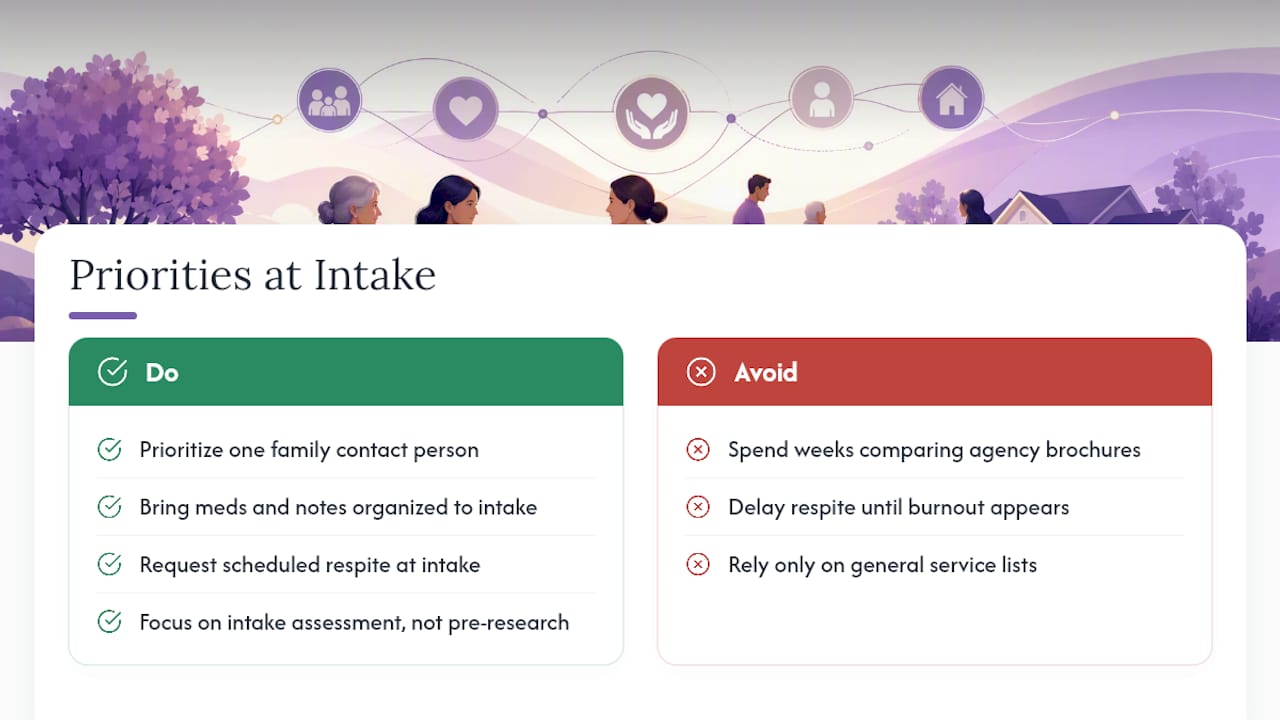
The overlooked piece is respite. Families treat it as a nice-to-have for when things get unbearable, rather than a standing feature of the plan from day one. Ask for it at intake, not after burnout sets in. Waiting until resentment shows up means you’ve already absorbed months of damage that a scheduled break would have prevented.
Prioritize the single family contact and the intake documents over everything else on this list. Everything downstream gets easier once those two things exist.
— Michael
Get Coordinated Care Started This Week
Doing this alone, or piecing together private hires one shift at a time, means you’re the one absorbing scheduling gaps, payroll paperwork, and the risk of a caregiver simply not showing up. Helping-hands-home-care is built for families in metro Detroit who want that overhead handled by someone else: a structured assessment, a written care plan, and staffing backup that doesn’t leave you scrambling on a Tuesday morning.

Whether you need a home health aide for daily personal care, house cleaning to take one task off your plate, or in-home massage therapy for a caregiver running on empty, the intake process starts with one call. Reach out to Helping-hands-home-care today to schedule your assessment and get a written care plan built around your family’s actual week, not a generic template.
Key Takeaways
Effective family caregiver coordination with an agency depends on fast documentation, one designated contact, a detailed care plan, and scheduled respite before burnout sets in.
| Point | Details |
|---|---|
| Prepare before intake | Gather medications, medical notes, and emergency contacts before the assessment visit. |
| Name one family contact | Assign a single point person so agency communication doesn’t scatter across relatives. |
| Ask about backup staffing | Confirm how the agency covers sick calls and staff turnover before signing anything. |
| Request respite at intake | Build scheduled breaks into the care plan early instead of waiting for burnout. |
| Start with Helping-hands-home-care | Its Detroit-area home health aide, homemaker, and respite services follow the assess-plan-arrange model this article outlines. |
This article is general information, not a substitute for advice from a qualified doctor. Consult a qualified healthcare professional about your own circumstances before acting on anything here.
Sources
- Caregiver burnout - Cleveland Clinic
- Usa
- Caregiver stress - Mayo Clinic
- Caregiver stress - Alzheimer’s Association
- Eldercare locator / Administration for Community Living
Recommended
- How to Choose the Right Home Care Agency for Your Family | Helping Hands Home Care
- What Is an Area Agency on Aging for Families Hiring Care? | Helping Hands Home Care
- Licensed Home Care Agency: What Families Need to Know | Helping Hands Home Care
- Examples of Personal Care Assistance for Elderly Families | Helping Hands Home Care