
At-Home Care for Families: A Practical U.S. Guide
At-Home Care for Families: A Practical U.S. Guide

At-home care is care delivered inside a person’s residence, and it splits into two practical categories: Medicare-eligible skilled home health (think wound care, physical therapy, skilled nursing) and privately paid nonmedical home care (personal care, meal prep, housekeeping, companionship). Knowing which category your loved one needs determines who pays, who provides it, and how fast you can get started.
Home health services typically include:
- Skilled nursing visits (wound care, IV therapy, medication management)
- Physical, occupational, and speech therapy
- Home health aide support when combined with skilled services
- Medical social services
Nonmedical home care typically includes:
- Bathing, dressing, and grooming assistance
- Meal preparation and light housekeeping
- Companionship and transportation to appointments
- Medication reminders (not administration)
Key Takeaways
At-home care divides into two categories with entirely different payers: skilled home health (Medicare-eligible when five conditions are met) and nonmedical personal care (typically private pay or Medicaid).
| Point | Details |
|---|---|
| Two types of care | Home health is skilled and potentially Medicare-covered; nonmedical care covers personal support and is usually private pay. |
| Medicare’s five conditions | Homebound status, physician care, signed plan of care, need for skilled services, and a documented face-to-face encounter must all be met. |
| Medicare cost for skilled visits | Beneficiaries typically pay $0 for covered home health visits; durable medical equipment carries a 20% Part B cost-share. |
| Caregiver burnout is preventable | Schedule regular respite from the start of the care plan; Mayo Clinic links proactive respite to lower caregiver health risks. |
| Helping-hands-home-care | Provides home health aide support, cleaning, meal prep, and massage for elderly clients in metro Detroit with coordinated care plans. |
Table of Contents
- What does at-home care actually include?
- Does Medicare cover home health, and do you qualify?
- How do Medicaid, private insurance, and VA benefits pay for care?
- How do you get at-home care started, step by step?
- What does at-home care cost out of pocket?
- How do you recognize caregiver burnout, and where can you get relief?
- How do you choose a trustworthy in-home care provider?
- Why continuity of care matters more than most families realize
- Helping-hands-home-care makes starting care straightforward
- Sources
What does at-home care actually include?
MedlinePlus defines home care services broadly as support that allows people to stay in their own homes while receiving medical or personal assistance. The practical distinction families need to understand is simpler: skilled care requires a clinician’s order and trained professionals; nonmedical care does not.
Home health (skilled care) covers services a licensed clinician must perform or supervise. A registered nurse changes a surgical wound, a physical therapist rebuilds strength after a hip replacement, a speech-language pathologist addresses swallowing difficulties. These visits are episodic and goal-oriented, not indefinite.
Nonmedical home care covers the daily support that keeps someone safe and comfortable at home. A personal caregiver helps with bathing and dressing. A homemaker prepares meals and does laundry. A companion sits with someone who cannot safely be left alone. These services are ongoing by nature and rarely covered by Medicare.
Where families get confused is the home health aide role. A Medicare-covered home health aide assists with personal care as part of a skilled care plan, meaning a nurse or therapist is also actively visiting. A private personal caregiver from a nonmedical home care agency does similar tasks but is paid privately. The service looks the same; the payment source and oversight structure are entirely different.
Agency licensing matters here. Medicare-certified home health agencies must meet federal Conditions of Participation, employ licensed clinicians, and submit to regular surveys. Private home care agencies follow state licensing rules, which vary considerably. Some states require agencies to carry liability insurance and conduct background checks on all staff; others have minimal requirements. Always ask which category an agency falls into before signing anything.
The ACL’s home health care guide outlines community-based supports that complement both types of care, including home modification programs and adult day services worth exploring alongside in-home options.
Pro Tip: Ask any agency upfront: “Are you Medicare-certified?” A yes means federal oversight and a specific standard of care. A no doesn’t mean the agency is bad, but it does mean you’re in private-pay territory regardless of what Medicare covers.
Does Medicare cover home health, and do you qualify?
Medicare covers home health services when five conditions are all met simultaneously. Miss one, and coverage does not apply.
The five Medicare eligibility conditions:
- Homebound status. Leaving home requires a considerable and taxing effort, or is medically contraindicated. “Rarely goes out” is not enough. Clinical documentation must show that leaving is physically or medically burdensome. The legal definition is specific: CMS guidance requires documented evidence that the patient’s condition restricts their ability to leave.
- Under a physician’s care. A doctor, nurse practitioner, or clinical nurse specialist must be actively managing the patient’s care.
- A signed plan of care. The physician must establish and periodically review a written plan of care.
- Need for skilled services. The patient must require skilled nursing, physical therapy, speech-language pathology, or (in some cases) occupational therapy on an intermittent basis.
- A qualifying face-to-face encounter. A physician or allowed non-physician practitioner must have seen the patient within a specific window and documented that the patient’s condition supports the need for home health.
What Medicare pays and doesn’t pay:
According to the Medicare home health booklet, Medicare-certified agencies are paid on a 60-day episode basis. For covered services, beneficiaries typically pay $0.
The Medicare “Getting Started” publication lists covered disciplines clearly: skilled nursing, physical therapy, occupational therapy, speech-language pathology, home health aide services when combined with skilled care, and medical social services. What Medicare does not cover is equally clear: 24-hour custodial care, homemaker services, and long-term personal care when those are the only needs.
| Medicare Home Health Rule | Key Detail |
|---|---|
| Episode length | 60-day payment period; recertification required to continue |
| Beneficiary cost for skilled visits | $0 for covered services |
| Durable medical equipment cost-share | 20% under Part B after deductible |
| Homebound standard | Leaving home must be a taxing effort, clinically documented |
| Face-to-face requirement | Must occur within required timeframe; clinician documents need |
| What’s NOT covered | 24/7 custodial care, homemaker-only services, meal delivery alone |
Statistic to know: Medicare’s home health benefit is designed for short-term skilled recovery, not long-term personal support. Many families are surprised to learn that routine daily personal care falls almost entirely to private pay or Medicaid once skilled needs resolve.
Pro Tip: The face-to-face encounter can be conducted by a physician, nurse practitioner, clinical nurse specialist, certified nurse midwife, or physician assistant. It can happen in an office, hospital, or via telehealth in many cases. Ask the clinician to document specifically why the patient is homebound and what skilled service is needed — vague notes are the most common reason Medicare denies home health claims.
For a deeper look at Medicare eligibility steps, including the face-to-face documentation process, that resource walks through each requirement in plain language.
How do Medicaid, private insurance, and VA benefits pay for care?
Medicare’s home health benefit is narrower than most families expect. Here is where the other payers come in.
- Medicaid home and community-based services (HCBS): Medicaid can cover personal care, homemaker services, and even some respite care for eligible low-income individuals. The catch is that eligibility rules, covered services, and waiting lists vary dramatically by state. Some states have robust HCBS waiver programs; others have long queues. Contact your state Medicaid office or local Area Agency on Aging for current rules.
- Long-term care insurance: Policies purchased before a care need arises often cover both skilled and nonmedical home care, with benefit triggers typically tied to inability to perform two or more activities of daily living. Coverage shapes vary: some policies pay a daily benefit; others reimburse actual costs up to a cap. Review the policy’s elimination period (the waiting period before benefits begin) carefully.
- VA benefits: Veterans may qualify for the Aid and Attendance benefit, which can help pay for in-home personal care. Eligibility depends on service history, disability rating, and financial need. The VA also offers its own home-based primary care program for veterans with complex needs.
- Medicare Advantage (Part C): Many Medicare Advantage plans offer supplemental benefits beyond original Medicare, including some nonmedical home care hours or meal delivery. Coverage varies by plan and county. Check your plan’s Evidence of Coverage document, not just the summary, before assuming a benefit exists.
- Private pay: When no program covers a service, families pay out of pocket. This is the most common payment method for nonmedical home care.
For a full breakdown of home care payment options, including how to stack benefits and plan for gaps, that guide covers each payer in detail. Medicare Advantage plan differences are also covered well in the Medicare education resources at XactInsure.
How do you get at-home care started, step by step?
The process from “we need help” to “a caregiver is in the home” typically takes one to three weeks for Medicare home health, and can be faster for private home care. Here is the sequence.
For Medicare home health:
- Clinical assessment. Talk to the primary care physician or specialist managing your loved one’s condition. Describe functional limitations and recent changes in health status.
- Physician order and face-to-face encounter. The clinician documents the face-to-face visit and writes a referral to a Medicare-certified home health agency.
- Agency intake. The agency conducts a comprehensive assessment (often using the OASIS tool) to establish baseline function and build a plan of care.
- Plan of care creation. The physician reviews and signs the plan. Services cannot begin until this is in place.
- Start of services. The first skilled visit occurs, typically within a few days of the signed plan.
- 60-day recertification. At the end of each episode, the physician must recertify that the patient still qualifies. A documented plan of care and regular reassessments reduce readmissions and keep care coordinated.
For private home care (nonmedical):
- Contact private home care agencies in your area and request a written service agreement before any care begins.
- Run criminal background checks on any independently hired caregiver; reputable agencies do this automatically.
- Arrange a paid trial period of several short visits before committing to a long-term schedule, as MedlinePlus advises.
- Clarify payroll responsibilities: if you hire independently, you may become an employer of record with tax withholding obligations. An agency handles this for you.
- Confirm the agency carries liability insurance and workers’ compensation coverage.
Questions to ask any agency before signing:
- Are you Medicare-certified (for home health) or state-licensed (for nonmedical care)?
- What background check process do you use for caregivers?
- Who supervises aides, and how often?
- What is your staff turnover rate?
- How do you handle emergencies or caregiver no-shows?
- What training do your aides receive, and is it ongoing?
- Can you provide three client references?
- What does your written service agreement include?
For in-home care eligibility specifics, including local assessment examples, that resource is worth reviewing before your first agency call.
Pro Tip: For the first two weeks, keep a simple daily log: who visited, what was done, any concerns. Share it with the supervising clinician at the first follow-up. This single habit catches medication conflicts, missed visits, and care gaps before they become crises.
What does at-home care cost out of pocket?
Cost depends on four variables: the type of care (skilled vs. nonmedical), how many hours per day or week are needed, your geographic area, and whether you use an agency or hire independently.
For Medicare-covered home health, the beneficiary cost for skilled visits is $0. When home medical devices are involved, the FDA’s home healthcare device checklist is a practical reference for safe setup and supplier questions.
For nonmedical home care, private-pay hourly rates vary by region and agency. Urban markets typically run higher than rural ones. Ask agencies for written estimates that break down hourly rates, minimum visit lengths, and any additional fees (holiday rates, live-in premiums). Bundled pricing for multiple services (cleaning plus personal care, for example) sometimes costs less than booking each separately.
- Get everything in writing. A verbal quote means nothing if a billing dispute arises.
- Confirm what is billable to Medicare or insurance before services start, not after. Agencies are required to give you an Advance Beneficiary Notice if they believe Medicare may not cover a specific service.
- Ask about sliding-scale fees. Some nonprofit agencies offer income-based pricing.
- Contact your Area Agency on Aging. They maintain lists of subsidized or low-cost local services and can connect you with state Medicaid planners at no charge.
Cost reality check: Medicare’s home health benefit covers skilled recovery care, not ongoing personal support. Once skilled needs resolve, families often face a gap between what Medicare paid for and what daily life still requires. Planning for that gap early, before a discharge, prevents scrambling.
The CDC’s home health care statistics reflect how widely home care use has grown, which has driven more pricing transparency and competition among agencies in most markets.
How do you recognize caregiver burnout, and where can you get relief?
Caregiver burnout is not a character flaw. It is a predictable outcome of sustained, high-demand caregiving without adequate support. The Office on Women’s Health documents that many family caregivers perform medical tasks, including injections and medication management, and report significantly higher stress levels than non-caregivers.
Warning signs to watch for:
- Persistent exhaustion that sleep does not fix
- Withdrawal from friends, family, or activities that used to matter
- Increased frequency of illness (stress suppresses immune function)
- Irritability or resentment toward the person being cared for
- Neglecting your own medical appointments or medications
- Feeling like caregiving has no end and no reward
The Alzheimer’s Association notes that caregivers often deny the severity of their own stress, and that acknowledging denial is itself a necessary first step toward sustainable care.
Mayo Clinic recommends proactive help, specifically professional in-home assistance and respite care, to reduce health risks to the caregiver before burnout becomes a medical crisis.
Practical respite options:
- Short-term in-home respite: A paid caregiver covers several hours or a full day so the family caregiver can rest, run errands, or simply leave the house.
- Adult day programs: Structured daytime programs provide social engagement, meals, and supervision for the care recipient while the caregiver works or rests.
- Short-term facility stays: Some assisted living facilities and nursing homes offer short-term respite stays of a few days to a few weeks.
- Temporary agency coverage: A home care agency can provide a substitute caregiver during vacations or illness.
Pro Tip: Schedule respite the same way you schedule a medical appointment: put it on the calendar, treat it as non-negotiable, and build it into the care plan from the start. Waiting until you are depleted to ask for help is the pattern that leads to crisis.
For families managing chronic conditions alongside caregiving, the chronic illness home care guide covers caregiver training and long-term sustainability strategies in more depth.

How do you choose a trustworthy in-home care provider?
The difference between good home care and a bad experience often comes down to what you verify before the first visit, not what you discover afterward.
Trust signals to confirm:
- Medicare certification (for home health agencies) — verifiable on Medicare Care Compare at medicare.gov
- State agency license — check your state’s health department licensing database
- Caregiver background checks — ask specifically what the process covers (criminal, sex offender registry, driving record if transport is involved)
- Liability insurance and workers’ compensation — request a certificate of insurance
- Ongoing caregiver training and competency evaluations
- Willingness to provide at least three client references
Red flags that should stop you:
- Evasive or vague answers about Medicare certification or state licensing
- No written service agreement or plan of care
- Unusually high staff turnover with no explanation
- Refusal to provide references or to let you speak with current clients
- No clear emergency or backup coverage protocol
- Pressure to sign a long-term contract before a trial period
Ten questions to ask before hiring:
- Are you Medicare-certified or state-licensed, and can I verify that online?
- What does your caregiver background check include?
- Who supervises aides in the home, and how often does a supervisor visit?
- What is your average caregiver tenure?
- How do you handle a caregiver calling out sick?
- What infection control protocols do your staff follow?
- How is the care plan documented and shared with the family?
- What training do aides receive before their first solo visit?
- Are your aides certified nursing assistants (CNAs), home health aides (HHAs), or unlicensed personal care workers?
- What is your process if a client’s condition changes significantly?
Verifying credentials takes about 20 minutes. Medicare Care Compare lists every Medicare-certified home health agency in the country with quality ratings. Your state health department’s website lists licensed home care agencies. Your local Area Agency on Aging can cross-reference both and flag any agencies with recent complaints.
Why continuity of care matters more than most families realize
The families I see struggle most with at-home care are not the ones who chose the wrong agency. They are the ones who treated care as a series of disconnected transactions: one agency for skilled nursing, a different person for personal care, no one coordinating between them. The care recipient ends up explaining their situation to a new face every week, medications get missed in the handoffs, and family members spend hours on the phone trying to piece together what happened.
The research backs this up. A documented plan of care and routine reassessments every 60 days, as Medicare’s own guidelines require, reduce readmissions and improve coordination between clinicians and agencies. That structure exists for a reason. When private home care agencies skip the formal care plan because it is not required for nonmedical services, they are removing the single most effective tool for keeping care consistent.
My view: the best indicator of a good home care agency is not their brochure or their website. It is whether they can tell you, in specific terms, how they will communicate with your loved one’s physician, how they document changes in condition, and who calls you when something goes wrong at 2 AM. Those answers reveal whether you are dealing with a real care partner or a staffing agency with a warmer name.
Helping-hands-home-care makes starting care straightforward
Arranging care for a parent or spouse is hard enough without spending weeks vetting agencies and decoding Medicare rules. Helping-hands-home-care serves families in the metro Detroit area with home health aide support, professional house cleaning, meal preparation, and therapeutic massage, all designed around the practical needs of elderly clients living at home.
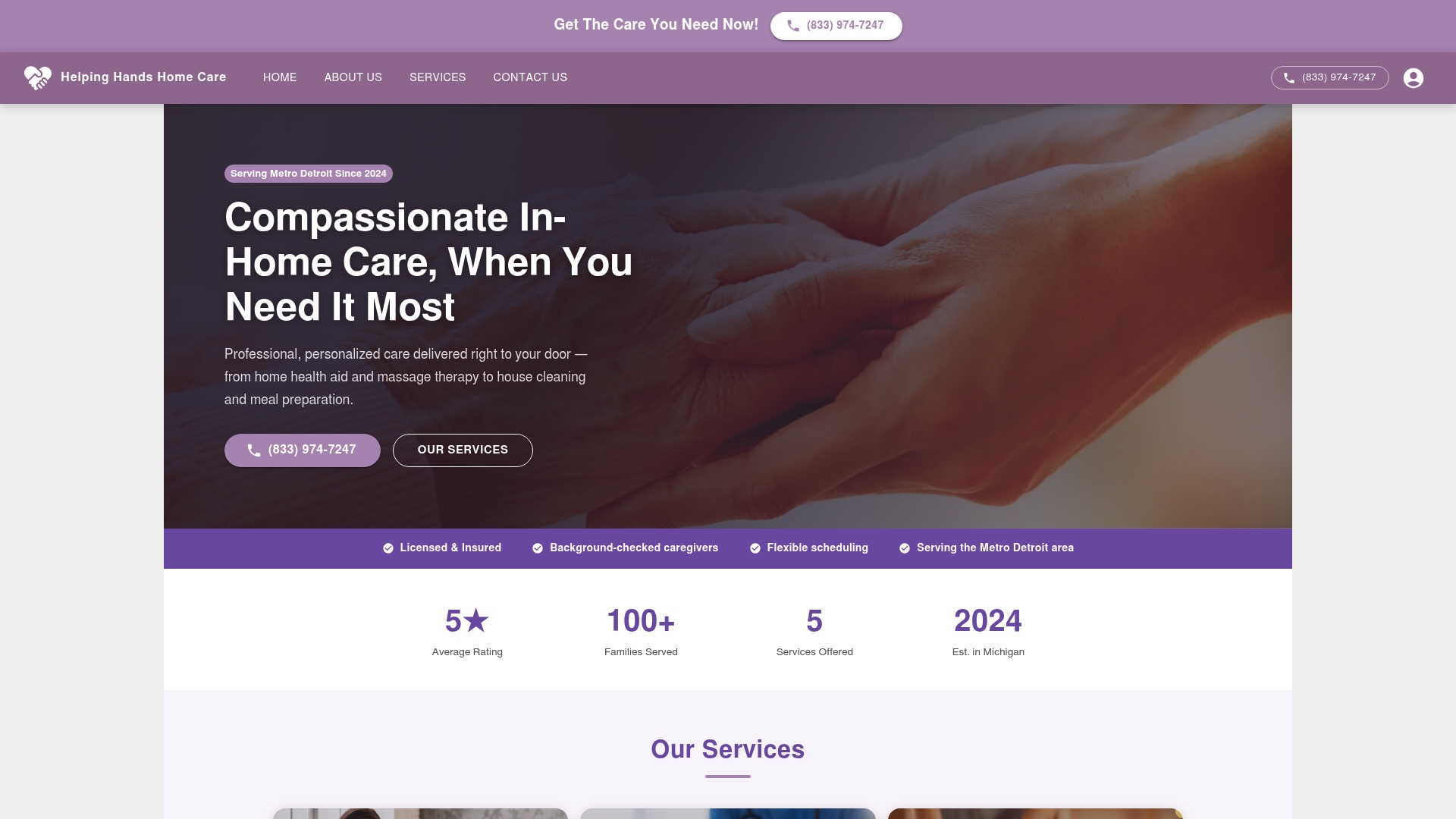
What sets Helping-hands-home-care apart from a standard referral agency is the coordination piece. Staff work from a documented care plan, communicate directly with families, and adjust services as needs change, so you are not starting over every time a caregiver changes. The intake process is straightforward: contact the team, describe your loved one’s current situation, and a care coordinator walks you through which services fit and what to expect on the first visit. To see the full range of available services or to schedule an initial conversation, reach out to the Helping-hands-home-care team directly.
Sources
- Medicare: Home health services
- CMS State Operations Manual (home health coverage and eligibility guidance)
This article is general information, not a substitute for advice from a qualified doctor. Consult a qualified healthcare professional about your own circumstances before acting on anything here.